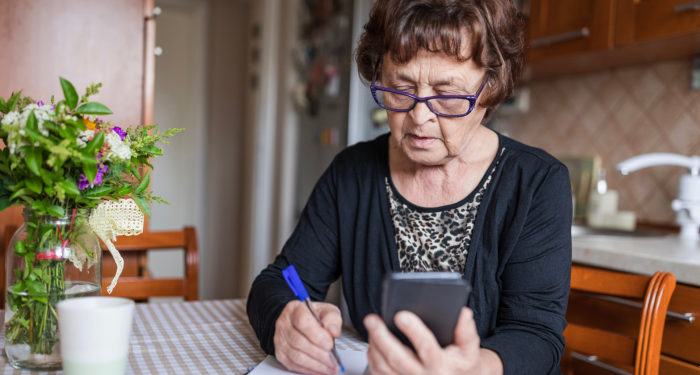
Twenty-six years after our divorce, when my ex-wife called to ask if I remembered where I'd proposed, the answer came instantly—and that's when I realized that failed marriages don't disappear, they just become museums we can describe perfectly but never enter again.

Add VegOut to your Google News feed. 
Last month, the phone rang while I was making cashew cream for Sunday's vegan pizza. My ex-wife's voice hadn't changed in twenty-six years.
"Do you remember the name of that little place where you proposed? The one with the terrible wine but perfect pasta?"
"Giulietta's," I said without thinking. "On College Street. They had that back booth with the torn vinyl seats."
There was a pause. I could hear her breathing, the same way she used to when she was trying to find the right words for something that didn't have any.
After we hung up, I stood there for a long time, wooden spoon in hand. Giulietta's had been closed for twenty years, but I could still see it perfectly: the yellowed photos of Sicily on the walls, the owner's mother making pasta in the back, the way Anne's face looked in that unreliable candlelight when she said yes.
The building is still there, you just can't live in it anymore
The thing about divorce that nobody tells you is that it doesn't erase anything. Every restaurant I ever worked in still exists somewhere in my muscle memory. My first marriage lives in that same kind of memory, not in my mind but in my bones.
I spent fifteen years working every Friday and Saturday night, every holiday, every anniversary after the third one. I told myself I was building something, that the restaurant was for us, for our future. Anne would eat alone at our kitchen table while I was expediting orders five kilometers away, making sure other couples had the perfect date night.
When she finally said she'd been lonely for years, I couldn't argue. The evidence was in our bank statements: thousands of meals I'd cooked for strangers while she reheated leftovers. The evidence was in our son's school plays I'd missed, the parent-teacher conferences I'd sent her to alone, the Sunday mornings I'd spent doing inventory instead of making pancakes.
The divorce papers were signed when I was thirty-six, but the marriage ended years before that, somewhere between the long hours and the endless holidays spent at work.
Sometimes the second draft is the one that works
For two years after the divorce, I lived above the restaurant in a studio that smelled permanently of garlic and failure. The restaurant became everything. It nearly killed me, and I would have let it.
Then Linda walked in.
She sent back the wine. Not rudely, but with the kind of confidence that comes from knowing what you want and refusing to settle. I brought her a different bottle myself, partly to see who had the audacity to reject my carefully curated wine list.
"This wine is corked," she said simply.
She was right. I'd been serving it all night, and either nobody else had noticed or nobody else had cared enough to say anything.
We married three years later, both of us scarred enough to know that love wasn't sufficient, that it needed infrastructure, intention, and the willingness to show up even when the restaurant was calling.
The blending of families at middle age is like trying to merge two restaurants with completely different menus. Linda has two kids from her first marriage. Her daughter Sophie was twenty-three when I met her, old enough to be suspicious but young enough to eventually let me in. Being a stepfather in your forties means you've already made all your worst mistakes on someone else.
The grandchildren don't care about your failures
My son Ethan was seven when Anne and I divorced. Old enough to remember us together, young enough to adapt to weekend visits and two bedrooms. I carried guilt about him like a stone in my pocket for years.
"I just wanted you to show up, Dad," he told me when he was twenty-five. "Not the expensive hockey equipment or the concert tickets you'd buy to make up for missing things. Just you."
That sentence rearranged me at a molecular level.
Now he's thirty-three with a four-year-old daughter who rides on my shoulders at the farmers' market every Saturday morning, pointing at vegetables and asking their names in a voice that could resurrect the dead. She doesn't care that I wasn't perfect, that I failed at my first marriage, that I spent decades hiding in work. She just wants me to read stories with all the voices.
Sophie has a two-year-old son now who calls me "Pop," which wasn't planned but stuck. I make him vegan mac and cheese from scratch every time he visits. These grandchildren are teaching me presence in ways I'm only now learning.
Even Greeks can change
Going vegan at forty-seven was after watching a documentary and my father's worst nightmare. A Greek man giving up lamb? My mother didn't speak to me for three months. But after really seeing what I'd been part of for thirty years in the restaurant business, I couldn't unknow it.
The restaurant staff thought I'd lost my mind. How do you build flavor without butter? But constraints breed creativity. I discovered that cashew cream could do things butter never dreamed of, that mushroom stock had more depth than beef ever would.
My father died still disappointed, but not before admitting my spanakopita made with almond feta was "almost as good as the real thing," which from a Greek father was basically a Nobel Prize.
Sunday dinners are sacred now
These days, I consult for restaurants part-time. The rest belongs to the life I forgot to live the first time around.
Sundays are for family dinner. Everyone comes, even Anne once a month with her partner, who's a decent man who never owned a restaurant and therefore had time to be a proper husband.
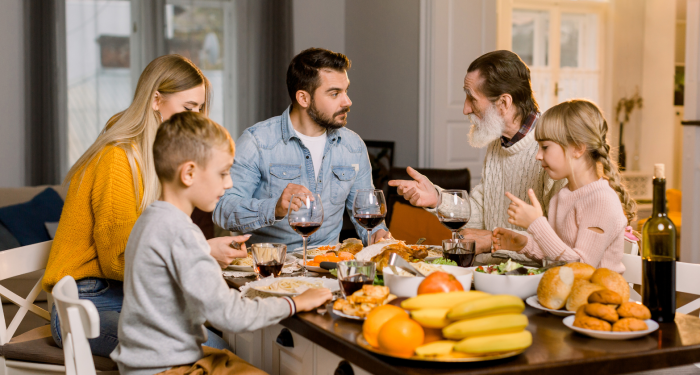
People find it strange that we all eat together, but when your adult son asks for family, you figure out how to make it work. We pass vegan lasagna and old stories around the same table. The children play together, unaware of the complex geometry that brought them here.
Last Sunday, Anne mentioned she'd driven past where Giulietta's used to be. It's a cannabis shop now, which feels right somehow.
"Remember their tiramisu?" she said, and everyone waited to see if this would be awkward.
"Mascarpone from heaven," I agreed. "Though I make a better one now with coconut cream."
Linda squeezed my hand under the table, not from jealousy but from understanding. She has her own first marriage, her own restaurant of memories.
After dinner, while the kids played, Anne and I stood on the deck.
"We were so young," she said.
"We were perfect," I said. "Just not for each other."
Final words
Anne called about Giulietta's because she was trying to explain something to her partner about who she used to be. I gave her the name because it cost me nothing, because the boy who proposed in that back booth grew into a man who learned to come home for dinner.
My granddaughter will never eat at Giulietta's, but she'll grow up in a house where her grandfather is present, where Sunday dinner is sacred, where the food is plant-based and the love is unconditional.
The building where my first marriage lives is locked, has been for decades. But I can describe every room. I just can't live there anymore. And more importantly, I don't want to.
The life I have now was built on the ruins of that locked building. Every Saturday when my granddaughter reaches for my hand at the market, completely trusting I'll be there, that small gesture contains everything I've learned: show up, pay attention, hold loosely, love fiercely.
The phone might ring again. Anne might need another memory retrieved. And I'll give it to her, easily, the way you'd loan sugar to a neighbor. Because that's what we are now: neighbors in time, keepers of each other's history, people who know exactly which booth in which restaurant on which street, even if we can't go back there anymore.