After twenty-five years of rebuilding from divorce, I've discovered that a successful second life doesn't cure the loneliness—it just gives you a better view of everything you missed the first time around.

Add VegOut to your Google News feed. 
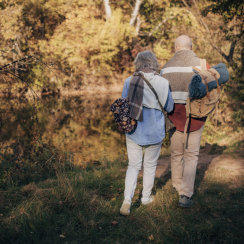
There's a photo on my desk from last summer—Linda and me at the cottage, both of us squinting into the sun, her hand on my chest. We look content. We are content. But what the photo doesn't show is that later that night, after she went to bed, I stood on the dock staring at the water and felt exactly as lonely as I did the night my first marriage ended twenty-six years ago.
That's the thing about gratitude—after you've performed it long enough, it becomes real. But nobody tells you that real gratitude can coexist with real loneliness, that they can sit at the same table, sharing the same perfectly good life you've built from the ruins of the first one.
The weight of second chances
I got divorced at 36. Spent the next two years living above the restaurant, working eighteen-hour days because I didn't know what else to do with myself. The therapist I started seeing after the divorce—same one I still see now—helped me understand that my first marriage didn't fail in one dramatic moment. It died from a thousand small choices to be anywhere but present.
Twenty-six years later, I've built everything I thought I wanted. A good marriage to Linda, who saw through my chef's bravado to something worth salvaging. Relationships with my kids that we've rebuilt from honesty instead of guilt. Grandchildren who call me Papa and don't care that I wasn't always the man I am now. Friends who survived my worst years. A quieter life after selling the restaurant, with time to write and cycle and cook elaborate vegan meals that would have horrified my younger, butter-obsessed self.
But here's what haunts me: sometimes I stand in my kitchen—the one where I finally learned to cook for love instead of escape—and feel the echo of every year I spent running. The gratitude is real. The life is good. And the loneliness finds me anyway.
When success feels like grief
My son was seven when his mother and I split. For years, I thought providing meant presence, that working every weekend to pay for his hockey gear was the same as watching him play. The restaurant business gave me the perfect excuse—somebody had to work Friday nights, Saturday brunches, Mother's Day, New Year's Eve. Somebody had to make sure the bills got paid.
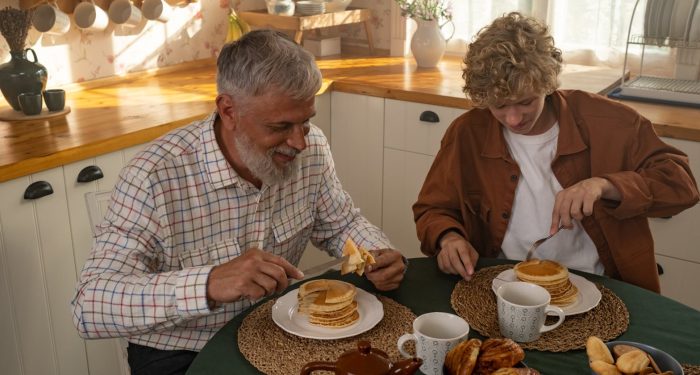
Now he's 33 with kids of his own, and we've found our way to something real. Every Thursday, he calls at exactly 7:30. We talk about his work, his daughter's preschool dramas, whether the Leafs will ever win another Cup. What we don't talk about, but what sits between every word, is all those Thursday nights I missed when he was young.
The thing is, the second chance worked. I learned to show up. I learned to put the phone down, to be home for dinner, to care more about presence than profit. When I met Linda at 44, I came to the relationship as a whole person, not just the charming parts. When stress almost swallowed me again at 55, she called me on it before it was too late.
But success doesn't erase the grief. It just gives you a better vantage point to see what you lost.
The loneliness nobody talks about
Last week, Linda was at her book club. I made dinner—a complicated vegan pasta that would have taken half the time with butter but tasted just as good without it—and sat at our dining table facing an empty chair. The house was so quiet I could hear the clock in the hallway, marking time I'm increasingly aware I can't get back.
I thought about calling someone. My son, but it wasn't our Thursday. One of the guys from my cycling group. An old friend from the restaurant days. But what would I say? "I'm lonely in my nice house with my good marriage and my full life"?
This isn't the sharp loneliness of my thirties, when the divorce was fresh and the apartment above the restaurant smelled like industrial bleach and failure. This is something quieter, more persistent. It's the space between who I was and who I've become, filled with all the moments I can't retrieve.
At 62, I finally understand that loneliness isn't about being alone. Linda could be sitting right beside me, reading one of her mystery novels, her feet tucked under her on the couch, and I'll still feel it sometimes—this awareness of all the connections I severed, all the presence I withheld, all the years I spent being charming instead of real.
Learning to sit still
The restaurant business was perfect for someone who couldn't sit still with difficult feelings. There was always another service, another crisis, another twelve-hour shift that justified avoiding whatever was happening at home. Even now, retired from the daily grind, I have to resist the urge to fill every quiet moment with elaborate cooking projects.
Linda suggested meditation at 56. Ten minutes every morning of sitting still, which might as well be ten hours for someone who spent decades in constant motion. But I do it, fidgeting through every second, because I'm learning that the discomfort won't kill me.
The cycling helps differently. Forty kilometers along the lake on Saturday mornings with a group of men my age who've all got their own stories of marriages that worked or didn't, kids who forgave them or didn't, careers that defined them until they didn't. We don't talk about feelings much, but we show up for each other, which is its own form of honesty.
My therapist asks what I want to do with the loneliness, and I tell her: nothing. I don't want to fix it or feed it or run from it. I just want to acknowledge it as part of the price—the price of getting a second chance, of being aware enough now to feel the absence of all those years I wasn't.
The grandchildren don't care about your past
Every Saturday, I take my four-year-old granddaughter to the farmers' market. She picks the messiest fruit possible, asks why tomatoes are fruits but taste like vegetables, and makes me stop at every dog we pass. She calls basil "the pizza leaf" and thinks I'm magic because I can make ice cream without milk.
Her little brother, just turned two, sits in his high chair and throws cashew cheese at the wall with remarkable accuracy. Neither of them knows about the years I missed with their father, about the restaurant that consumed everything, about the man I used to be who thought working hard was the same as loving well.
With them, I get to be exactly who I am now—Papa who makes funny voices during stories, who grows special tomatoes in the backyard, who always has time for one more book before nap time. They don't need my guilt or my gratitude. They just need me to show up.
It's healing and heartbreaking at the same time, getting to be the grandfather I never quite managed to be as a father. Every patient moment with them is a reminder of all the impatient moments with my own kids. Every Saturday at the market is a Saturday I probably worked twenty-five years ago.
When gratitude becomes real
I spent the first few years after meeting Linda performing gratitude like a script I'd memorized. Thank you for the second chance. Thank you for seeing past the damage. Thank you for patience while I learned to be present instead of just charming. I said it so often it became true, or maybe it was true all along and I just needed the repetition to believe it.
Now the gratitude is as real as my grandmother's olive oil bottle that sits on our kitchen counter—solid, useful, always within reach. I'm grateful for Linda's book club nights that give us space to miss each other. For my son's Thursday calls that keep us connected without pressure. For the friends who knew me when I was all ambition and no wisdom and stuck around anyway.
But real gratitude includes room for everything else. For the ache when I see fathers coaching their kids' teams—something I never did. For the silence in conversations where inside jokes should be. For all the family dinners that happened without me while I was plating somebody else's anniversary meal.
The gratitude and the loneliness aren't opposites. They're ingredients in the same dish, one I'm finally learning to serve without apology.
Final words
Tomorrow, Linda and I will have been married fifteen years. I'll make her breakfast—something elaborate with cashew hollandaise that my younger self would have mocked—and we'll sit on the deck with nowhere urgent to be. The grandkids will visit Sunday. My son will call Thursday. The cycling group will meet Saturday. This is my life, my good, full, second-chance life.
And yes, the loneliness will probably visit too, sliding in between the contentment and the gratitude like smoke under a door. But I won't run from it anymore. I won't hide in the kitchen or create unnecessary projects or fill the silence with charm. I'll just let it sit at the table with us, another guest at this feast of a life I'm finally learning to live.
Because starting over after my divorce gave me everything I thought I wanted. The warning nobody gives you is that getting what you want includes knowing what you lost. The second life is real, and good, and sometimes lonely—not despite its goodness, but because I'm finally present enough to feel everything, including the echo of all those years I wasn't.
What’s Your Plant-Powered Archetype?
Ever wonder what your everyday habits say about your deeper purpose—and how they ripple out to impact the planet?
This 90-second quiz reveals the plant-powered role you’re here to play, and the tiny shift that makes it even more powerful.
12 fun questions. Instant results. Surprisingly accurate.