While his stepkids mock him for clinging to newsprint in the age of infinite scrolling, this 61-year-old former restaurant owner has discovered that his morning paper ritual is the last sanctuary where Silicon Valley can't manipulate what captures his attention.
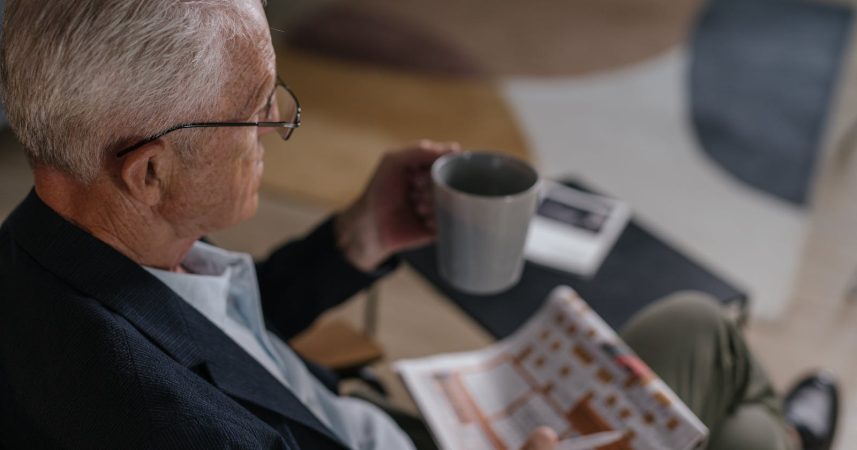
The newspaper hitting my front step at 5:45 AM sounds different in winter—a muffled thud against frozen concrete instead of summer's sharp slap. I've been hearing that sound for fifteen years, and my stepkids still can't believe I pay actual money for dead trees to show up at our door. Last week, Sophie watched me unfold the business section with the same expression she'd have if she caught me churning my own butter. "You know there's an app for that, right?" she said. James went further, suggesting I'm performing some kind of boomer theater for their benefit. But here's the thing: those 40 minutes with my coffee and newspaper are the only time all day when I get to decide what's worth my attention.
The algorithm doesn't know what I need to read
My phone thinks it knows me. It knows I spent too long reading about restaurant failures last month, so now it feeds me a steady diet of closure announcements and chef meltdowns. It knows I clicked on one article about knee pain, so apparently I'm in the market for every joint supplement ever invented. The algorithm has decided I'm a 62-year-old man who needs to be angry about politics, worried about my health, and nostalgic for restaurants that no longer exist.
The newspaper doesn't know anything about me. It shows up with the same stories for everyone on my street, completely indifferent to whether I read them or use them to line the recycling bin. There's something beautifully democratic about that. The city council coverage doesn't get more sensational based on my engagement. The high school sports scores don't multiply because I spent five minutes reading about the hockey playoffs.
When I owned the restaurant, I learned that giving people what they want isn't the same as giving them what they need. Sure, customers said they wanted the richest, most indulgent dishes possible. But the ones who became regulars? They ordered the simple stuff—the perfectly roasted vegetables, the salad with just the right amount of acid in the vinaigrette. The newspaper is like that good, simple salad. It's not trying to hack my dopamine. It's just Tuesday's news, arranged by humans who went to journalism school, not by code optimizing for my eyeball time.
My morning ritual is a choice, not a habit
I get up at 6 AM, before Linda, before the dog realizes it's morning, before the world starts demanding things. The coffee ritual comes first—grinding the beans, heating the water to exactly 200 degrees, a habit from my restaurant days when precision mattered. By 6:15 AM, I'm at the kitchen table with the paper spread out like a map of the day's possibilities.
The sports section gets read first, even though I don't follow teams the way I used to. Then local news, because these are the stories that actually affect my life—the new bike lane on Morrison Street, the water main replacement schedule, the school board elections nobody pays attention to until their kid gets rezoned. Business comes third, though I skip most of it now that I'm not competing with anyone. The opinion pages I save for last, like dessert, even though half the time they give me heartburn.
Sophie thinks this is inefficient. She's not wrong. I could scan headlines on my phone in three minutes instead of taking 40 with the physical paper. But efficiency isn't the point. When you run restaurants for 35 years, efficiency becomes a tyrant. Every minute gets optimized, every process streamlined, until you realize you've efficiently worked your way through a divorce and missed most of your son's childhood.
The newspaper is deliberately inefficient. I have to physically turn pages. Sometimes the story continues on A6 and I lose my place. The crossword requires an actual pencil. Last week, I spilled coffee on the editorial section and had to read around the stain. These small obstacles force me to slow down, to be present with what I'm reading instead of skimming for dopamine hits.
Real news has borders
The physical newspaper ends. There are only so many pages, so many stories, so many advertisements for furniture stores that seem to be perpetually going out of business. When I reach the back page, I'm done. There's no infinite scroll, no "you might also like," no rabbit holes that start with city politics and end three hours later with conspiracy theories about fluoride.
This boundary is a gift. In the restaurant, I learned that constraints force creativity. When we went vegan and suddenly couldn't use butter, cream, or eggs, I had to reimagine everything. The limitation didn't make the food worse—it made it more interesting. We started using cashew cream, aquafaba, nutritional yeast. The dishes that emerged were more creative than anything I'd made in my butter-soaked decades before.
The newspaper's constraints work the same way. Because I can't read everything, I have to choose what matters. Because the stories don't update every thirty seconds, I can actually finish a thought about them. Because there's no comment section, I form my own opinions instead of getting sucked into other people's rage.
My grandkids don't understand this yet. They see the newspaper as a relic, like the rotary phone in our basement that my granddaughter thinks is broken because the screen is black. But they love when I read them the comics, even though they don't get half the references. They fight over who gets to find the hidden pictures in the kids' section. They're learning, without knowing it, that information can be finite, complete, enough.
The best part of my day belongs to me
Linda gets up around 7, and the whole energy shifts. Not in a bad way—after fifteen years together, her presence is comfortable as old slippers. But once she's awake, I'm no longer alone with my thoughts. She'll read something aloud from her section. The dog needs walking. The phone starts buzzing with the day's obligations.
But from 6 to 7 AM, the time is mine. No notifications about restaurant consulting gigs. No texts from my cycling buddies about Saturday's route. No updates from my son about the grandkids' schedules. Just me, the news, and coffee that starts too hot and ends too cold because I forget about it while reading about the library budget crisis.
This protected time teaches me something every morning: I get to choose what I think about. Not some programmer in Silicon Valley, not some algorithm trained on my worst impulses, not some engagement metric that thinks it knows what will keep me scrolling. Me. I choose.
Sometimes I read every word of a story about the local food bank. Sometimes I skip national politics entirely and go straight to the gardening column. Sometimes I just stare at the steam rising from my coffee and think about nothing at all, the newspaper patient as a meditation cushion, waiting for me to return.
Final words
My stepkids aren't entirely wrong—there is something performative about reading the physical newspaper. But it's a performance for myself, not them. Every morning, I perform the radical act of choosing my own attention, of reading what editors selected rather than what an algorithm calculated, of ending when the paper ends instead of scrolling into infinity.
At 62, I've learned that wisdom isn't about keeping up with everything—it's about choosing what deserves your focus. The newspaper, with its ink-stained fingers and recycling bin destiny, helps me make that choice. Those 40 minutes aren't about being informed, though I am. They're about being human in a world that increasingly wants me to be a user, a metric, a consumer of endless content.
Tomorrow morning, the paper will arrive at 6 AM, same as always. I'll make my coffee, spread the news across my kitchen table, and spend 40 minutes deciding for myself what's worth thinking about. In a world where algorithms want to do our thinking for us, that feels like freedom.