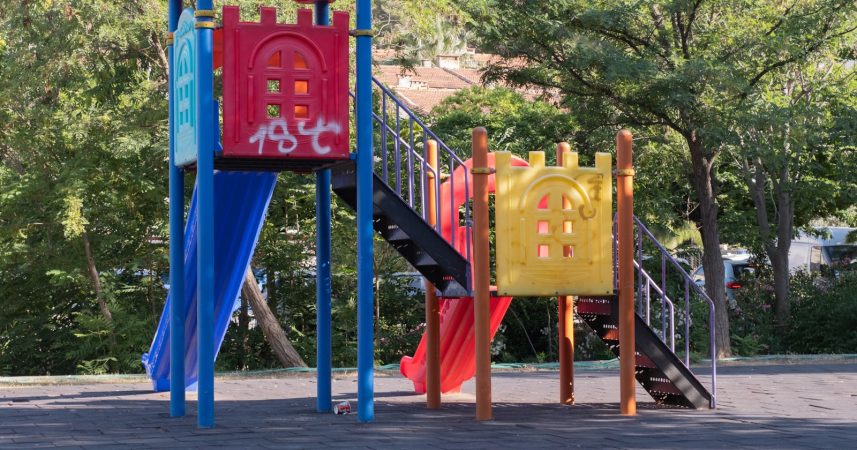
Those endless summer days weren't empty—they were laboratories where we mixed freedom with scraped knees, turning feral children into fully formed humans one unsupervised adventure at a time.

Add VegOut to your Google News feed. 
Remember that summer when days stretched forever and the only GPS tracking your whereabouts was your mother's intuition? I was eleven years old in 1975, racing my bike down Cemetery Hill with playing cards clothespinned to the spokes, making that satisfying motorcycle sound. My mother's entire safety briefing that morning consisted of: "Don't ride in traffic and be home for dinner." Six hours later, I'd explored three neighborhoods, started and lost a war with the kids from Maple Street, and discovered that if you mixed grape Kool-Aid with orange, it tasted like rebellion.
That wasn't parental negligence. That was childhood.
The architecture of empty afternoons
I've been thinking about this lately, especially when I see my grandchildren's schedules. Soccer at 9, tutoring at 11, violin at 2, supervised playdate at 4. When do they get to stare at clouds until they see dragons? When do they learn that boredom is just creativity wearing a disguise?
In 1975, boredom was our constant companion and greatest teacher. It pushed us out the door at 8 AM with nothing but a house key on a yarn necklace and maybe a quarter for emergency phone calls we'd spend on candy instead. We'd stand in someone's driveway, five or six of us, kicking rocks and complaining about having nothing to do until someone said the magic words: "I know, let's..."
And then we were urban explorers, discovering that the drainage tunnel under Route 9 echoed perfectly if you sang "Band on the Run." We were entrepreneurs, selling "perfume" made from crushed roses and water in baby food jars. We were diplomats, negotiating complex treaties about who got to use the good swing and for how long.
Every skill I later needed as an adult, from conflict resolution to creative problem-solving, germinated in those unsupervised hours. When Tommy Bennett stole my bike, no adult mediator helped us work through our feelings. I had to decide: fight him, tell his scary older brother, or spread the rumor that he still wet the bed. I chose option three, got my bike back, and learned about leverage.
When getting lost was a life skill
Here's something that would horrify modern parents: I got lost regularly. Not traumatically lost, just turned-around-and-had-to-figure-it-out lost. The first time, I was nine, and I'd followed a cat six blocks from home. When I looked up, nothing was familiar. I didn't have a phone to call for rescue. I had to pay attention, retrace my steps, ask the mailman for directions.
That small adventure taught me to notice landmarks, trust my instincts, and stay calm under pressure. Years later, when I found myself navigating single motherhood after my divorce, that same internal compass kicked in. The skills were already there, hardwired from a childhood spent finding my own way home.
We learned to read the world without Google Maps or Yelp reviews. Mrs. Davidson's dog meant walk on the other side of the street. The teenagers smoking behind the grocery store meant find another route. The ice cream truck's music box version of "Turkey in the Straw" at 3 PM meant you had exactly four minutes to raid your piggy bank and make it to the corner.
The democracy of neighborhood games
Do kids today even know what "Ghost in the Graveyard" is? Or "Kick the Can"? We had elaborate games with Byzantine rules that changed depending on who was playing and how close we were to dinner time. No adult referee. No participation trophies. If you cried when you lost, you might not get picked next time. If you cheated, word spread faster than head lice.
We learned democracy in its rawest form. Should we play baseball or build a fort? Vote. Should Jennifer's little brother be allowed to play even though he always cried? Vote. Should we tell about the broken window or pool our allowances to fix it? Heated debate, then vote.
These weren't structured leadership exercises. This was Lord of the Flies with training wheels, and somehow we all survived. More than survived, actually. We learned to stand up for ourselves, to compromise, to lead and follow, to win and lose with something approaching grace.
Risk assessment 101
The tree in the Wilsons' backyard had a branch that hung over the road, maybe twelve feet up. Every kid in the neighborhood had to decide: was the glory of touching that branch worth the risk of falling? No one made that calculation for us. We watched older kids do it, saw Dennis break his wrist trying, weighed our options.
I touched that branch when I was twelve. The bark was rough under my palms, and for one moment, suspended between childhood and gravity, I felt invincible. Then I felt the ground, hard. I limped home with torn jeans and a bruised ego, but I'd done it. My mother looked at my bloody knee, shook her head, and handed me the Bactine. "Hope it was worth it," she said.
It was. Not because I'd conquered the tree, but because I'd conquered my fear. I'd made a choice, accepted the consequences, and lived to tell about it. How many kids today get to make those kinds of choices? Real choices, with real stakes?
The gift of being unreachable
From breakfast until the streetlights flickered on, we were gone. Unreachable. Our parents had no idea if we were building a dam in the creek, racing bikes in the abandoned lot, or sitting in someone's basement listening to records. That wasn't neglect; it was trust. They trusted us to make reasonable decisions, to look out for each other, to come home if something went really wrong.
That trust was transformative. It said: You're capable. You're smart enough to figure things out. You're trustworthy. When you tell a child that through your actions, they tend to rise to meet those expectations.
I remember the weight of that trust, how it sat on my shoulders like a cape. Sure, we did stupid things. I once ate an entire jar of marshmallow fluff on a dare and spent the evening throwing up behind the garage. But that taught me about consequences in a way no lecture ever could have.
Finding yourself in the spaces between
The summer I turned thirteen, I spent three weeks lying on our flat garage roof, reading every book I could find and writing terrible poetry in a notebook I still have. No one suggested this activity. No one monitored my reading choices or evaluated my poetry. I did it because I was bored, then because I loved it, then because I was becoming someone who loved it.
That's how identity forms, isn't it? Not through carefully curated experiences designed to build specific skills, but through stumbling into what speaks to us when no one else is talking. I discovered I was a reader not in school but on that hot roof. I learned I was a writer not through assignments but through the desperate need to put words to the feelings I didn't understand.
My best friend that summer discovered she could draw by doodling in the margins of phone books. My sister learned she was athletic by trying to outrun the boys who teased her. We found ourselves in those unscripted moments, those boring afternoons that forced us to dig deeper into who we might be.
Final thoughts
Sometimes I watch my grandchildren, these beautiful, capable kids with their full schedules and constant supervision, and I want to kidnap them for a week. Take away their phones, their planned activities, their safety nets. Hand them some chalk, a jump rope, maybe a magnifying glass, and say what my mother said: "Go play. Be home for dinner."
But I can't recreate 1975. The world has changed in ways both wonderful and terrible. The freedom we had might not even be possible anymore. But surely there's some middle ground between absolute freedom and constant surveillance, between dangerous neglect and suffocating protection.
Because here's what those long, unsupervised days gave us: the knowledge that we were capable of creating our own joy, solving our own problems, and surviving our own mistakes. They gave us the confidence that comes from navigating the world solo, even if that world was just six blocks of suburban streets.
We were the last generation to grow up that way, and we carry something precious: the memory of what it feels like to be trusted, to be free, to be bored enough that you have to become yourself. That wasn't neglect. That was the gift of space to grow wild and strong, like the blackberries behind the school that no one planted but everyone ate, sweet and thorny and absolutely worth the scratches.
What’s Your Plant-Powered Archetype?
Ever wonder what your everyday habits say about your deeper purpose—and how they ripple out to impact the planet?
This 90-second quiz reveals the plant-powered role you’re here to play, and the tiny shift that makes it even more powerful.
12 fun questions. Instant results. Surprisingly accurate.