In a world where every stranger is a potential scammer and your doorbell has a camera, some of us still answer the phone blind, write checks by hand, and believe that most people will do the right thing — not because we're naive, but because we remember when trust was the price of admission to being human.

Add VegOut to your Google News feed. 
The weight of a good pen matters when you're writing a check. I discovered this truth again yesterday, sitting at my kitchen table with afternoon light streaming through the lace curtains my mother crocheted forty years ago. The check was for my granddaughter's birthday — $50 tucked inside a card with watercolor roses on the front. As I wrote her name in careful cursive, I could hear the skeptics already: "Nobody uses checks anymore." But there's something about the deliberate act of writing out "Fifty dollars and 00/100" that feels like a promise, a small ceremony of giving that Venmo can't replicate.
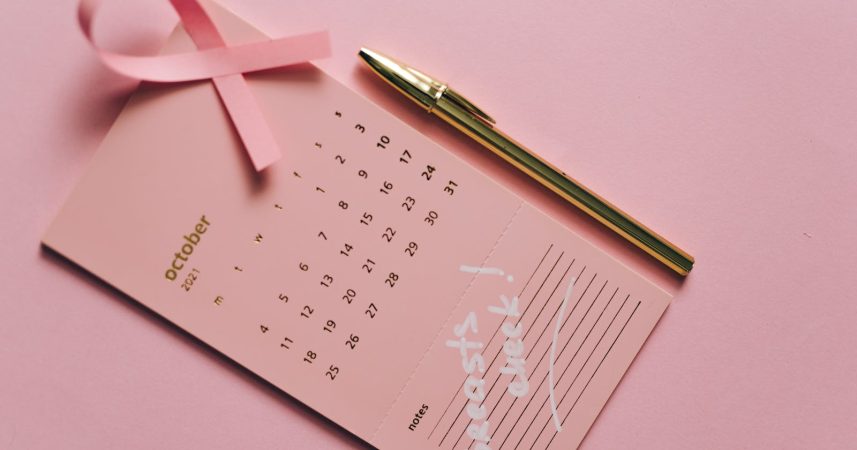
Behind me, the paper calendar on my kitchen wall rustles in the breeze from the open window. October is covered in my handwriting — dentist appointments in blue ink, book club in green, birthdays circled in red. When the phone rings (yes, an actual ring from an actual bell), I answer without checking who it is. "Hello?" I say, and in that moment, I'm practicing a kind of faith that seems almost extinct.
The world we trusted without thinking
Growing up, trust wasn't something we talked about — it was just the air we breathed. My father delivered mail for thirty-seven years in our Pennsylvania town, and he knew every family on his route. Not just names, but stories. Mrs. Henderson's arthritis flared up in the rain. The Kowalski boy was headed to college, first in his family. Trust was leaving your door unlocked during the day, buying corn from an unmanned stand with just a coffee can for payment, letting your kids roam the neighborhood until the streetlights came on.
I remember being eight years old, walking to the corner store with a note from my mother and her signature, and Mr. Delano would add the milk and bread to our family tab. No credit check, no ID required — just the understanding that we were good for it come Friday. This wasn't naivety; it was community. Everyone knew everyone, and your reputation was your credit score.
When did we stop believing the world worked this way? Was it gradual, like watching your children grow, where you don't notice the daily changes until suddenly they're taller than you? Or was there a moment when we collectively decided that trust was too risky?
Learning to trust after betrayal
I'd be lying if I said my faith in the world has never been shaken. When my first husband left — just didn't come home one day, leaving me with two toddlers and a teaching salary that barely covered rent — I learned that trust could shatter like a dropped plate. For months afterward, I checked and double-checked everything. Door locks, bank statements, promises made by anyone about anything.
Those were the food stamp years, when I swallowed my pride and accepted help from a government I wasn't sure I could trust, from a system that made me feel small. I remember standing in line at the grocery store, praying my benefits card wouldn't be declined, my son asking too loudly why we couldn't buy the cereal he wanted. Trust, I learned, is a luxury when you're just trying to survive.
But here's what surprised me: even betrayal couldn't kill my capacity for faith. When I met my second husband at a school fundraiser fifteen years later, I waited, I was careful, but eventually, I chose to believe again. Not blind trust — informed trust. The kind that comes from knowing that hearts can break and heal, that people can surprise you in good ways too.
Why I still answer without checking
My grandchildren think I'm crazy for answering unknown calls. "It could be anyone!" they warn, as if the phone might explode in my hand. But do you know what I've received from answering blind? The call telling me I'd won Teacher of the Year. My daughter's voice at 2 AM, crying with joy: "Mom, the baby's here." A student from twenty years ago calling to say my class changed his life.
Yes, I've also gotten sales calls and wrong numbers and the occasional nasty surprise. But I'd rather live in a world where I'm occasionally disappointed than one where I'm constantly suspicious. When that phone rings, I still feel a little flutter of possibility. Who needs me? What news is coming? That moment of not knowing feels like freedom.
There's something about refusing to pre-screen every interaction that keeps me connected to a deeper rhythm of life. When everything is filtered, verified, and authenticated before we allow it near us, we lose the muscle memory of discernment. We forget how to read voices, how to trust our instincts, how to be genuinely surprised.
The paper calendar as an act of faith
My kitchen calendar is more than a scheduling tool — it's a declaration of hope. Every appointment I write assumes I'll be alive to keep it, that my body will cooperate, that the world will keep spinning in its familiar way. When I write "Garden Club Meeting" three weeks from now, I'm trusting that there will still be a garden club, that I'll still be able to drive there, that spring will come again.
My daughter recently offered to transfer everything to her phone, to share a digital calendar so she could "help manage things." I know she means well, but she doesn't understand that the physical act of writing these appointments is part of how I claim my days. The resistance of pen on paper, the satisfaction of crossing off completed tasks, the visual reminder on my wall that life continues to unfold — these aren't inefficiencies to be solved.
Teaching trust in a suspicious world
At the women's shelter where I volunteer, I teach resume writing to women whose trust has been shattered in ways I can barely imagine. They flinch when someone moves too quickly, they test every kindness for hidden motives. Watching them slowly learn to accept help without suspicion reminds me that trust isn't just personal — it's revolutionary.
When I hand them a book to keep, no library card required, no deposit needed, some of them cry. One woman held a grammar workbook to her chest and whispered, "You trust me with this?" Yes, I told her. I do. Because sometimes being trusted is the first step toward becoming trustworthy again.
The world tells these women to be careful, to verify everything, to assume the worst. I don't disagree — they need those skills too. But I also teach them to recognize genuine kindness, to accept help gracefully, to believe that some people really do want nothing from them except to see them succeed.
What we lose when we stop trusting
I worry about my grandchildren growing up in a world where every interaction is mediated by technology, where you check reviews before trying a new restaurant, where you run background checks on dates, where children can't sell lemonade without permits and insurance. They're safer, perhaps, but are they happier?
When you can't leave your car unlocked while you run into the post office, when you can't let your neighbor's kid mow your lawn without liability waivers, when you can't give someone directions without wondering if you're being scammed — what kind of life is that? We've traded community for security, spontaneity for safety, trust for guarantees that don't actually guarantee anything.
Final thoughts
Tomorrow morning, I'll wake up and check my paper calendar. I'll write a check for my water bill, address the envelope by hand, and walk it to the mailbox — trusting it will arrive. When my phone rings, I'll answer with the same "Hello?" I've been saying for decades, ready for whatever voice greets me.
This isn't foolishness or stubborn resistance to change. It's a choice to preserve something precious — the belief that most people are good, that systems can work, that human connection doesn't always need to be filtered through screens and algorithms. My brand of trust was forged in a different time, yes, but it's not obsolete. It's a gift I can still give: to the stranger who needs directions, to the teenager who says the dog ate their homework, to the world that insists I should be more careful.
The check I wrote yesterday will pass through many hands before it reaches my granddaughter. Each person who touches it — the mail carrier, the sorting facility workers, her local postal worker — is part of an chain of trust that stretches back generations. We're all counting on each other to do our small part, to keep our small promises. That's not old-fashioned. That's the foundation of everything worth preserving.
What’s Your Plant-Powered Archetype?
Ever wonder what your everyday habits say about your deeper purpose—and how they ripple out to impact the planet?
This 90-second quiz reveals the plant-powered role you’re here to play, and the tiny shift that makes it even more powerful.
12 fun questions. Instant results. Surprisingly accurate.