When a veteran English teacher discovered her brightest students couldn't read an analog clock, she realized they'd lost something far more precious than a practical skill—they'd lost the ability to sit with uncertainty, to let understanding unfold slowly, to find wisdom in the waiting that our instant-everything world has made extinct.

Add VegOut to your Google News feed. 
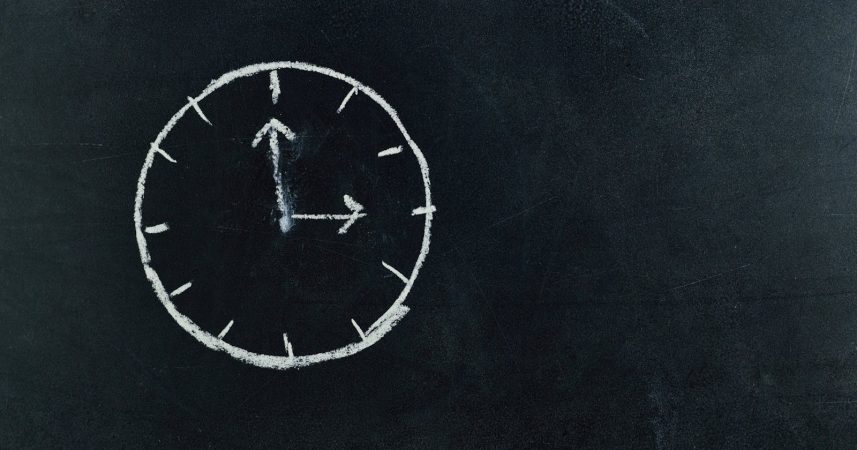
It happened on a rainy Thursday in March, three minutes before the bell. I'd just asked my sophomore English class to put away their phones for our daily writing prompt when someone asked what time it was. Simple question. I pointed to the analog clock above the whiteboard.
Silence.
Twenty-six teenagers stared at that clock like it was written in Sanskrit. Finally, a brave soul pulled out his phone. "2:47, Mrs. T."
That's when it hit me. Not one student in my advanced English class could read an analog clock. These kids who could navigate three social media platforms simultaneously, who wrote beautiful essays about Gatsby's green light, who understood metaphor and irony better than most adults—they couldn't decode two hands on a circle.
The weight of waiting
Standing there, marker still in hand, I felt something deeper than generational disconnect. This wasn't about technology replacing tradition. It was about what we lose when everything becomes instant, when waiting becomes obsolete, when patience becomes a relic as outdated as that clock on my wall.
I've thought about that moment often in the three years since I retired. Not because I mourn the loss of analog time-telling, but because it crystallized something I'd been sensing throughout my final teaching years: we've forgotten how to wait for understanding to unfold.
Think about it. When did you last sit with a question without immediately googling the answer? When did you last let uncertainty marinate, allowing understanding to develop slowly like film in a darkroom? We've gained the world at our fingertips but lost the peculiar wisdom that comes from not knowing, from waiting, from letting comprehension arrive in its own time.
Lessons from the slow lane
My mother used to make bread every Sunday. The process took all day—mixing, kneading, waiting for the rise, punching down, shaping, another rise, then finally baking. "Why not just buy it?" I'd ask, teenage impatience radiating from every pore. She'd smile and hand me warm bread with butter melting into every crevice. "Because some things are worth the wait."
I didn't understand then. I was too busy rushing toward adulthood, toward independence, toward some imaginary finish line where everything would make sense. But life, I've learned, doesn't offer many finish lines. It offers processes, journeys, slow revelations that unfold like those roses in my garden that take years to establish before they bloom with abandon.
Teaching teenagers for over three decades taught me this: real learning can't be microwaved. You can't download understanding like an app. When we read "To Kill a Mockingbird" together, my students always wanted Scout to understand racism immediately, to see through her town's prejudices from page one. They'd get frustrated with her slow awakening. "Why doesn't she get it?" they'd ask. Because wisdom takes time, I'd tell them. Because seeing clearly requires first seeing unclearly.
When patience was mandatory
Remember waiting for photographs to be developed? You'd take twenty-four pictures, maybe thirty-six if you splurged, then wait a week to see if any turned out. Half would be blurry, someone's thumb would obscure another, but the good ones—oh, the good ones were treasured because they couldn't be retaken, filtered, or instantly deleted.
My students documented everything but experienced little. They'd photograph their lunch before eating it, sunset while missing its actual beauty, concerts through screens instead of feeling the music in their bones. The immediacy of capture replaced the patience of observation.
But here's what patience taught me that instant gratification never could: my father's death wasn't sudden, though the heart attack was. It was preceded by years of small disconnections, missed dinners, postponed conversations. If I'd been paying attention—really watching instead of assuming there'd always be time—I might have seen the signs. Patience isn't just about waiting; it's about attending to the slow changes that matter.
The paradox of slow in a fast world
After my students couldn't read that clock, I instituted "slow time" in my classroom. Ten minutes of sustained silent reading. No phones, no laptops, just books and the rustle of turning pages. The first week was torture. They fidgeted like addicts in withdrawal. But by month's end, something shifted. They started arriving early to get extra reading time. They began requesting longer books, stories that required commitment.
One student wrote in her final reflection: "I discovered that my brain had been living in a state of constant interruption. Reading without stopping to check my phone felt like breathing deeply for the first time."
That's what we're losing—not clock-reading skills but the ability to sustain attention, to let complex ideas develop without demanding immediate resolution. We're losing the patience to be confused, to not know, to let understanding arrive like dawn: slowly, then all at once.
What grows in the waiting
My neighbor recently complained that her daughter's college application process was "torture" because some schools don't offer instant admission decisions. "The waiting is killing us," she said. But I remember waiting three months to hear from colleges, checking the actual mailbox daily, the weight of possibility in every empty delivery. That waiting taught me something about hope, about resilience, about continuing to move forward even when the outcome remains unknown.
In my garden now, I plant bulbs in October for flowers in April. There's faith in that act, a trust that time and nature will collaborate to create beauty. My grandchildren help sometimes, impatient for immediate blooms. "But why can't we see them now?" they ask. Because anticipation is half the joy, I tell them. Because the waiting makes the blooming sweeter.
Finding our way back to patience
So how do we reclaim patience in an impatient world? How do we teach ourselves to wait when everything conspires against waiting?
Start small. Make tea and wait for it to steep properly instead of rushing the bag. Write a letter by hand and mail it, accepting that the response won't come for days or weeks. Plant something—anything—and tend it without expecting immediate growth. Read a book without checking how many pages remain.
Learn to be comfortable with not knowing. When someone asks a question at dinner, resist the urge to immediately Google the answer. Let the wondering exist. Debate possibilities. The answer matters less than the conversation that flows from uncertainty.
Most importantly, recognize that the best parts of life still move at analog speed. Love deepens slowly. Trust builds gradually. Children grow imperceptibly until suddenly they don't. Grief fades not in a rush but in barely noticeable increments. These things cannot be rushed, cannot be hacked, cannot be optimized. They move at the speed of clock hands, and that's exactly right.
Final thoughts
Last week, I taught my granddaughter to read my grandmother's analog watch. She struggled at first, frustrated by the effort required for something her phone does instantly. But when she finally got it—when understanding clicked—her face lit up with the particular joy that comes from working for comprehension.
"It's like a puzzle," she said, tracing the clock face with her finger.
Yes, I thought. And life is full of puzzles that reveal themselves slowly, in their own time, requiring patience we're forgetting we have. The question isn't whether we can still read analog clocks. It's whether we can still value things that don't instantly resolve, whether we can find beauty in the waiting, wisdom in the not-yet-knowing.
Time moves forward whether we're patient or not. But patience transforms waiting from emptiness into possibility, from frustration into anticipation, from mere endurance into a kind of grace. And in a world spinning ever faster, that might be the most radical act of all: choosing to move at the speed of understanding, not information. Choosing to wait. Choosing to let life unfold like those roses in my garden—slowly, beautifully, in absolutely perfect time.
If You Were a Healing Herb, Which Would You Be?
Each herb holds a unique kind of magic — soothing, awakening, grounding, or clarifying.
This 9-question quiz reveals the healing plant that mirrors your energy right now and what it says about your natural rhythm.
✨ Instant results. Deeply insightful.
Marlene Martin
Marlene is a retired high school English teacher and longtime writer who draws on decades of lived experience to explore personal development, relationships, resilience, and finding purpose in life’s second act. When she’s not at her laptop, she’s usually in the garden at dawn, baking Sunday bread, taking watercolor classes, playing piano, or volunteering at a local women’s shelter teaching life skills.
More Articles by Marlene