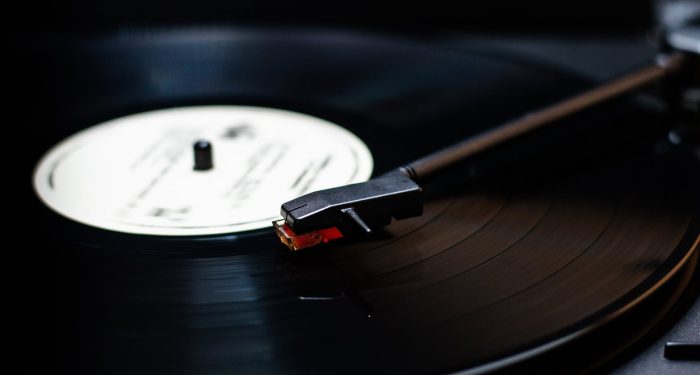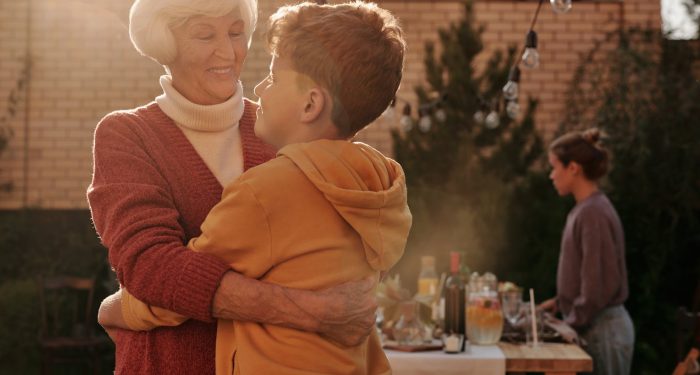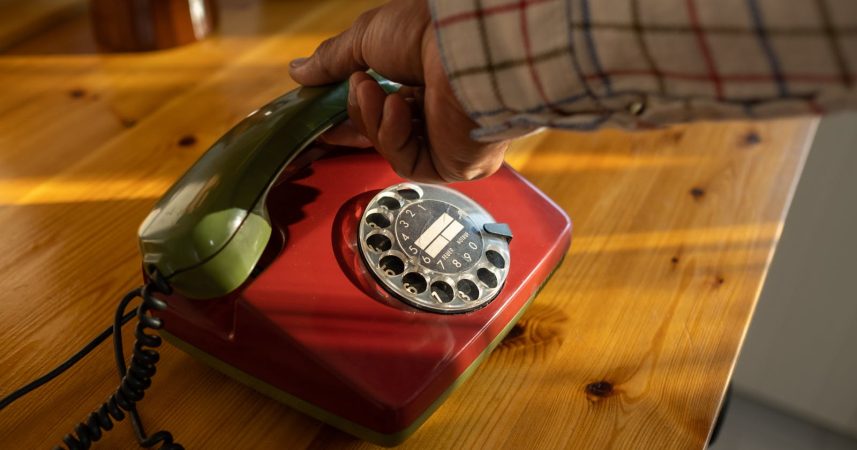
At 62, I discovered that the shocked expressions people make when they realize I'm not ashamed of my landline reveal something profound about how convenience culture has trained us to hide our preferences for anything tangible, deliberate, or beautifully inefficient.

Add VegOut to your Google News feed. 
The cable guy looked at me like I'd asked him to install a rotary phone. "You want to keep the landline?" He held his clipboard, pen hovering over a checkbox that would save me twelve dollars a month.
"Yes," I said. "I want to keep it."
"But you have a cell phone." He pointed to my iPhone sitting on the counter, as if I might have forgotten about this miracle device that lives in my pocket.
"I do. Still want the landline."
He shrugged, checked the box, and moved on. But I caught him glancing back at the phone on the wall, the one with actual buttons and a cord, like it was some artifact he'd only seen in museums.
That was two years ago. Since then, I've had this conversation approximately fifty times. With friends, family, the twentysomething who delivered my new refrigerator and couldn't understand why I had "two phones for the same house." Each time, I used to launch into explanations. The reception is better. It works during power outages. It came with the internet bundle anyway.
Then I stopped. Stopped explaining, stopped justifying, stopped acting like keeping a functioning piece of technology was some quirky personality defect that needed defending.
The moment everything shifted
Last month, my neighbor Sarah came over to borrow my stand mixer. While I was getting it from the garage, my landline rang. She stood there, frozen, staring at it like it might bite her.
"Should I... answer it?" she called out.
"Just let it ring," I called back. "If it's important, they'll leave a message."
When I returned with the mixer, she was still staring at the phone, now silent. "I haven't heard a real phone ring in years," she said. Then, quieter: "I kind of miss it."
That's when I realized something. Sarah's a successful software developer, owns a Tesla, has her entire house controlled by voice commands. But she missed the sound of a real phone ringing. She missed the weight of picking up a receiver. She missed the definitive click of hanging up on someone who deserved it.
We ended up talking for an hour. Not about the mixer, which sat forgotten on the counter, but about all the things we've given up without really choosing to. She told me she still buys physical books but hides them when colleagues visit, displaying her Kindle instead. She handwrites her grocery lists but transfers them to an app before shopping, worried someone will see her pulling out paper at the store.
"When did preferring the physical become embarrassing?" she asked.
I couldn't tell her exactly when, but I know it happened. Somewhere between "there's an app for that" and "smart everything," we started treating preference for tangible things as a failure to evolve.
What restaurants taught me about tools
During my years in the restaurant business, I watched countless new gadgets come through. Molecular gastronomy kits. Thousand-dollar immersion circulators. Digital everything. Some chefs jumped on every trend, convinced that newer meant better. Others stuck with their worn cutting boards and carbon steel pans that required babying but cooked like nothing else.
The best chefs I knew understood something crucial: the right tool is the one that works for you, not the one that impresses others.
I think about this when people see my landline. They assume I'm stuck in the past, resistant to change. They don't know I taught myself video editing at 58 to help my stepson with his college project. They don't know I manage three different cycling apps to track my rides. They know I have a landline, so I must be a dinosaur.
But here's what they don't see: when that phone rings during dinner, Linda and I look at each other and keep eating. When it rings while I'm kneading bread dough, my hands covered in flour, I let it ring. The landline doesn't own me. I own it.
The permission nobody asked for
After Sarah left with the mixer, she texted me. Then she called my landline.
"This feels rebellious," she laughed through the receiver. "Like I'm breaking some rule."
That's exactly what it is. We've created an unspoken rule that says embracing convenience is mandatory, that choosing the slower or older option requires justification. But rebellion doesn't always look like protest signs and raised fists. Sometimes it looks like keeping a landline. Using a paper calendar. Writing checks. Reading physical newspapers with actual ink that gets on your fingers.
A friend from my cycling group recently admitted she still develops film in her bathroom-turned-darkroom. She'd been hiding this for years, posting only digital photos online, terrified someone would judge her for choosing the slower, more expensive, messier option. When she finally told us, two other members immediately asked if she could teach them.
We're all walking around hiding our preferences for the tangible, the slow, the deliberate, because we've been told that progress means abandoning everything that came before.
What we've traded for instant
The landline has become my small act of resistance against the tyranny of instant. Instant messages, instant delivery, instant response, instant gratification. But instant doesn't mean better. It just means faster.
When my brother calls from Vancouver, we talk for an hour. Real talking, where I sit in one spot, phone cradled against my shoulder, giving him my full attention. No scrolling, no multitasking, no walking around doing seventeen other things. The weight of the handset reminds me this conversation matters enough to stop moving.
My granddaughter loves the landline. She calls it "the kitchen phone" and asks to answer it whenever she visits. Last week, she spent ten minutes just listening to the dial tone, fascinated by the steady hum. In her world of screens and swipes, a phone that stays in one place and makes actual sounds is magic.
She'll grow up in a world where convenience is king, where waiting is seen as failure, where being unreachable is almost impossible. But she'll also know that her grandfather had a phone that stayed in the kitchen, that rang loud enough to hear from the garden, that sometimes went unanswered because dinner was more important.
Final words
The landline isn't really about the phone. It's about choosing which parts of progress serve us and which parts we're just accepting because everyone else is. It's about remembering that we get to set our own pace, that efficiency isn't always effectiveness, that some inefficiencies are actually boundaries in disguise.
I'm 62. I've adapted to plenty. Learned to cook entirely plant-based in my late forties, figured out online banking, embraced GPS navigation even though I can still read a paper map. But I've also learned that not every change is an improvement, and not every convenience is worth what we trade for it.
The landline stays. Not because I'm old or stubborn or scared of change, but because it works for me. Because when it rings, I get to choose whether to answer. Because when I do answer, I'm choosing to stop everything else and have a conversation.
And if that makes me outdated, well, I've been called worse things by better people. At least when they call to tell me about it, I might not answer.
What’s Your Plant-Powered Archetype?
Ever wonder what your everyday habits say about your deeper purpose—and how they ripple out to impact the planet?
This 90-second quiz reveals the plant-powered role you’re here to play, and the tiny shift that makes it even more powerful.
12 fun questions. Instant results. Surprisingly accurate.