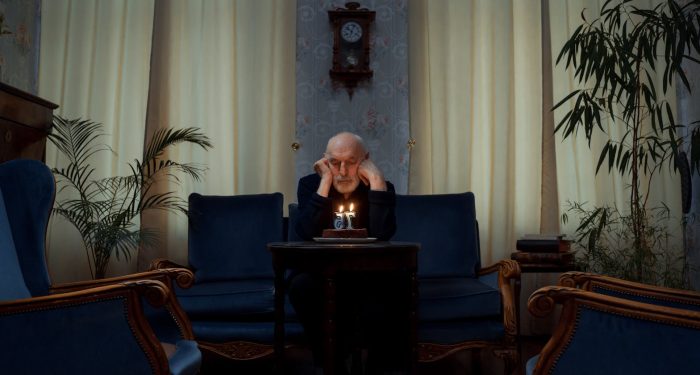
The men who built careers, raised families, and upheld decades of stoic strength revealed confessions so painfully identical that hearing them on repeat felt like watching the same heart break forty different ways.
Last month, I sat across from a retired banker who hadn't cried in front of his wife in 37 years of marriage. Not when his father died. Not when they lost their first pregnancy. Not even when the doctor said "cancer." He saved his tears for his car, parked behind a grocery store at 2 AM, where no one could see him break.
That conversation started something. Word spread through coffee shops and community centers that someone was finally asking the questions these men had been waiting decades to answer. Over the next few weeks, I met with 40 men over 60, all carrying words they'd swallowed for so long the weight had become part of them.
The rules were simple: complete anonymity, no judgment, and permission to say what they'd never been able to voice to their wives and children. What emerged wasn't unique or surprising. It was devastating in its uniformity. The same five confessions came up so often that by interview twenty-five, I'd stopped writing them down. I already knew what they were going to say.
I'm scared of being useless now that I can't provide
A former construction foreman put it bluntly: "I built shopping centers. Now I can't open a pickle jar without my grandson pretending not to notice he loosened it first."
Every single man mentioned this fear. Not death, not illness, but irrelevance. They'd spent forty years defining themselves by what they could do, fix, earn, or provide. Retirement stripped that identity away overnight, leaving them standing in their own homes feeling like tourists.
One man, a retired mechanic, confessed he still gets up at 5 AM and goes to his garage, not to fix anything, just to hold the tools. His wife thinks he's puttering. He's actually trying to remember who he was when those tools meant something.
"My kids don't need my money anymore," another said. "My wife handles our finances better than I ever did. The house is paid off. The grandkids have college funds. What am I supposed to do with this need to be needed? It didn't retire when I did."
They can't say this to their families because it sounds ungrateful. Their wives supported them through layoffs and long hours. Their children built successful lives. But these men are mourning a loss no one acknowledges: the death of their usefulness.
I don't know how to have friends and I'm too embarrassed to learn
"My wife has book club, tennis, lunch dates, wine nights," one man told me. "I have guys I used to work with who I haven't called since retirement because I don't know what we'd talk about without quarterly reports."
This came up thirty-eight times out of forty. These men had colleagues, not friends. They had golf buddies they never talked to off the course. They had neighbors they'd wave to for twenty years without knowing their last names.
A retired pharmaceutical executive admitted he once sat in a coffee shop for three hours, watching groups of retired men play cards, trying to figure out how to ask to join. He never did. He went home and told his wife he'd been at the hardware store.
"Boys stop making friends at about twelve," one explained. "After that, we just have people we do things with. But when you stop doing those things, those people disappear. And at 67, how do you tell your wife you're lonely? How do you tell your kids their father doesn't have a single real friend?"
The shame around this is crushing. Their wives often suggest activities, introduce them to other husbands, encourage them to "get out more." But these men can't articulate that they literally don't know how to make a friend without a shared project or workplace to provide the framework.
I resent how easily you moved on from needing me
This one stung to hear repeatedly. Not because it's cruel, but because it's so human.
"I missed everything for that job," a former marketing director said. "Recitals, games, anniversaries. Then I retire, ready to make up for lost time, and nobody needs me anymore. My kids have their own kids. My wife has her routine. They adjusted to my absence so well that my presence feels like an interruption."
These men watched their families build lives around their absence. Now their presence feels like a disruption to systems that work perfectly without them. Their wives have Sunday routines that don't include them. Their children call on schedules that were established when dad was always working.
One man described coming home early from retirement to surprise his wife, only to find her having wine with friends, laughing harder than he'd heard in years. "She was happy," he said. "Really happy. And I realized she'd learned to be happy without me while I was learning to be successful without her."
They can't voice this resentment because it's not fair. They chose work. They chose absence. But the consequence, that their families thrived without them, feels like a punishment for a crime they're only now understanding they committed.
I'm grieving the father and husband I could have been
"I see young fathers at the park, really playing with their kids, not checking their phones, not anxious to get back to work," one said. "And I want to grab them and say 'You're doing it right.' Because I didn't know there was a right way. I thought providing was enough."
This regret appeared in every single conversation. Not regret about career choices or financial decisions, but about presence. About the thousand small moments they traded for overtime, for promotions, for the next deal.
A retired surgeon told me he recently found a box of his daughter's school papers. Twenty years of "All About My Dad" projects where she'd written "He saves lives" under "What does your dad do?" and left "Favorite memory with dad" blank.
"She wasn't being cruel," he said. "There just weren't memories to write about. I saved strangers' lives while missing my daughter's."
These men can't share this grief with their families because it sounds like self-pity. Their children don't want apologies; they've made peace with their childhoods. Their wives don't want to relitigate decades-old wounds. But these men carry this grief daily, especially when they see their own children being the parents they never were.
I love you so much it terrifies me, and I've never learned how to say it
Every interview ended with some version of this. These men love their families with an intensity that frightens them, but they've never developed the vocabulary to express it.
"I would die for my wife," one said. "But I can't tell her she looks beautiful without it sounding like I'm reading cue cards. I've loved her for forty-three years and I still don't know how to say it right."
They were taught that love was provision, protection, problem-solving. Not words, not vulnerability, not the messy, daily expression of affection their families craved. Now, at 65, 70, 75, they're trying to learn a language they should have been speaking all along.
A retired electrician described practicing "I love you" in his bathroom mirror, trying different tones, different contexts, trying to make it sound natural. His wife says it easily, daily, casually. For him, each attempt feels like climbing a mountain.
Final words
After forty conversations, I stopped asking questions. I didn't need to. These men had been waiting their whole lives for someone to listen without judgment, to let them voice the feelings they'd been taught to bury.
What strikes me most is not their pain, but their love. These aren't bitter men. They're men who loved imperfectly, incompletely, but genuinely. They just never learned how to translate that love into a language their families could receive.
If you recognize yourself in these words, know this: it's not too late. Your family doesn't need grand gestures or perfect words. They need you, authentic and present, stumbling through the conversation you've been avoiding for decades.
The courage isn't in being strong. It's in finally admitting you never were.