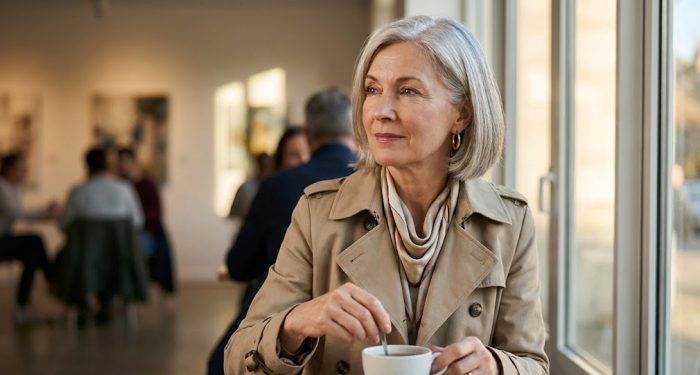
The women I interviewed broke down in tears describing the same haunting realization: their children know them only as "Mom," never meeting the passionate, complex woman who wrote poetry at 3 AM, screamed in empty parking lots, and gave up graduate school dreams — the person who chose to disappear into motherhood.

Add VegOut to your Google News feed. 
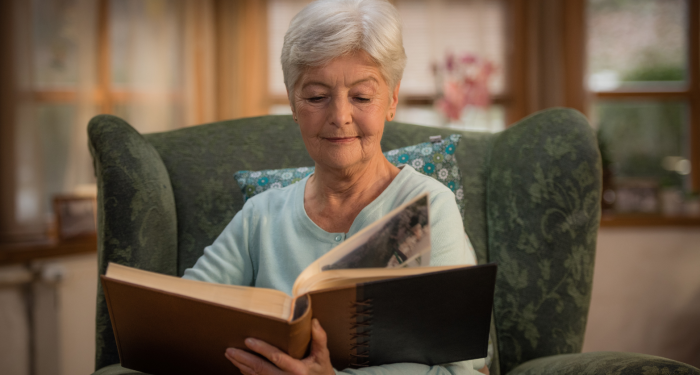
Last night, I found myself sitting on my kitchen floor at 2 AM, eating cereal straight from the box and crying over a photo album I hadn't opened in twenty years. Not because of sadness, exactly, but because of recognition — seeing a woman in those pictures I'd somehow forgotten existed. A woman my children never knew.
This revelation came after weeks of conversations that started innocently enough. At my widow's support group, someone mentioned feeling like a stranger to their own adult children. That comment lodged itself in my chest like a splinter. So I started asking around — at church, at book club, during walks with neighbors. I talked to 35 women over 60, all mothers, all carrying some version of the same weight.
"What do you wish you'd told your children before the distance set in?"
The answer that surfaced again and again still takes my breath away: "I should have let them know who I was before I became their mother."
The woman who disappeared at "Mom"
When my son Daniel was born, I was twenty-three years old. I'd been writing a novel, teaching myself guitar, planning to backpack through Europe. In one moment, I became "Mom," and everything else got filed away in a drawer marked "later" that somehow never opened again.
My children know the fortress I built around them, but they never knew the woman building it, brick by heavy brick. They don't know about the morning I sat on the bathroom floor crying because I couldn't afford both groceries and my daughter Grace's field trip fee. They don't know I once drove to the overlook at Miller's Point and screamed into the void for twenty minutes before picking them up from school.
They know Margaret the English teacher, Margaret the mother who somehow made Christmas happen every year, Margaret who never missed a parent-teacher conference despite working two jobs. But they don't know Margaret who wrote poetry at 3 AM because it was the only time the house was quiet, or Margaret who fell asleep grading papers with a glass of cheap wine that helped blur the edges of exhaustion.
Yesterday, Grace called, sounding tired in that particular way that meant she was drowning in motherhood but wouldn't ask for help. I recognized it because I'd perfected that same voice when she was small. I gave her the wisdom she expected — patience, consistency, communication with teachers. But what I wanted to tell her was this: "That novel you've been saying you'll write someday? Write it now, even if it's just fifteen minutes before bed. That person you were before motherhood? She's still in there, and she matters."
The stories we never told
Last week, my neighbor Helen and I were having our Thursday morning coffee when she mentioned something her son said about never really knowing her beyond "Mom." We sat in silence for a long moment, both of us swimming in that truth.
The other women I've talked to echo this same grief — not for lives unlived, but for stories untold. Martha, the retired banker, wishes her children knew about her first career as a jazz singer. Patricia wants her son to know she almost joined the Peace Corps. Linda needs her daughters to understand that their father wasn't her first love, or even her second, but he was the one who showed up when she needed stability more than passion.
What haunts me now isn't the choices I made but the stories I never told. My children don't know about the professor who said I could've been a serious writer if I'd focused. They don't know about the night I drove two hours to the ocean just to remember what freedom felt like, or that I applied to graduate school three different times but never went because the timing was never right. They don't know about James, who I dated before their father, who sent me postcards from Prague for years after we parted, each one a small window into the life I might have lived.
Ellen from my widow's support group said it plainest: "I wish they knew who I was before I became their mother. Not just the facts — that I was a nurse, that I loved to dance — but who I actually was. The woman with dreams bigger than our suburb. The woman who chose them over a promotion that would've meant relocating. The woman who was terrified every single day that I was ruining them."
The performance we perfected
Have you ever realized you've been playing a role so long that everyone, including you, forgot it was a performance?
Helen and I discussed this recently, how we'd perfected the act of motherhood so completely that we'd forgotten it was an act. "My kids think I'm naturally patient," she laughed, but it was hollow. "They don't know about the primal scream therapy I did in my car every Tuesday while they were at piano lessons."
We became mothers, and in becoming mothers, we became archivists of our children's lives. First words, first steps, every report card and art project. But we forgot to archive ourselves. Our children know our roles — mother, provider, protector — but not our depths. They've seen us in crisis mode but not in contemplation. They know our strength but not our struggles, our rules but not our reasons.
For our generation of women, showing ourselves fully felt like selfishness. We were taught that good mothers were selfless, that our needs came last, that talking about our struggles would burden our children. But by hiding our full selves, we taught our daughters that motherhood meant erasure. We taught our sons that women's interior lives were secondary to their roles. We modeled sacrifice but not self-possession.
The distance that grew while we weren't looking
The distance isn't geographic with my children. Daniel lives twenty minutes away, Grace just across town. But there's an emotional geography between the mother they know and the woman I am, a gap that widened so gradually I didn't notice until it became a canyon.
Yesterday, Grace mentioned finding an old photo of me from college. "You looked so different," she'd said. "So young." What I didn't tell her was that the woman in that photo had just won a state poetry competition. That she'd been accepted to study abroad in Oxford but turned it down because she'd just found out she was pregnant with Daniel. That she'd been someone who believed she could have everything until she learned that "everything" requires choices that exclude other everythings.
The irony is that my children probably think they know me completely. They know my coffee order, my favorite books, my Sunday morning routines. They know I taught English for thirty-two years, that I garden, that I make soup every Monday. They know the outline but not the shading, the facts but not the feelings, the woman who mothers them but not the woman who existed before and alongside that role.
Through my kitchen window, I can see the cardinal that visits my feeder every morning, reliable as sunrise. My children would say that's so like me, finding joy in small, routine things. They're not wrong. But they also don't know that I see my younger self in that flash of red — something wild that chose to stay close to home, beautiful and free even within chosen boundaries.
What we wish we'd said
Virginia Woolf wrote, "A woman must have money and a room of her own if she is to write fiction." But what about a woman who needs to remain herself while raising children? Where is her room?
Some days I write letters to my children that I'll never send, telling them about the woman who existed before they did and who continued existing even as she subsumed herself into motherhood. I tell them about the poetry I still write, about the way certain songs make me cry because they remind me of freedoms I traded for their security. I tell them about the dreams I had and the dreams I have still.
The women I've talked to all wish they'd let their children see more. Sandra from book club said her therapist told her, "Your children can only know what you show them." We wish we'd let them see us writing poetry at the kitchen table instead of only after they'd gone to bed. We wish we'd told them about our dreams, even the ones that didn't include them. We wish we'd admitted to our struggles instead of always projecting strength. We wish we'd shown them that mothers are complete humans with past and future tenses, not just the eternal present tense of caregiving.
I don't regret my choices. This needs to be clear. Given the option, I'd fold myself into motherhood again, would gladly trade my unwritten novels for the humans my children became. But there's a difference between regret and recognition. I can recognize the woman I set aside without wishing I'd chosen differently.
Final thoughts
Maybe it's not too late. Maybe at seventy, I can start telling them the stories that explain not just what I did but who I was, who I am still. The phone rings — it's Grace, calling back as she always does the morning after we talk. This time, instead of just being her mother, I might try being myself.
"Hi, sweetheart," I say. Then, before she can launch into whatever she called about, I add, "I want to tell you something about that photo you found."
Because that's what I wish I'd told my children before the distance set in: that I existed before them, not as prelude to their story but as the main character in my own. That becoming their mother was not my entire identity but one of many. That the woman who raised them was complete and complex, with dreams deferred and dreams achieved, with stories that started before they were born and continue still.
If You Were a Healing Herb, Which Would You Be?
Each herb holds a unique kind of magic — soothing, awakening, grounding, or clarifying.
This 9-question quiz reveals the healing plant that mirrors your energy right now and what it says about your natural rhythm.
✨ Instant results. Deeply insightful.
Marlene Martin
Marlene is a retired high school English teacher and longtime writer who draws on decades of lived experience to explore personal development, relationships, resilience, and finding purpose in life’s second act. When she’s not at her laptop, she’s usually in the garden at dawn, baking Sunday bread, taking watercolor classes, playing piano, or volunteering at a local women’s shelter teaching life skills.
More Articles by Marlene