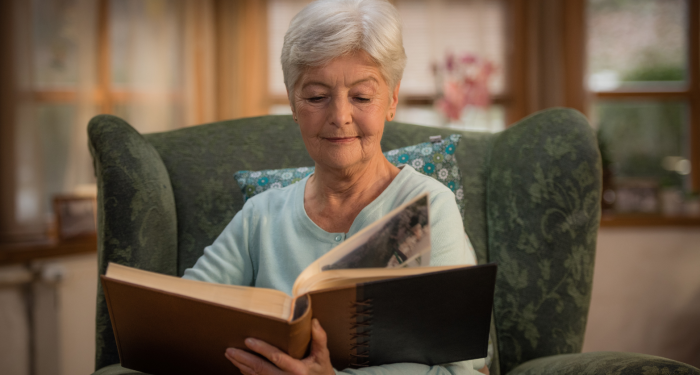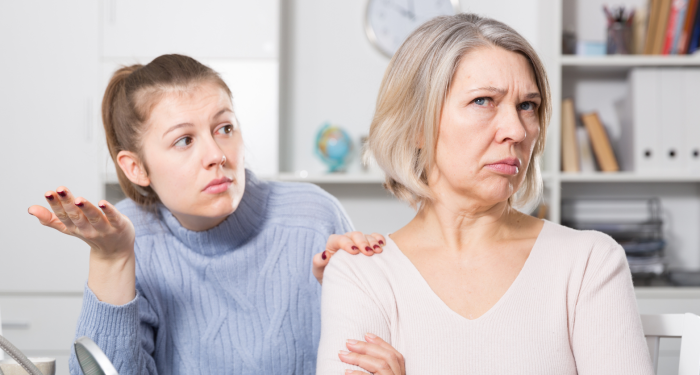
She sits in her kitchen at 71, realizing her grown children would do anything for her yet have no idea she writes poetry, once got tear-gassed at a protest, or still dreams of that solo trip to Rome.

Add VegOut to your Google News feed. 
Last week, my daughter called me three times to ask if I was okay because I didn't answer her text within an hour. When I told her I was at a poetry reading with friends, there was this long pause before she said, "You go to poetry readings?" That's when I knew. My children love me deeply, would do anything for me, but they have absolutely no idea who I am beyond the role I've played in their lives for the past four decades.
It's a strange realization to come to at 71, sitting in my kitchen with a cup of tea, understanding that the people who know me longest might actually know me least. Not because they don't care, but because children, even grown ones with children of their own, see their parents through a very specific lens. We're frozen in their minds as the person who packed their lunches, checked their homework, and worried when they stayed out too late.
The truth is, there are phrases I've started repeating more and more lately, gentle reminders that I existed before them, that I exist beyond them, and that I'll continue existing as a full person until my last breath. These aren't complaints or accusations, just small attempts to introduce them to the woman who happens to also be their mother.
I actually had a life before you were born, you know
This one usually comes out when my son acts shocked that I know who The Weeknd is, or when my daughter discovers I can recite Sylvia Plath from memory. They forget that before I was elbow-deep in diapers and permission slips, I was teaching *The Bell Jar* to teenagers, dancing at concerts until dawn, writing terrible poetry in coffee shops.
They don't know about the summer I spent waitressing at a truck stop, learning colorful language I've never used in front of them. Or the protest march in 1973 where I got tear-gassed. Or the boy named Daniel who taught me to play guitar and then broke my heart so thoroughly I didn't date for two years.
When they express amazement that I can fix a carburetor or speak conversational French, I remind them gently that my life didn't begin at their birth. It just took a different path.
Your father wasn't my first love, and he wasn't my last
Have you ever watched your adult children's faces when you mention dating? It's like watching someone bite into what they thought was chocolate only to discover it's dark baker's chocolate. They know the basic timeline of my romantic life, but they don't know the feelings that lived between those dates.
They don't know about Marcus, who wrote me love letters on graph paper because he was an engineering student. Or Tom, the fellow teacher who could make me laugh until I couldn't breathe but who belonged to someone else. They don't know that after my second husband died, I went on several dates with a man from my grief support group who collected vintage typewriters and made me feel seventeen again.
When they worry about me being alone, I want to tell them that I've been loved by good men and difficult men, that I've had my heart broken and repaired, that at my age I've learned the profound difference between being alone and being lonely.
I wasn't always this patient
My grandchildren think I have infinite patience. I let them make cookies that turn the kitchen into a disaster zone. I sit for hours helping with multiplication tables. But their parents don't remember the mother who once threw a plate of spaghetti in the sink and walked out of the house for an hour because everyone was complaining about dinner.
They choose to forget the mother who yelled, who cried behind locked bathroom doors, who made mistakes I still apologize for thirty years later. This patience they admire? I earned it through decades of failure, through teaching thousands of teenagers, through caring for my husband as Parkinson's slowly stole him from me. Patience isn't a gift you're born with. It's a skill you develop after you've lost your temper enough times to finally understand it never helps.
I've failed at more things than you know
When my children come to me for advice, they see someone who has answers. What they don't see are all the questions I got wrong first. The small business that failed and left me in debt for three years. The novel I wrote that no one wanted to publish. The marriage that crumbled despite my desperate attempts to hold it together with willpower and couples therapy.
They don't know about the two years we survived on food stamps, or the student I couldn't save from his own darkness, or the five-year silence with my sister that still makes my chest tight with regret. Every piece of wisdom I offer them was purchased with failure. That's something I wish they understood: their mother isn't wise because she always knew better, but because she's made enough mistakes to finally learn.
I have friends you've never met and stories you've never heard
"Who's Patricia?" my daughter asked recently when I mentioned canceling lunch plans. The surprise in her voice reminded me that my children think my social world revolves entirely around family. They don't know about the widow's support group that kept me standing after loss, or the five women I meet for supper every Thursday who know secrets I've never told my children.
There's my college roommate Sarah who still calls monthly after forty-five years, and the writing group where I share essays about my life that would probably make my children blush. They don't know about the toxic friend I had to cut off after twenty years, or the Italian class I take with a retired Navy captain who makes me laugh until my sides hurt.
I still have dreams I haven't given up on
Do your children talk about your retirement like it's a permanent vacation? Mine do. They don't understand that I'm not done becoming who I want to be. I'm learning Italian for a solo trip to Rome I'm planning. I'm writing a memoir that might never see publication but matters to me. I'm considering a small tattoo, saving to take each grandchild abroad when they graduate, and learning piano again after abandoning it at twelve.
When they talk about my life in past tense, listing what I've accomplished as if my story is complete, I remind them I'm not finished. At 71, I'm still becoming.
You know the mother I was able to be, not the woman I wanted to be
This is the hardest truth to share. My children knew the mother who worked double shifts, who was too exhausted to play, who was surviving rather than thriving. They don't know I dreamed of being the mother who baked bread daily, who never raised her voice, who could afford music lessons and family vacations to Europe.
Before practicality set in, I wanted to be a writer. Before responsibility took over, I wanted to travel the world. Before their father left and survival became everything, I imagined a different life entirely. Years of therapy taught me to forgive myself for being human instead of perfect. When my children tell me I was a good mother, I accept the compliment while knowing they can only judge the mother they knew, not the one I'd dreamed of being.
Final thoughts
If you're a mother whose children see you only as "Mom," know that this is both a blessing and a loss. It means you did your job well enough that they never had to see you struggle to be whole. But perhaps it's time to gently introduce them to the woman you've always been, the one who existed before them and alongside them, the one who continues to grow and dream and fail and succeed. You're not asking them to take care of you or worry about you. You're simply inviting them to know you. And that's a gift for both of you.
If You Were a Healing Herb, Which Would You Be?
Each herb holds a unique kind of magic — soothing, awakening, grounding, or clarifying.
This 9-question quiz reveals the healing plant that mirrors your energy right now and what it says about your natural rhythm.
✨ Instant results. Deeply insightful.

Marlene Martin
Marlene is a retired high school English teacher and longtime writer who draws on decades of lived experience to explore personal development, relationships, resilience, and finding purpose in life’s second act. When she’s not at her laptop, she’s usually in the garden at dawn, baking Sunday bread, taking watercolor classes, playing piano, or volunteering at a local women’s shelter teaching life skills.
More Articles by Marlene