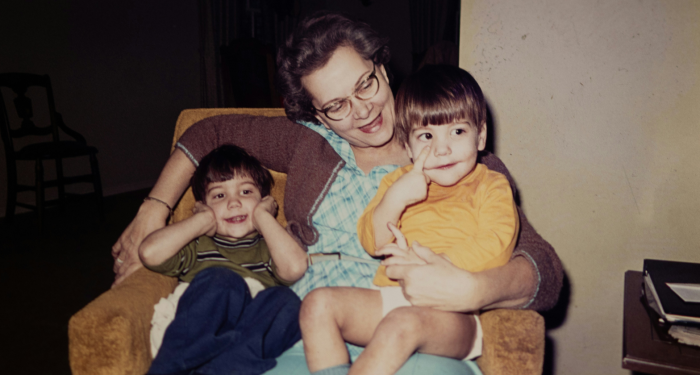
Back when "be home by dark" was the only safety rule that mattered.

Add VegOut to your Google News feed. 
My uncle still has a scar on his shin from jumping off a moving freight train in 1967. He was twelve. This wasn't considered a near-death experience—it was Tuesday afternoon entertainment in working-class Detroit. His mother's response? "Stay off the ones carrying chemicals." Different times.
The gap between 1960s childhood and today isn't just about safety standards—it's about what happens when kids have no money, no supervision, and an entire industrial landscape as their playground. These weren't neglectful parents. They were working double shifts, raising five kids on factory wages, operating on the reasonable assumption that children who survived until dinner deserved supper. The mortality data suggests this wasn't always a safe bet, but nobody had the mortality data.
1. Playing in construction sites after the workers left
Every neighborhood had at least one half-built house that became the unofficial afterschool center. Kids would spend hours climbing scaffolding, jumping between floor joists, and playing hide-and-seek in foundation pits. The lumber piles were jungle gyms, the sawdust piles were landing pads, and nobody wore helmets because helmets were for astronauts.
Parents knew where their kids were—they just didn't consider active construction sites particularly dangerous. After all, their eight-year-olds already knew how to use hammers and saws. The idea that someone could sue a construction company for kids getting hurt on their property was as foreign as seatbelts. You got tetanus? That's what the shots were for.
2. Hitchhiking to the public pool
Working-class kids in the '60s treated hitchhiking like public transit. Needed to get to the pool three towns over? Stick out your thumb. The accepted practice was so normal that kids would hitchhike in groups, and parents would give directions that included "catch a ride to the intersection."
The public pool was worth the risk—it was free entertainment if you could get there. Kids would hitchhike five miles each way for the chance to swim in chlorinated water so strong it bleached your suit. Parents' safety advice? "Don't get in vans." That was the entire stranger danger curriculum.
3. Making go-karts from stolen shopping carts and scrap wood
Every working-class neighborhood had kids racing homemade death traps down the steepest hills they could find. The engineering was simple: steal a shopping cart, rip it apart, nail the wheels to planks, add a milk crate for a seat. Brakes were your shoes, steering was theoretical, and helmets were for rich kids with bikes.
The real danger wasn't the go-karts—it was the industrial hills kids chose. Streets that ended at factory loading docks, roads with blind corners and semi-truck traffic. Parents' contribution? "Don't go down Miller Hill, that's where Tommy broke his arm." Tommy's cast was signed by everyone, making him a hero, not a cautionary tale.
4. Swimming in industrial rivers and quarries
Public pools cost money and had rules. Abandoned quarries and industrial rivers were free and had nobody watching. Kids would bike miles to swim in water that was definitely not EPA-approved (the EPA barely existed). The quarries were freezing with underwater hazards. The rivers ran past factories that turned them different colors depending on the day.
These swimming holes were legendary—passed down from older siblings with names like "Devil's Drop" or "The Pit." Kids would build rope swings over water they couldn't see the bottom of, jumping from heights that would trigger modern parents' vertigo. Everyone knew someone who'd gotten hurt, but that just added to the mystique.
5. Train hopping for transportation
Before suburban sprawl, working-class neighborhoods were veined with railroad tracks carrying freight trains that moved just slow enough to catch. Kids didn't hop trains to be rebellious—it was genuinely the fastest way to get across town. You'd jump on at the grain elevator, ride two miles, jump off at the lumber yard.
The timing was precise and everyone knew it: the 3:15 came through slow enough to catch but sped up after the bridge. The 5:30 was too fast unless it was hauling steel. Parents knew kids did this. Their safety advice was practical: "Don't try it in winter when the rails are icy." This was considered responsible parenting.
6. BB gun wars in the woods
BB guns weren't toys—they were tools that working-class kids got around age eight. By ten, groups of boys (and some girls) were having elaborate wars in whatever patches of woods existed between factories. The rules were simple: no aiming for faces, heavy clothes required, and if you got hit, you were out.
These weren't supervised activities. Kids would disappear for entire Saturdays with their BB guns, coming home with welts they'd hide under shirts. Parents' main concern wasn't the guns—it was making sure kids didn't shoot out windows or kill birds that weren't pests. The idea that children shouldn't have projectile weapons simply didn't exist in neighborhoods where everyone hunted.
7. Exploring abandoned buildings
Every industrial town had them—abandoned factories, closed schools, empty warehouses. These became elaborate playgrounds where kids played everything from hide-and-seek to full-contact "war." The buildings were definitely structurally unsound, definitely full of asbestos, and definitely tetanus factories, but they were also the most interesting places available.
Kids knew which buildings had weak floors, which had cool machinery left behind, which had resident homeless people who were either friendly or to be avoided. They'd spend entire summers mapping these places, creating elaborate games in spaces that would now be surrounded by federal safety tape. Parents knew kids played there. The rule was: "Don't go alone."
8. Junkyard scavenging as treasure hunting
The local junkyard wasn't off-limits—it was a resource center. Kids would spend hours hunting for bike parts, cool pieces of metal, or anything that could be repurposed into toys. The owner usually knew all the kids by name and had an informal system: stay away from the crushing area, don't mess with cars being stripped, and you could take small stuff.
This was recycling before it had a name—kids building entire bikes from parts, creating fort materials, finding treasures in what others threw away. Cuts from rusty metal were treated with iodine and a Band-Aid. Stepping on nails was so common that tetanus shots were routine, not emergency care.
9. Chemistry sets that could actually blow things up
Working-class kids whose parents scraped together money for a chemistry set got the real deal—sets with actual chemicals that could create actual explosions. The instructions included how to make gunpowder. The warnings were suggestions. Smart kids figured out how to concentrate the good stuff.
These weren't supervised activities. Kids mixed chemicals in basements and backyards, following and not following instructions with equal enthusiasm. Small explosions were expected. Singed eyebrows were learning experiences. Parents' attitude was that kids interested in science should be encouraged, and burns would teach better safety lessons than any lecture could.
Final thoughts
Here's what's hard to convey about working-class childhood in the 1960s: it wasn't that parents didn't care if kids got hurt—they just had different calculations about acceptable risk. When you're working two jobs to keep food on the table, you can't helicopter parent. When everyone's kids are running wild, yours can too. When you survived the same childhood, it seems normal.
These kids weren't tougher—they just lived in a world where danger was background noise rather than something to be eliminated. They got hurt more often, some died from preventable accidents, and plenty have scars with good stories. Modern parents aren't overprotective for being horrified by these activities. They just have information, options, and lawsuits that didn't exist then.
The truth is both eras got something right. The '60s kids learned resilience, problem-solving, and independence through benign neglect. Today's kids are statistically safer and will probably keep all their fingers. But somewhere between jumping off trains and being driven to supervised playdates, there's probably a sweet spot.
We just haven't found it yet.