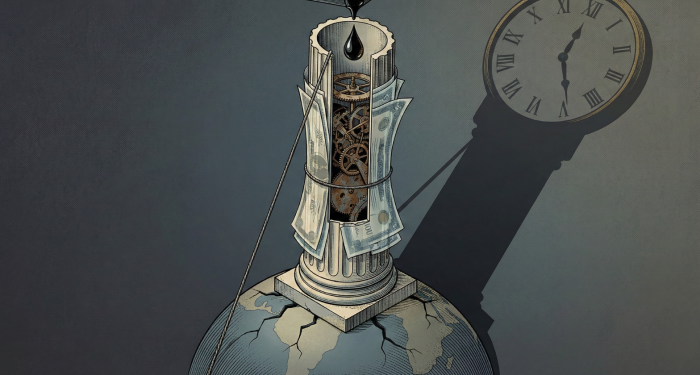
We inherit these phrases like family heirlooms, passing down comfort that cuts. But modern therapy reveals why "Everything happens for a reason" might be the cruelest kindness we offer.
My friend Sarah was sobbing in her car outside the funeral home when her aunt knocked on the window. "Everything happens for a reason, sweetheart," the older woman said, sliding into the passenger seat. "God needed another angel."
Sarah's face went blank. Later, she told me it felt like being slapped with a greeting card. Her mother had just died after a brutal fight with cancer, and here was comfort that felt more like erasure.
I've been thinking about that moment for years now—how the phrases we inherit as comfort can land like small violences. We learn them young, these verbal Band-Aids passed down through generations of people doing their best with limited emotional tools. Of course, different cultures have their own versions—some more direct, others wrapped in metaphor—but in American English, we've perfected the art of comfort that distances. Therapists are increasingly recognizing what many of us feel in our bones: these "comforting" phrases often do more harm than good.
1. "Everything happens for a reason"
This one's the heavyweight champion of well-meaning harm. We say it reflexively, almost like a prayer, when faced with someone else's inexplicable loss. But watch what happens to a person's face when they hear it. There's often a flicker—confusion, maybe anger—before they compose themselves and nod.
A therapist friend recently told me this phrase is particularly damaging because it implies the person's pain serves some cosmic purpose they're just too limited to understand. It's gaslighting wearing a spiritual costume, making people question their natural response to tragedy. As therapists point out, searching for reasons in random suffering can prevent us from actually processing our grief.
2. "Time heals all wounds"
My neighbor lost her son three years ago. Last week, someone told her she should be "moving forward by now." Time heals all wounds, they added, as if grief operates on a schedule.
Psychologists observed that the idea that time alone fixes things dismisses the actual work of grieving—the therapy, the crying, the slow reconstruction of a life around an absence. You learn to carry the weight differently. Some days it's lighter, some days it crushes you all over again.
3. "At least..."
"At least she's not suffering anymore." "At least you can have another baby." "At least you found out before you married him."
The "at least" construction is a minimizer dressed up as perspective. It's what we say when we're uncomfortable with someone else's pain and want to shrink it down to manageable size. But pain doesn't work that way. As Jeffrey Bernstein explains, dismissing someone's feelings can inflict lasting emotional harm, making them feel inadequate for having those feelings in the first place.
4. "Look on the bright side"
I once watched a woman tell her friend—who'd just been laid off—to look on the bright side. "Now you have time to pursue your passions!" she chirped. The friend's face did something complicated, a mix of rage and resignation I recognized immediately.
Toxic positivity, therapists call it. The insistence that we perform happiness even in legitimate distress. It's especially insidious because it makes the suffering person feel guilty for not being grateful enough, adding shame to their already full plate.
5. "You're so strong"
This sounds like a compliment, but I've watched it function as a cage. When we tell someone they're strong in the midst of crisis, we're often telling them to keep performing that strength for our comfort.
A single mother I know heard this constantly during her divorce. "You're so strong," everyone said, while she cried in her car between school pickups. The phrase became a wall between her and the help she needed. After all, strong people don't need support, right?
Another friend, a surgeon, told me how this phrase followed her through her father's death. Colleagues assumed her professional steadiness meant she could handle personal loss with the same clinical detachment. "You're so strong" became code for "please don't fall apart where I can see it." She ended up grieving alone, maintaining the performance of strength until she couldn't anymore.
6. "God doesn't give you more than you can handle"
My grandmother loved this one. She'd say it while making casseroles for families in crisis, meaning it as reassurance. But for the recipients, it often landed as spiritual bypassing—as if their struggles were somehow sized to their capacity, rather than random and overwhelming.
The phrase assumes a divine plan that includes deliberately inflicted suffering as some kind of spiritual fitness test. It tells people their pain is purposeful, which can prevent them from the healthy recognition that sometimes terrible things just happen.
What's particularly interesting is how these spiritual platitudes work: they center the comforter's worldview rather than the sufferer's reality. We project our need for meaning onto someone else's meaningless loss, making their tragedy about our theology.
7. "I know exactly how you feel"
No, you don't. Even if you've experienced something similar, you don't know exactly how another person feels. This phrase centers the comforter's experience rather than making space for the sufferer's unique pain.
I learned this the hard way when my miscarriage happened. Well-meaning friends who'd been through their own losses said they knew exactly how I felt. But their certainty left no room for my specific grief—the particular dreams I'd built, the specific fears I carried.
8. "You need to move on"
Grief researchers now understand what grieving people have always known: you don't move on from loss, you move forward with it. As Colin Murray Parkes wrote, "The pain of grief is just as much a part of life as the joy of love; it is, perhaps, the price we pay for love."
The pressure to "move on" suggests that holding onto grief is a failure of will rather than a natural response to loss. It implies there's a finish line for sorrow, a point at which you should have metabolized your pain into a life lesson and emerged renewed.
9. "Stay positive!"
During my mother's cancer treatment, the number of people who told her to "stay positive" was staggering. As if her attitude was the variable that would determine whether the chemotherapy worked. As if fear and sadness were betrayals of her own healing.
Studies have found that crying and expressing difficult emotions are natural, necessary responses. When we demand positivity, we're asking people to perform emotional labor on top of their existing burden.
What sits beneath the surface
These phrases share a common thread: they all attempt to shrink, solve, or spiritualize pain rather than simply acknowledge it. They're what we reach for when we feel helpless in the face of someone else's suffering.
But maybe that helplessness is the point. Maybe the discomfort we feel when confronted with raw grief or fresh trauma is appropriate. Research on emotional support shows that simply being present with someone's pain—without trying to fix or frame it—can deepen bonds and provide real comfort.
The most helpful things people said to me during difficult times were often the simplest: "This is awful." "I'm here." "Tell me what you need." They didn't try to make meaning from my pain or rush me through it. They just witnessed it.
There's a tender arrogance in thinking we can verbal-formula our way out of life's brutal realities. These phrases persist because they make the speaker feel useful, like they're helping. But real help often looks like showing up empty-handed, willing to sit in the mess without arranging it into a lesson.
I think about Sarah in that car, her aunt trying to make sense of senseless loss. What if, instead of reasons and angels, her aunt had said, "This is unbearable. I'm here." What if we trusted each other to hold pain without immediately trying to transform it?
The phrases we've inherited aren't evil. They're artifacts of generations trying to navigate grief without much emotional vocabulary. But we can do better. We can retire the platitudes that diminish and embrace the harder truth: sometimes life breaks us, and the kindest thing is to acknowledge the breakage while staying close.
What’s Your Plant-Powered Archetype?
Ever wonder what your everyday habits say about your deeper purpose—and how they ripple out to impact the planet?
This 90-second quiz reveals the plant-powered role you’re here to play, and the tiny shift that makes it even more powerful.
12 fun questions. Instant results. Surprisingly accurate.