Love doesn't always come with matching dietary preferences—here's what actually unfolds when plant-based meets paleo.
The first time I watched someone I was dating order a burger medium-rare, something shifted in my chest. Not judgment exactly, but a peculiar awareness that we inhabited fundamentally different worlds. I'd been vegan for three years, and while I knew most people ate meat, watching someone I cared about do so felt unexpectedly intimate—and complicated.
These mixed-diet relationships are everywhere now. With plant-based eating growing while omnivores remain the majority, more of us are navigating this particular minefield. What surprises me isn't the obvious stuff—the restaurant negotiations or separate cutting boards—but the subtle ways these relationships transform how both partners see food itself.
1. The omnivore suddenly becomes a meat philosopher
Before dating a vegan, most meat-eaters never explain their diet. Now they're articulating arguments about protein needs and evolutionary biology they've never voiced before. It's fascinating—they're seeing their choices through someone else's eyes for the first time.
My ex once spent an entire dinner explaining his grass-fed beef preferences, as if the cows' better life might bridge our philosophical divide. These explanations often reveal unexplored values. They'll emphasize local sourcing or humane treatment, unconsciously seeking middle ground. Sometimes this leads to real change. Sometimes it just leads to really detailed bacon sourcing stories.
2. Restaurant selection becomes an elaborate dance
Finding restaurants isn't the hard part—it's the careful choreography around who suggests where. The vegan doesn't want to seem difficult. The omnivore doesn't want to seem thoughtless. What develops is this intricate ritual of menu pre-screening and coded conversations.
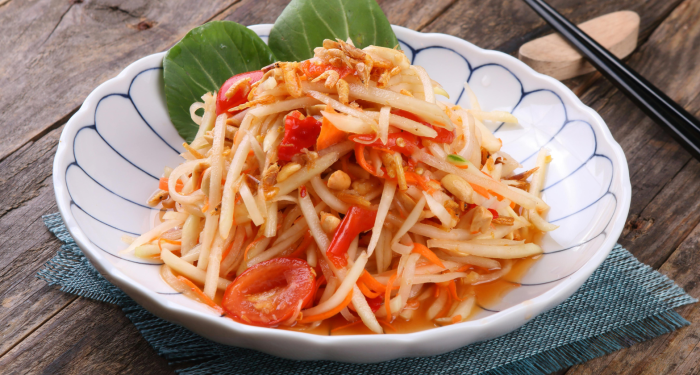
"How do you feel about Thai food?" becomes code for "I found somewhere with actual vegan options." The meat-eater develops radar for customizable bowls. The vegan masters gratitude for efforts they once considered bare minimum. Both partners cultivate a sixth sense for menus that won't leave anyone picking croutons off lettuce or drowning in meat-guilt.
3. Grocery shopping turns weirdly political
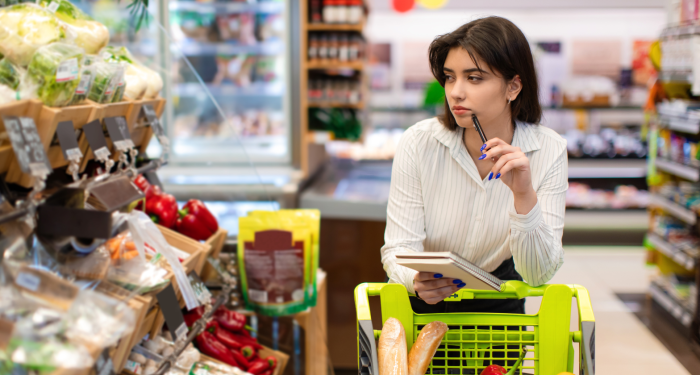
Nothing exposes relationship dynamics like navigating the meat aisle together. There's this moment—your cart contains both oat milk and ground turkey—when you realize you're literally consuming different realities.
The vegan speed-walks past the butcher counter. The omnivore lingers apologetically at the plant-based proteins, performance shopping for tempeh they'll never cook. These tiny negotiations—who holds the cart during the chicken-breast grab, whether to share cutting boards—become surprisingly loaded. You're not just buying groceries anymore; you're navigating moral territories with someone whose compass points elsewhere.
4. Both partners become reluctant diet ambassadors
Dating across dietary lines makes everyone a representative. The vegan explains, again, that yes, they get enough protein, while trying not to become the preachy stereotype. The omnivore defends veganism to their family while still eating meat themselves.
This ambassador role exhausts everyone. You're constantly translating between worlds, code-switching at every dinner party. The meat-eater develops protective instincts around their partner's dietary needs. The vegan perfects their poker face when someone mentions plants having feelings. Both become masters at deflecting food-focused tension with strategic topic pivots.
5. Cooking together becomes performance art
Some couples discover unexpected creativity, making parallel meals sharing components—pasta with two sauces, build-your-own tacos. Others stop cooking together entirely, treating the kitchen like shifts at a factory.
The successful ones develop signature dishes that naturally accommodate both. Buddha bowls become relationship glue—endlessly customizable, no cross-contamination. But there's something hollow about cooking beside someone when you can't taste what they're making, can't share that simple pleasure of "try this" without careful choreography.
6. The vegan's activism gets complicated
How do you fight for animal rights when you love someone who participates in what you're fighting? Many vegans find their activism shape-shifting when their partner orders salmon. Convictions don't change, but their expression becomes more nuanced.
You learn to hate systems while loving individuals within them. Some vegans intensify activism elsewhere, compensating for perceived home-front compromise. Others adopt harm-reduction approaches over abolition. The personal becomes political in ways single vegans never navigate.
7. Tiny gestures become declarations
When a steak lover orders the plant-based burger unprompted, it feels momentous. When the vegan stays silent about bacon, it's a gift. These micro-choices become love languages.
The omnivore stocking vegan butter, the vegan buying their partner's favorite cheese despite the smell—these accommodations mean more than their practical value. They're daily proof that love makes room for difference. Sometimes the most romantic gesture is simply not making someone feel weird about their lunch.
8. Both partners face the compatibility question
Eventually, every mixed-diet couple confronts it: Is this sustainable? Can you build a life with someone whose daily choices contradict your ethics? For some, shared values beyond diet matter more. For others, the constant negotiation becomes exhausting.
This incompatibility forces brutal clarity about what matters in partnership. Is it shared ethics or respected differences? Comfort or growth? Some couples find that navigating this divide strengthens everything else. Others discover some gaps can't be bridged. There's no universal answer, only the recognition that love and lifestyle don't always align cleanly.
Final thoughts
These relationships become laboratories for bigger questions about compromise and conviction. They test whether love requires agreement or just respect, whether partners need shared practices or just space for different ones.
Dating across the dietary divide taught me that these relationships mirror all intimate negotiations—they just make the stakes visible on every plate. Each meal becomes a small referendum on difference, every grocery trip a patience practice. Some couples thrive on this constant dialogue, finding that difference makes them more intentional. Others discover that sharing food is too fundamental to sacrifice.
There's something deeply human about loving someone whose daily practices challenge your worldview. It forces you to locate your flexibility and your firmness. These relationships don't always survive, but they always teach us about the gap between judgment and discernment, between compromise and capitulation. Sometimes they prove that love doesn't require perfect alignment—just the willingness to keep showing up to the same table, even when you're eating different meals.
Just launched: Laughing in the Face of Chaos by Rudá Iandê
Exhausted from trying to hold it all together?
You show up. You smile. You say the right things. But under the surface, something’s tightening. Maybe you don’t want to “stay positive” anymore. Maybe you’re done pretending everything’s fine.
This book is your permission slip to stop performing. To understand chaos at its root and all of your emotional layers.
In Laughing in the Face of Chaos, Brazilian shaman Rudá Iandê brings over 30 years of deep, one-on-one work helping people untangle from the roles they’ve been stuck in—so they can return to something real. He exposes the quiet pressure to be good, be successful, be spiritual—and shows how freedom often lives on the other side of that pressure.
This isn’t a book about becoming your best self. It’s about becoming your real self.