
These aren’t just “things”—they’re proof of how you survive when nothing comes easy.
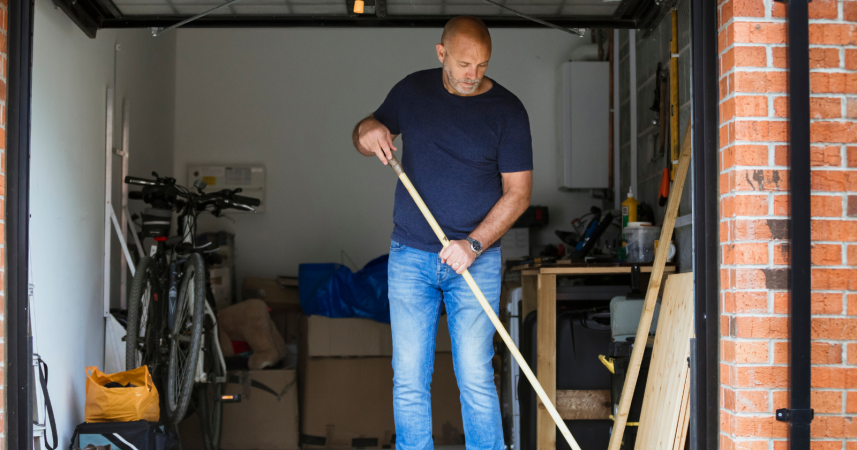
Last weekend, I helped my dad clean out his garage. We'd been threatening to tackle this project since 2009.
Between paint cans from the Clinton administration and boxes labeled "MISC," I realized we weren't just sorting junk. We were excavating layers of working-class life, each item telling its own story about resourcefulness and the work of building stability with whatever you can save.
My dad didn't hoard these things. He kept them because they represented insurance—against car trouble, against expensive repairs, against the kind of financial emergency that could derail everything. Professional organizers might call it clutter, but I finally understood it as something else entirely.
1. Coffee cans full of screws, nails, and mysterious hardware
Open any boomer garage and you'll find them lined up on a shelf. Folgers, Maxwell House, Chock full o'Nuts—each one heavy with sorted (or not-so-sorted) screws, bolts, and washers.
My dad has seven. He knows exactly which can holds the wood screws versus the machine screws versus the "might need someday" category. When I suggested consolidating them, he looked at me like I'd suggested burning money.
This habit came from a generation raised by Depression-era parents who understood that buying new screws when you already owned perfectly good ones was wasteful. But it's also practical—a two-dollar screw at the hardware store costs time and gas to acquire. The coffee can represents the ability to fix something immediately rather than waiting.
2. Spare car parts for vehicles they no longer own
An alternator for the '98 Camry. Brake pads for a truck sold in 2018. A mystery air filter that definitely fits something. These orphaned parts map the complex relationship between working families and transportation.
When your car is your lifeline to work, every spare part becomes insurance against catastrophe. My dad still has a headlight assembly for a Honda he traded in six years ago because "someone might need it." He's probably right—he's given away parts to neighbors more than once.
Good parts can't be wasted. Even after the vehicle's gone, these pieces represent money already spent, problems already solved. Throwing them out feels like throwing away value, and when you've worked for every dollar, that instinct runs deep.
3. A pegboard with tools outlined in marker
The pegboard is a boomer signature. Every tool has its place, outlined in black Sharpie so you know where the hammer goes, where the screwdriver belongs.
My dad's pegboard has been in the same spot since 1987. Some tools have been replaced, but the outlines remain. It's a system that works—you can see at a glance what's missing.
This level of organization isn't fussiness. When you're fixing your own car or doing your own repairs because you can't afford to pay someone else, efficiency matters. Time wasted looking for tools is time you could be earning money.
4. Paint cans from projects finished a decade ago
Stacked in corners or tucked under shelves, old paint cans remain in place for years. My dad has paint from every room we've lived in, labeled with the room name and date in his careful handwriting.
The logic is sound: keep paint for touch-ups. The reality is that latex paint dries out, colors get discontinued, and those touch-ups never happen. But throwing away a half-full can feels wrong when you paid thirty dollars for it.
These cans represent optimism about maintenance. They're evidence of work already done and the belief that you'll maintain it yourself. Even dried-out, they're proof that someone cared enough to do it right the first time.
5. A pile of lumber sorted by size
Every 2×4 cutoff, plywood piece bigger than a placemat, and length of old molding gets saved. My dad's wood pile has fixed wobbly tables, patched fences, and built countless science fair projects.
Call it resource management inherited from generations who knew materials cost money. Each piece holds possibility: tomorrow's shelf, next week's repair, the emergency patch you'll need at the worst possible moment.
In working-class logic, nothing becomes waste until absolutely necessary. That pile of lumber is basically a savings account denominated in avoided Home Depot runs. You can mock it until you need a random piece of trim on a Sunday night and there it is, waiting.
6. Inherited tools from fathers and grandfathers
My grandfather's hammer lives in my garage now, its handle worn smooth by decades of work. These tools carry something more than function—they're physical links to generations who understood that skill could substitute for money.
My dad has his father's socket set, his uncle's hand saw, a plane from someone he barely remembers. He doesn't use all of them regularly, but he maintains them.
Even unused, they radiate competence we hope might transfer through proximity. They're reminders that people in our family have always been able to fix things, figure things out, make do. That knowledge is worth more than the tools themselves.
7. A second refrigerator that hums inefficiently
A fridge often sits in the garage corner, usually one moved from the kitchen after an upgrade. My dad's has been out there since 2003, holding overflow groceries, party drinks, and bulk purchases from Costco.
It's not energy efficient. It probably costs more to run than the savings from buying in bulk. But having that extra capacity means being able to stock up when things go on sale, being prepared for gatherings without scrambling.
For working-class families, bulk buying is a form of investing when you have a little extra money. That garage fridge enables a strategy: spend more now to spend less over time. It's the same logic behind those spare parts and that lumber.
8. Exercise equipment gathering dust
The ab roller. Rusty dumbbells. A resistance band system ordered at 2 AM. Garages become graveyards for fitness dreams, each piece evidence of trying to achieve health without membership fees.
My dad's treadmill has been a clothes hanger for five years. But he won't get rid of it because "I might start using it again." The hope isn't delusional—it's a reminder that he tried, that health mattered enough to invest in.
These abandoned fitness attempts tell a story about working-class health. Gym memberships cost money every month. Equipment is a one-time purchase that might, someday, pay off. The fact that it didn't doesn't negate the logic behind buying it.
Final thoughts
Standing in my dad's garage last weekend, surrounded by coffee cans and mysterious boxes, I finally understood. This isn't disorganization or inability to let go.
It's evidence of the exhausting, creative work of building stability with whatever you can save, fix, or trade. That broken lawnmower represents faith in your own capabilities when professional help costs too much. The paint cans, the coolers, the inherited tools—they're testimonies to how working-class Americans survive and occasionally thrive.
These things earned their square footage through years of might-need-this and just-in-case. Next time I'm helping my dad sort through something, I won't suggest throwing everything out. He kept these things for good reasons, even if those reasons look like clutter to people who've never had to choose between fixing something themselves or not fixing it at all.












