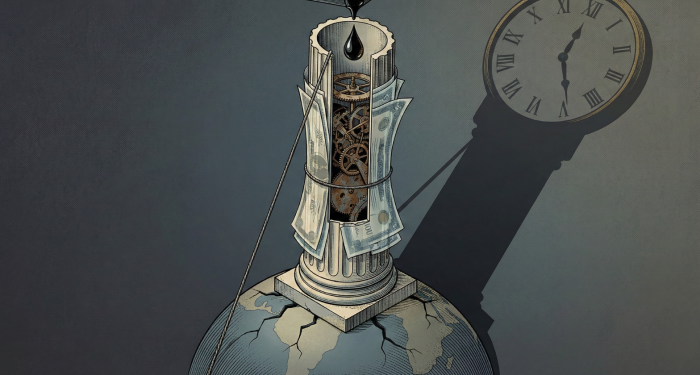
When being helpful becomes your only way of feeling valued.
There's a particular flavor of emptiness that comes from being everyone's emergency contact but no one's first choice for celebration. You're the one they call when things fall apart, never when things come together. Your phone lights up with problems, rarely with party invitations. You've built an entire identity around being useful, reliable, essential—and you've been telling yourself this is what love looks like.
The confusion runs so deep you might not even recognize it as confusion. Being needed feels like being loved because they're similar enough—both involve connection, attention, being held in someone's thoughts. But there's a crucial difference: need is about what you do, love is about who you are. And if you've spent your whole life mixing them up, you've probably never experienced the terrifying vulnerability of being loved for absolutely no reason at all.
1. Your relationships feel like unpaid internships
You're always auditioning for permanent positions that never quite materialize. Every relationship requires you to prove your worth through service—emotional support, practical help, constant availability. You're the friend who helps everyone move, the partner who handles all the emotional labor, the family member who solves every problem.
The moment you stop being useful, people drift away. Not dramatically, not cruelly, just a gradual fade that confirms your deepest fear: you were never a person to them, just a service provider. Your relationships have terms and conditions, performance metrics, unspoken quotas of helpfulness you must meet to maintain your position.
You've never experienced someone sticking around just because they enjoy your company. The idea that someone might want you without needing anything from you feels like science fiction.
2. You panic when you have nothing to offer
A friend is going through something and you can't fix it. Your partner has a problem you can't solve. Someone you care about is struggling and you're powerless to help. These situations don't just frustrate you—they terrify you. Because if you can't help, what's your purpose? If you're not useful, why would anyone keep you around?
This panic reveals the tragic equation you've internalized: your value equals your utility. You've never learned to just be with someone in their difficulty, to offer presence instead of solutions. The idea of being comforting without being helpful feels like showing up empty-handed to a potluck—surely they'll ask you to leave.
You exhaust yourself trying to fix unfixable things because sitting with someone's pain without being able to cure it makes you feel worthless.
3. Rest feels like betrayal
Taking a sick day feels selfish. Saying you're too tired to help feels like abandonment. Every moment you're not available to serve someone else's needs feels like you're failing at your core purpose. You've internalized the belief that your needs are only valid after everyone else's are met—which is never.
The peaceful Sunday afternoon, the early night, the "no" to an extra shift of emotional labor—these feel like moral failures rather than basic self-care. You've confused being needed with being worthy, so any moment you're not needed feels like a moment you don't deserve to exist.
You probably can't remember the last time you rested without guilt, because rest implies you're not being useful to someone, and not being useful means not being loved.
4. You attract people in crisis
Your dating history reads like a rehabilitation center roster. Your friendships are with people who always need something. You're surrounded by chaos and constant emergencies. This isn't bad luck—it's selection bias. You're drawn to people who need you because that's the only dynamic where you know your role.
Stable, self-sufficient people make you nervous. What do they want from you? How do you connect with someone who doesn't need fixing, supporting, or saving? You've become so fluent in crisis that calm feels like rejection. You interpret someone not needing you as them not wanting you.
The tragic irony is that you complain about always having to be the strong one while actively avoiding anyone who might share that load.
5. Your worth is always in flux
Good day: someone needed you and you delivered. Bad day: you couldn't help or no one required your services. Your self-esteem is entirely dependent on external demand for your usefulness. You're only as valuable as your last act of service.
This creates an exhausting internal stock market where your worth fluctuates based on others' needs. You can't generate self-worth internally because you've never learned that worth could be inherent rather than earned. Every day starts at zero, requiring you to prove your value through usefulness all over again.
The concept of unconditional self-worth feels like participation trophy nonsense to you. How can you have value if you're not providing value?
6. Love feels conditional and you're okay with that
"They love me because I..." is how you complete that sentence. Because you're always there. Because you never judge. Because you solve their problems. The "because" is crucial—it's the condition that makes the love make sense to you. Unconditional love feels suspicious, unearned, probably fake.
You've organized your entire life around meeting conditions, maintaining your usefulness, earning your keep in relationships. When someone claims to love you "just because," you immediately start looking for the hidden terms and conditions. There must be something they want, something you're providing without realizing it.
The saddest part is that you've become comfortable with conditional love. At least you understand the rules. At least you know how to keep earning it. Unconditional love would require you to believe you're loveable just for existing, and that's a leap you can't make.
7. Being chosen for fun things feels wrong
When someone invites you to something purely social—no problems to solve, no support needed, just hanging out—you feel like there's been a mistake. Surely they meant to invite someone else. You're the crisis friend, not the fun friend. You're the emergency contact, not the plus-one.
Being chosen for joy rather than need short-circuits your understanding of relationships. You don't know how to show up without a job to do. You might even create problems to solve at the party, taking over hosting duties or becoming the unofficial therapist, because being useful is the only way you know how to belong.
The idea that someone might want your company rather than your service feels like a clerical error in the universe.
8. You've never asked for help without offering something in return
Every request comes with an offer. "Could you help me move? I'll buy pizza and help you with your resume." "Can we talk? I'll watch your kids next weekend." You can't just need—you have to make it worth their while. The idea of asking for help without providing immediate compensation feels like theft.
This transactional approach reveals your core belief: relationships are exchanges, not connections. You can't imagine someone helping you just because they care about you. There must be a ledger, a balance, a way to even the score. You've never experienced the vulnerability of just receiving without immediately reciprocating.
The few times someone has helped you without accepting anything in return, you've felt uncomfortable, indebted, suspicious of their motives.
Final thoughts
The confusion between being needed and being loved usually starts young, in homes where love came with conditions, where attention required crisis, where being good meant being helpful. You learned that love was something you earned through service, not something you received just for being.
Breaking this pattern requires something terrifying: being useless and seeing who stays. It means showing up empty-handed, problems unsolved, solutions unoffered, and trusting that your presence alone has value. It means believing that someone might choose you not because you're useful but because you're you.
The hardest truth to accept is that being needed is actually easier than being loved. Need has clear parameters, defined expectations, measurable outcomes. Love requires you to believe you're worthy without proof, valuable without function, wanted without reason. It requires you to stop performing your worth and start accepting it.
Real love—the unconditional kind—doesn't keep score, doesn't require payment, doesn't need you to earn it. It simply exists. And if you've spent your whole life confusing being needed with being loved, that might be the most terrifying and liberating realization you'll ever have.