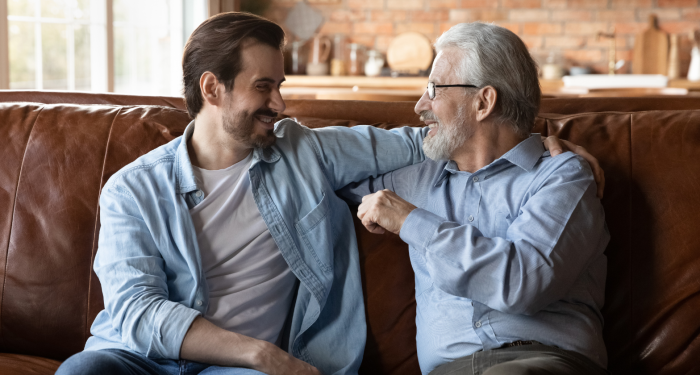
The generation gap played out in group chats and patient smiles—a field guide to intergenerational awkwardness.
The scene is familiar: your boss just spent five minutes hunting for the unmute button while everyone watched their frozen face. Or your mom posted another sunset photo with seventeen hashtags. Or your uncle explained cryptocurrency to you, incorrectly, for the third time this month. You smile, nod, maybe offer gentle help. Then immediately screenshot it for the group chat.
This isn't about cruelty—it's about survival. Millennials have perfected the art of respectful nodding while internally screaming. We're the bridge generation, fluent in both analog and digital, constantly code-switching between worlds. The generational divide isn't just about age—it's about completely different relationships with technology, social norms, and appropriate public behavior. And nowhere is this more apparent than in these daily moments of secondhand embarrassment we navigate with practiced grace.
1. The Facebook overshare chronicles
Your aunt just posted a photo of her colonoscopy results with the caption "Blessed and polyp-free! 🙏." Below that, your former boss is arguing with a bot about vaccine ingredients. Someone's mom just shared a missing person alert from 2015. The comment sections are minefields of personal medical information and political manifestos under recipe videos.
Facebook has become boomer territory, and they're treating it like their living room—if their living room had a megaphone to 500 acquaintances. The oversharing isn't just about privacy boundaries; it's the tone-deaf context collapse. Professional contacts don't need to know about your uncle's gout flare-up, yet here we are. Millennials watch this unfold while maintaining careful Instagram grids and LinkedIn personas, privately horrified by the digital chaos their parents create daily.
2. The speakerphone in public performance
Nothing announces boomer presence quite like a FaceTime call in the grocery store, phone held horizontal at arm's length, volume maxed. They navigate produce while shouting "CAN YOU HEAR ME?" at their screen, treating Whole Foods like their personal phone booth. The entire store learns about cousin Linda's divorce proceedings while they comparison shop yogurt.
The public speakerphone phenomenon represents something deeper—a complete misunderstanding of public versus private space. They're not trying to be rude; they genuinely don't recognize the intrusion. Meanwhile, millennials text full conversations in silence, embarrassed if their phone makes any sound in public. We've watched an entire generation treat shared spaces like extensions of their homes, and we're too polite to say anything beyond a gentle "Dad, everyone can hear you."
3. The reply-all disasters
The work email chain was simple: "Please confirm attendance for Friday's meeting." Then Gary from accounting hits reply-all: "Sharon, did you see what happened on Dancing with the Stars?" Twenty-three more reply-alls follow. "UNSUBSCRIBE." "Stop replying all!" "I don't know why I'm getting these emails." Each reply-all asking people to stop replying-all.
The email incompetence would be charming if it wasn't so disruptive. Boomers treat email like a conversation, not understanding the difference between reply and reply-all, or why "Thanks!" doesn't need its own message. Millennials, raised on instant messaging, watch these digital pile-ups with fascination and horror, screenshotting the worst offenses for later mockery while crafting their own emails with surgical precision.
4. The ellipsis abuse situation
"Hope you're well..." "See you at dinner..." "Okay..." Every text from boomer relatives reads like a cryptic threat or passive-aggressive masterpiece. They've somehow decided that ellipses are the punctuation equivalent of a pause in conversation, not realizing they're creating an atmosphere of perpetual doom.
What sounds like a thoughtful pause in their head reads like ominous disappointment to everyone under fifty. "Happy birthday..." feels less like celebration and more like there's terrible news coming. Millennials have learned to decode this—they don't mean anything by it—but the screenshots still fly. "Why does my mom text like she's plotting my death?" someone asks, sharing another "Love you..." message that somehow sounds menacing.
5. The phone call without warning
Your phone rings. No text warning, no "are you free?", just sudden, jarring sound. It's your dad, calling to ask something that could've been a text. "Just wanted to hear your voice," he says, while you panic-Google "is everything okay" behaviors. The call lasts forty minutes. He needed to know what kind of phone charger you have.
The unannounced phone call is peak boomer energy. They remember when phones were for talking, not pocket computers. Meanwhile, millennials treat unexpected calls like emergency signals—someone must be dead or arrested. We've established elaborate protocols for phone communication (text first, schedule calls, voice notes for urgency), while boomers just... dial. The generational trauma of answering unexpected calls has created a whole culture of letting everything go to voicemail.
6. The zoom meeting theater
"Can everyone see me? How about now? Is my camera on? I can't see anyone." Every virtual meeting starts with a five-minute technical difficulty symphony. They're too close to the camera (hello, nostril cam) or too far (are you calling from space?). The virtual backgrounds are either aggressively tropical or accidentally revealing (nobody needed to see your bedroom, Bob).
The video call struggles would be endearing if they weren't so consistent. It's been years since remote work went mainstream, yet every call feels like their first. Millennials, who adapted to video calls instantly, watch as boomers treat each Zoom like they're operating alien technology. The mute button remains humanity's greatest mystery to anyone over sixty, leading to dogs barking, toilets flushing, and entire side conversations broadcast to everyone.
7. The restaurant photography session
The food arrives. Out comes the iPad—yes, the full iPad—for photos. Flash on. Multiple angles. They're standing up now, getting an aerial shot of their pasta. The entire restaurant is watching this production. "It's for Facebook," they explain to the confused server, who didn't ask.
Restaurant photography isn't inherently boomer, but the execution absolutely is. Where millennials perfected the discreet overhead shot, boomers turn it into dinner theater. They haven't grasped that food photography has unspoken rules—be quick, be subtle, never use flash. Instead, they're directing others to lean back, adjusting table settings, taking seventeen blurry photos that will all be posted anyway with the caption "Yummy!"
8. The voice-to-text catastrophes
"SIRI SEND TEXT TO JENNIFER Hi Jennifer comma hope you are well period I wanted to reach out about NO NOT THAT SIRI DELETE START OVER." This entire stream of consciousness arrives as one message. You can hear them arguing with their phone through the text. Autocorrect disasters compound into beautiful chaos.
Voice-to-text technology has given boomers the confidence to text more while somehow communicating less clearly. They don't review before sending, treating it like leaving a voicemail. The results are inadvertently poetic—stream-of-consciousness messages punctuated by arguments with Siri, background conversations, and TV dialogue. Millennials screenshot these masterpieces, equally charmed and bewildered by this refusal to just type with their fingers like everyone else.
Final thoughts
Here's the thing about these behaviors: they're cringey precisely because they're sincere. Boomers aren't trying to be ironic or cool. They're using technology and navigating social spaces with an earnestness that feels foreign to millennials, who learned to be perpetually self-aware online. Every overshare, every reply-all, every ellipsis comes from a place of genuine attempt at connection.
The mockery that happens in private group chats isn't really mean-spirited—it's more like anthropological field notes from the generational front lines. We're documenting the collision between analog natives and digital natives, preserving these moments of beautiful awkwardness. We smile politely in person because we recognize something profound: they're trying. They're adapting to a world that changed faster than anyone expected.
Maybe the real cringe is our own inability to just let them be without the screenshot reflex. But then again, when your dad signs his texts "Love, Dad" like it's a letter, or your mom comments "ORDER CORN" on a Facebook post, you can't help but save that moment. Not from cruelty, but from affection. These behaviors we mock are also the ones we'll miss someday—the last gasps of a pre-digital innocence we'll never see again.
If You Were a Healing Herb, Which Would You Be?
Each herb holds a unique kind of magic — soothing, awakening, grounding, or clarifying.
This 9-question quiz reveals the healing plant that mirrors your energy right now and what it says about your natural rhythm.
✨ Instant results. Deeply insightful.