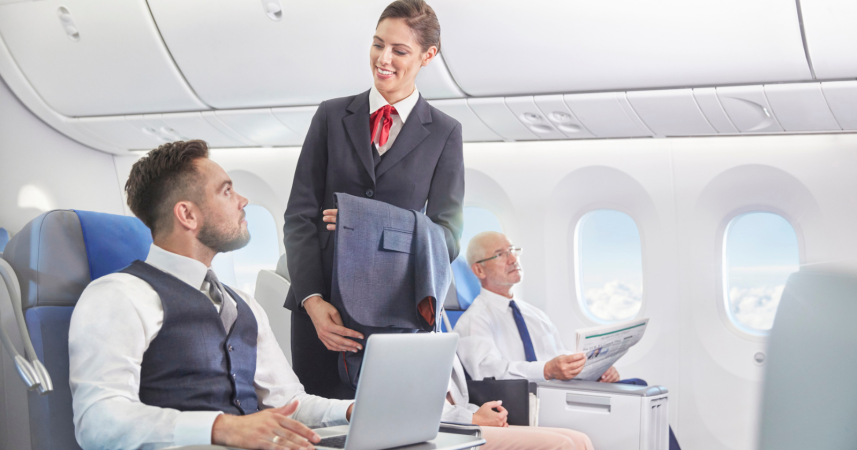
The secret assessments happening while you fumble with your boarding pass reveal more than you think.
The flight attendant's smile never wavered, but I caught the microsecond glance she exchanged with her colleague—a look that said everything while saying nothing. I'd just watched a passenger ahead of me barrel through the greeting without acknowledgment, phone pressed to his ear, gesturing wildly about some deal that couldn't wait until landing. The attendants' silent communication was so swift, so subtle, that if I hadn't been watching for it, I'd have missed it entirely. Later, during a delayed takeoff, I struck up a conversation with one of them. "You can tell everything about how a flight's going to go in the first ten seconds of boarding," she said, then caught herself, as if she'd revealed classified information.
She had, in a way. Flight attendants operate in a world of rapid assessment and coded communication, making split-second judgments that can determine everything from who gets extra attention to who might need to be watched. They're not just greeting you—they're running a complex diagnostic that would make a TSA scanner jealous. These evaluations happen so fast, you don't even know you're being read like a departure board.
The psychology of first impressions suggests we form initial judgments within milliseconds, but flight attendants have turned this into an art form born of necessity. They're assessing potential threats, identifying helpers, cataloguing special needs, and predicting problems—all while maintaining that professional smile and directing you to row 23B.
1. Your sobriety status (it's more obvious than you think)
They can spot the preflight airport bar veteran from thirty feet away. It's not just the obvious stumble or slurred "hellos"—it's the overly careful walk of someone trying to appear sober, the too-loud laugh, the slight delay in response time, the way you fumble with your boarding pass just a beat too long. One flight attendant told me they develop what she calls "drunk radar" within their first month on the job.
"We're looking at your eyes—not just if they're glassy, but how they track," a veteran attendant explained. "The way you smell, obviously, but also how you're holding your body. People who are drunk often overcompensate by standing too rigidly or moving too deliberately." They're also noting who's clutching those airport bar receipts or whose breath mints are working overtime.
This instant assessment determines whether you'll be watched, potentially cut off from bar service, or in extreme cases, removed from the flight. They share this information through subtle signals—a specific touch on the shoulder as they pass in the aisle, a particular phrase in their greeting to the next attendant. By the time the door closes, every crew member knows exactly who's had one too many.
2. Whether you're going to be "that passenger"
Within three seconds, they've categorized you: helper, neutral, or potential problem. The passenger who makes eye contact, returns the greeting, and shows basic courtesy gets mentally filed as "safe." The one who barges past without acknowledgment while barking into their phone? They've just made the watch list.
"We can tell who's going to complain about everything, who's going to hit the call button every five minutes, who's going to argue about overhead space," one attendant confided. "It's in how they interact with us in that first moment. If you can't make eye contact or say hello when you board, you're probably going to be difficult about everything else."
The tells are subtle but consistent: the passenger who sighs dramatically at the greeting, who responds to "Welcome aboard" with immediate complaints, who treats the attendant like furniture rather than a human. These passengers get discussed in the galley, their seat numbers memorized, their potential for disruption assessed and managed before takeoff.
3. Your actual anxiety level versus performed calm
Flight attendants are anxiety archaeologists, reading the layers of nervous energy you're trying to bury. They see the white knuckles despite the casual lean, the too-many questions about safety procedures, the way your eyes dart to the emergency exits, the death grip on your partner's hand while your face maintains a smile.
"Nervous flyers have a specific energy," an attendant explained. "They either overshare immediately—telling us it's their first flight or they hate flying before we even say hello—or they're unnaturally still, like they're afraid movement will make the plane crash." They notice who's already gripping the armrest during boarding, who's checking the safety card before sitting down, who's asking seemingly casual questions that reveal deep concern.
This assessment isn't judgment—it's triage. They're identifying who might need extra reassurance during turbulence, who should maybe not be seated in an exit row despite saying they're fine, who might need a discreet check-in during flight. The information gets passed along: "23B is a nervous flyer, keep an eye."
4. Who's traveling together (even when you pretend you're not)
They've become relationship detectives, able to spot connections you don't announce. The couple having a fight who board separately and avoid eye contact but keep checking where the other sits. The affair partners who are trying too hard to seem like strangers. The divorced parents doing a kid handoff who won't acknowledge each other. The work colleagues who clearly hooked up at the conference and are now maintaining theatrical distance.
"People think they're being subtle, but we see everything," one attendant laughed. "The 'strangers' who somehow have matching luggage tags. The 'solo travelers' who keep making eye contact across the aisle. The married couple pretending they don't know each other because one got upgraded and one didn't."
They also identify the positive connections—the nervous parent flying alone with kids for the first time, the elderly couple where one clearly needs help the other can't provide, the unaccompanied minor trying to act grown up. These observations determine seat adjustments, service modifications, and where attention gets focused during flight.
5. Your economic relationship with air travel
They can tell if you're a road warrior or once-a-year flyer before you've found your seat. It's in how you navigate the jet bridge, how you handle your luggage, whether you know to step aside after entering the plane, how familiar you are with the overhead bin Tetris game. Season travelers move with unconscious efficiency; infrequent flyers broadcast their uncertainty in a dozen small ways.
"Experienced travelers have a rhythm," explained one attendant. "They board without drama, they know the drill, they're already prepared for what we're going to ask." Meanwhile, the occasional flyer asks questions that reveal their status: where's their seat (when they're holding their boarding pass), can they put their jacket up top (of course), do they need to keep their phone off (no, just airplane mode).
But they're also making more subtle economic assessments. The passenger wearing designer clothes but flying basic economy. The person in the expensive suit in first class who's never flown premium before and doesn't know how to act. The quiet money that boards last, expects nothing, tips everyone. These observations inform service decisions and interaction styles throughout the flight.
6. Your potential usefulness in an emergency
This is the assessment you don't want to know they're making: who's an asset and who's a liability if things go wrong. They're noting physical capability, emotional stability, and most importantly, whether you're the type to help or panic. The registered nurse who mentioned her profession while chatting? Mentally bookmarked. The off-duty pilot who discreetly showed credentials? Noted and appreciated.
"We're looking for ABPs—Able-Bodied Passengers," one attendant told me. "But it's not just physical. It's who made eye contact, who seems alert and capable, who helped someone with their bag without being asked. We remember where these people sit." They also note the opposite: who's already intoxicated, who seems unstable, who's traveling with small children, who has mobility issues they didn't declare.
Exit row passengers get extra scrutiny. That quick question about whether you're willing and able isn't casual—they're assessing whether you actually processed the responsibility or just wanted the legroom. Your response time, enthusiasm level, and body language all factor into whether you'll keep that seat or get quietly relocated.
7. The stories you don't know you're telling
Flight attendants become inadvertent witnesses to life's transitions, and they can spot them instantly. The person flying with an urn (they always know, even when it's disguised). The college kid moving across country with their life in a backpack. The business traveler with the wedding ring tan line. The couple heading to or from a medical procedure. The family that's clearly relocating, not vacationing.
"You see the same patterns over and over," one attendant reflected. "The divorced dad with the kids for his weekend. The person visiting someone in the hospital. The student going home for a funeral—they have a specific kind of exhaustion." They notice the emotional signatures of major life events: the giddiness of honeymoon couples, the tension of job interviews, the grief that can't quite be hidden.
These observations affect how they interact with passengers. The widow flying with her husband's ashes might get a gentle upgrade if possible. The nervous job candidate receives an extra smile and encouragement. The medical patient gets checked on more frequently. All without a word being said about why.
Final thoughts
The next time you board a plane, remember: that brief greeting at the door is actually a complex scanning system that would make facial recognition software envious. Flight attendants aren't just welcoming you aboard—they're reading your story, assessing your needs, predicting your behavior, and sharing their findings in a silent language perfected over millions of miles.
This isn't voyeurism or judgment—it's professional survival. In a sealed tube at 35,000 feet, these rapid assessments can mean the difference between a smooth flight and airborne chaos. They're identifying who needs help before it's requested, who might cause problems before they materialize, who could be an ally if things go wrong.
But here's what's beautiful about this invisible system: despite cataloguing your quirks and challenges in those first three seconds, most flight attendants still manage to treat everyone with professional kindness. They've seen your type a thousand times before—the anxious flyer, the demanding executive, the overwhelmed parent—yet they still bring you that ginger ale with genuine warmth.
The secret world of flight attendant observation reminds us that we're all constantly reading and being read, assessing and being assessed. In the unique social laboratory of air travel, where strangers are compressed into intimate space, these skills aren't just helpful—they're essential. So the next time you board, take that extra second to make eye contact, return the greeting, acknowledge the human being welcoming you. You've already been noticed—might as well make it a good impression.
If You Were a Healing Herb, Which Would You Be?
Each herb holds a unique kind of magic — soothing, awakening, grounding, or clarifying.
This 9-question quiz reveals the healing plant that mirrors your energy right now and what it says about your natural rhythm.
✨ Instant results. Deeply insightful.