The pastimes that reveal more about economics than personality.

Add VegOut to your Google News feed. 
Hobbies are never just hobbies. They're declarations of identity, investments of precious free time, and—whether we admit it or not—class markers as clear as accent or address. The wealthy don't avoid certain activities because they're above them; they skip them because these hobbies solve problems money already solved. Meanwhile, the lower-middle class gravitates toward pastimes that offer maximum return on minimal investment: community, entertainment, and the particular satisfaction of accessible joy.
The divide isn't about sophistication. It's about what different bank balances make necessary or irrelevant. These aren't inferior choices—they're brilliantly efficient ones, extracting surprising value from limited resources.
1. Bowling leagues
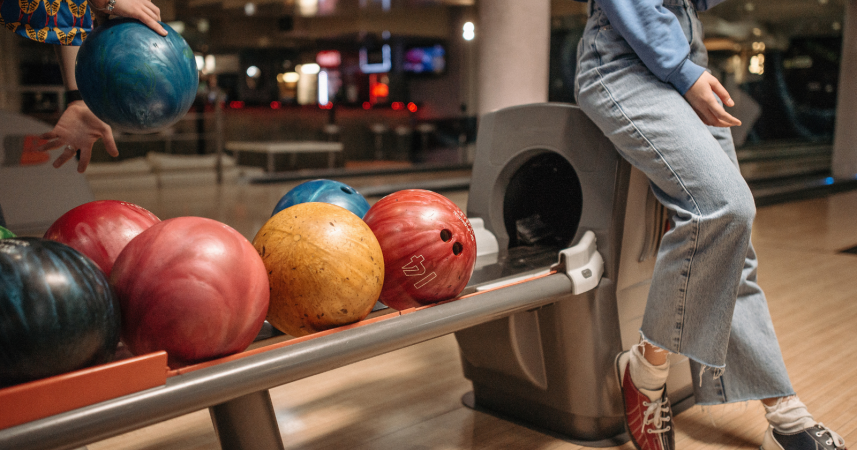
Thursday night leagues at aging alleys remain mysteriously absent from wealthy social calendars. They might bowl occasionally at boutique venues, but committing to weekly games with the same rotating cast of locals, wearing shirts with puns nobody else finds funny? That's decidedly lower-middle class territory.
The appeal isn't the bowling—most league players plateau at mediocre. It's the affordable social infrastructure: $20 weekly buys you consistency, community, and competition where a plumber can demolish an accountant and nobody blinks. Country clubs offer the same social architecture at exponentially higher prices. One builds community through exclusion, the other through the democracy of rented shoes.
2. Fantasy sports with money pools
The wealthy might own racehorses or stakes in actual teams, but they're not agonizing over waiver wire pickups at midnight or maintaining spreadsheets that track third-string running backs. They don't need to simulate ownership when they can afford the real thing.
Fantasy sports transforms passive viewing into active management for the price of a modest buy-in. It's the democratization of ownership, letting anyone experience the executive thrill of terrible personnel decisions. My brother-in-law treats his fantasy team with the seriousness of actual stock portfolios he'll never have, and honestly, his fantasy returns are probably better.
3. Local casino trips
The wealthy gamble in Monaco or private games, not at regional casinos forty minutes away where the carpet pattern hasn't changed since 1987. They don't know the particular ecosystem of $5 blackjack tables and penny slots that somehow still smell like the '90s.
These local casinos offer accessible adventure—bright lights and possibility without airfare or time off work. It's vacation compressed into four hours, transformation limited to what you can afford to lose. The rich fly to excitement; everyone else drives to its closest approximation, where $100 feels like high rolling and the buffet is genuinely good enough.
4. Adult recreational softball
Dusty public fields on Tuesday nights see demographics that never appear on private tennis courts. These leagues aren't about the sport—half the players are nursing something, whether hangovers or old injuries from attempting to relive past glory.
Softball leagues provide athletic democracy where skill matters less than showing up. It's exercise disguised as beer drinking, competition without real stakes, and proof that community forms anywhere people gather regularly enough. The wealthy get their exercise from trainers; everyone else gets theirs from activities that come with built-in social rewards.
5. Fishing (not fly-fishing)
There's fishing, and then there's fishing. The wealthy version involves guides, gear, and gorgeous locations. The lower-middle class version involves folding chairs, gas station coffee, and the same municipal reservoir every weekend.
This kind of fishing is meditation priced for the masses. It's acceptable solitude that requires no justification, therapy that happens to occasionally provide dinner. The contemplative benefits cost only patience and a basic rod. You're buying time more than hoping for fish—silence and possibility in equal measure.
6. Karaoke at dive bars
Private concerts for the wealthy, Tuesday karaoke night for everyone else. The difference isn't just scale—it's the beautiful democracy of three-minute transformations available to anyone brave enough to murder "Bohemian Rhapsody" in public.
Karaoke offers performance without consequences, fame limited to one song, and vulnerability shared among strangers who become friends through mutual embarrassment. Every small-town bar with a karaoke setup doubles as a stage where ordinary Wednesdays become memorable through terrible renditions of "Total Eclipse of the Heart."
7. Bingo halls
High-stakes poker for the wealthy, bingo at the VFW for everyone else. The stakes differ, but the appeal remains: gambling with guardrails, excitement with predetermined limits, and social interaction that doesn't require much actual interaction.
Bingo is perfectly calibrated entertainment for people who can't afford to lose much but still want to play. It requires just enough attention to feel engaged, offers just enough prize money to matter, and provides just enough community to combat isolation. The wealthy don't need games where the maximum win wouldn't cover their dinner.
Final thoughts
These hobbies reveal something profound about class and creativity. Each extracts maximum value—social, emotional, recreational—from minimum investment. They're not consolation prizes for those who can't afford better; they're innovations in affordable joy.
The wealthy purchase experiences individually and instantly. The lower-middle class builds them collectively and patiently. One group's entertainment requires only a credit card; the other's requires showing up week after week until strangers become friends and hobbies become communities.
The real distinction isn't quality but efficiency. Bowling leagues create the same bonds as country clubs. Fantasy football provides the same ownership thrill as actual investment. Local casinos offer the same escapism as Monte Carlo. These aren't lesser versions of wealthy hobbies—they're entirely different solutions to the same human needs, brilliantly adapted to different economic realities.
If You Were a Healing Herb, Which Would You Be?
Each herb holds a unique kind of magic — soothing, awakening, grounding, or clarifying.
This 9-question quiz reveals the healing plant that mirrors your energy right now and what it says about your natural rhythm.
✨ Instant results. Deeply insightful.

Jordan Cooper
Jordan Cooper is a pop-culture writer and vegan-snack reviewer with roots in music blogging. Known for approachable, insightful prose, Jordan connects modern trends—from K-pop choreography to kombucha fermentation—with thoughtful food commentary. In his downtime, he enjoys photography, experimenting with fermentation recipes, and discovering new indie music playlists.
More Articles by Jordan