When getting someone's attention required actual effort and a landline.

Add VegOut to your Google News feed. 
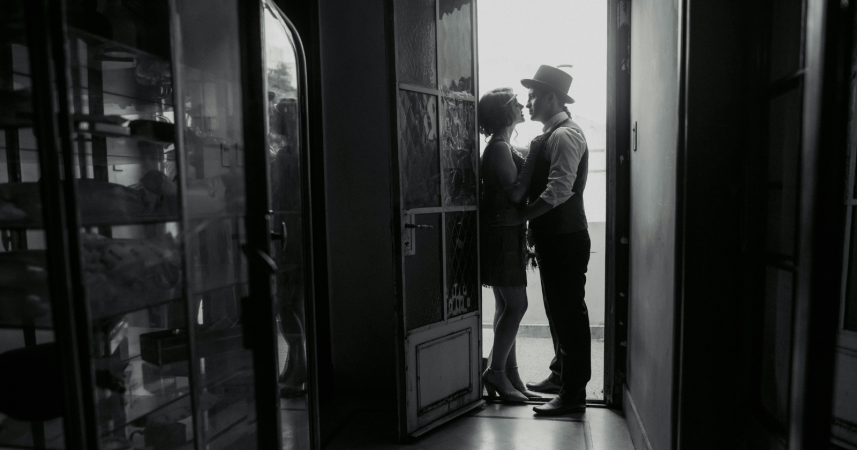
My parents have this photo from their early dating days. My dad is wearing a suit to pick up my mom for a movie. A movie. The formality seems almost comical now, but there's something in their faces that suggests they understood the weight of it.
Dating in the 60s operated under completely different rules and assumptions. The rituals weren't just quaint customs. They were the entire infrastructure of how people signaled interest, built connection, and navigated the uncertainty of attraction.
These practices didn't disappear because they were outdated. They vanished because the technology that made them necessary became obsolete.
1. Calling her father to ask permission for a date
Before you could take someone out, you had to get through their parents first. This meant a phone call to the family landline where anyone might answer.
The conversation followed a script. You introduced yourself, stated your intentions, and demonstrated respect and seriousness. Sometimes the dad asked questions. Sometimes he just grunted approval. Either way, you were being evaluated before the date started.
This parental gate-keeping served multiple functions: It slowed things down, added accountability, and forced young people to articulate intentions clearly. The friction was the entire point.
2. Going steady by giving her your class ring or letterman jacket
Physical tokens marked relationship status in visible, public ways. A guy's class ring wrapped in yarn on a girl's finger announced they were exclusive. His letterman jacket on her shoulders during football games did the same.
These weren't just accessories. They were contracts made visible to everyone. Breaking up required returning the items in a ceremony that people witnessed. The public nature made it harder to treat relationships casually.
My mom still has my dad's class ring somewhere. She said wearing it felt like carrying a piece of him around, which sounds ridiculous until you realize that was exactly the point.
3. The structured formality of asking someone to go steady
You didn't slide into exclusive territory through accumulated hangouts. There was a specific conversation where one person asked "Will you go steady with me?" and the other answered yes or no.
The clarity was brutal but useful. Everyone knew where they stood. No wondering if you were dating or just hanging out. No ambiguous situationships lasting months. You asked, they answered, and the situation had definition.
This directness required courage because rejection was explicit rather than implied. But it meant people spent less time in confusing gray areas decoding mixed signals.
4. Handwritten letters if you went to different schools
Long-distance dating in the 60s meant actual distance with no way to bridge it except pen and paper. If your girlfriend went to a different high school across town, you wrote letters.
The anticipation of waiting for mail created its own rhythm. You'd check the mailbox daily hoping to see her handwriting. When a letter arrived, you'd read it multiple times, analyzing every word for hidden meaning.
My dad kept every letter my mom sent him during their first year of dating. Not for nostalgia. Because that's all he had of her between visits. The scarcity made each communication feel precious in ways unlimited texting never replicates.
5. The expectation that guys planned and paid for everything
Dates followed clear choreography. The guy planned the activity, picked her up, opened doors, and paid the bill. This wasn't negotiable or progressive. It was simply how things worked.
Before judging it as sexist (which, fair), consider what it required. Guys had to develop planning skills, save money, and think about what the other person might enjoy. They couldn't just suggest "hanging out" and see what happened.
The rigid gender roles limited everyone in obvious ways. But the expectation of effort and intentionality created a baseline standard that modern dating often lacks. People knew they had to try.
6. The doorstep drop-off that determined everything
The end of a date happened at her front door, usually with parents potentially watching from inside. This space between public and private was where relationship progression got negotiated.
A handshake meant friendship. A kiss on the cheek meant interest but moving slowly. A real kiss meant serious romantic intention. Parents often enforced curfews and porch lights that prevented things from escalating.
Removing these physical and social boundaries often changed the pace of physical intimacy. Without the doorstep checkpoint, relationships accelerated in ways that sometimes outpaced emotional development.
7. Double dates as the primary dating format
You rarely went out alone, especially early on. Double dates provided built-in social safety and parental approval. Two couples sharing a car to the drive-in was standard procedure.
This setup created accountability and diffused some intensity of one-on-one dates. If conversation lagged, the other couple picked up slack. If someone acted inappropriately, there were witnesses. Social pressure kept behavior in check.
My parents said their first several months of dating involved almost no solo time. Everything happened in groups. That slow build created anticipation and forced them to get to know each other through conversation rather than physical chemistry.
Final thoughts
These rituals weren't better or worse than modern dating. They were just radically different in ways that shaped how relationships formed.
The structure provided clarity and forced intentionality, but it also enforced rigid gender roles and gave parents too much control. The formality slowed things down, which protected some people and frustrated others. Like most cultural changes, we gained some things and lost others.
What's interesting is how much anxiety exists in modern dating despite all our freedom and technology. The swipe-based efficiency offers unlimited options but surprisingly little clarity about what anyone wants. Sometimes I wonder if my parents had it easier simply because the rules, however limiting, at least existed.
What’s Your Plant-Powered Archetype?
Ever wonder what your everyday habits say about your deeper purpose—and how they ripple out to impact the planet?
This 90-second quiz reveals the plant-powered role you’re here to play, and the tiny shift that makes it even more powerful.
12 fun questions. Instant results. Surprisingly accurate.