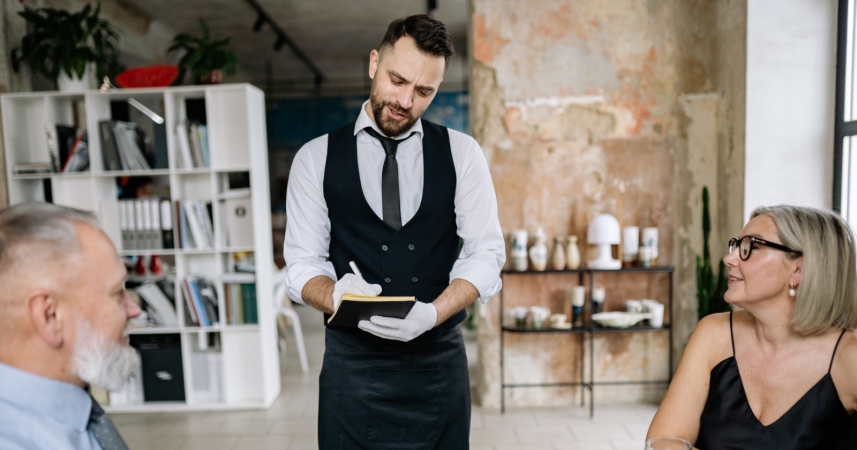
You can leave 25% and still clutch the bread basket like it’s a lifeline (guilty).
I worked in restaurants through college and noticed something curious: you could tell within five minutes who grew up dining out regularly and who didn't. It had nothing to do with how much they spent or how they treated staff. It was subtler—the way they held the menu, interacted with the space, navigated the ritual of being served.
Years later, I still catch myself doing some of these things. Not bad habits, just markers of a different relationship with restaurants—one where eating out was occasional, maybe even stressful, rather than routine.
1. Asking what things cost before ordering
Not just glancing at prices, but actually asking the server about portion sizes, whether sides are included, if the appetizer feeds two.
I did this for years without realizing how it read. When you grow up calculating every expense, that mental habit sticks. Research on economic insecurity shows scarcity mindsets persist long after circumstances change. People who grew up with financial cushions order first, ask questions later. The rest of us are still doing math at the table.
2. Treating the bread basket like a meal
Filling up on free bread before your entrée arrives. Or asking if you can take extras home.
The first time I ate at a nice restaurant as an adult, I demolished that bread basket. Where I grew up, bread was filler—you loaded up on the cheap stuff. Servers notice when you're treating complimentary bread like the main event. It signals that unlimited free food feels like an opportunity you can't waste.
3. Over-apologizing for simple requests
"I'm so sorry, but could I possibly get the dressing on the side? I don't mean to be difficult. Is that okay? I'm really sorry."
Watch someone who grew up upper middle class order modifications—they're polite but direct. No apology tour. When you grow up feeling like you don't quite belong in certain spaces, you apologize for taking up room. Studies on social class and behavior show working-class people are more concerned with not imposing. It's like we're still asking permission to have preferences.
4. Being overly impressed by standard service
Acting amazed when the server refills your water unasked. Profusely thanking them for bringing bread. Looking genuinely confused about valet parking.
These reactions come from restaurants being special occasions. When dining out is routine, these services fade into expectation. When it's rare, each element feels notable. I once thanked a server three times for water. She was kind about it, but I saw the recognition in her eyes—she'd been there too.
5. Planning for leftovers before you start eating
Not just taking food home—everyone does that. I mean actively strategizing, maybe commenting on "getting another meal out of this" before you've finished the first one.
For people who grew up with money, leftovers are a nice bonus. For the rest of us, they're part of the value equation. You're thinking about tomorrow's lunch while eating today's dinner. Nothing wrong with that, but it signals a different relationship with what you're paying for. The meal extends beyond this moment into resource management.
6. Documenting everything, including the check
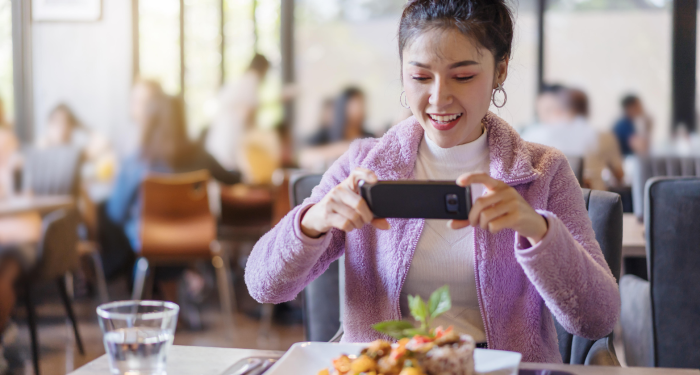
Not just food photography—everyone does that now. I mean photographing the menu, the decor, the itemized bill.
I caught myself doing this recently and realized: when restaurants are infrequent, they're worth recording. It's the same impulse that makes you photograph landmarks when traveling but not your own street. Research on memory and social class suggests working-class people are more likely to preserve experiences they perceive as exceptional. The ordinary doesn't need documentation.
7. Visible anxiety about tipping correctly
Asking the server directly whether to tip on pre-tax or post-tax. Doing obvious math. Over-explaining why you're leaving what you're leaving.
People who grew up dining out absorbed tipping norms through repetition. The rest of us are still figuring it out, worried about getting it wrong. I've watched friends from wealthier backgrounds casually calculate 20% in their heads. Meanwhile, I'm double-checking my phone calculator and second-guessing everything.
Final thoughts
None of these behaviors are wrong. They're just different—shaped by growing up where restaurants were treats rather than routine.
What interests me is how these patterns stick. You can make more money, dine out weekly, even become comfortable in fancy restaurants. But those early lessons about resources and belonging have serious staying power.
The servers who notice aren't judging. Many of them recognize themselves in these habits. We're all just navigating spaces with invisible rules we learned—or didn't learn—a long time ago.