It's not about price—it's about the confidence of never having to explain.
There's something revealing about the moment someone approaches a bar. The pause before ordering, the slight hesitation or confident delivery—these micro-moments telegraph volumes about comfort levels in different social spaces. After spending years observing bar culture from both sides of the economic divide, I've noticed that certain drink orders have become quiet markers of a particular kind of social confidence.
It's not about the price tag, though that's often assumed. A champagne cocktail can cost less than the latest craft beer creation. Instead, these choices reflect something deeper: a relationship with tradition, an understanding of cultural capital, and perhaps most importantly, the confidence to order something without explaining or defending it.
1. The Aperol Spritz at precisely the right moment
The Aperol Spritz occupies a curious position in bar culture. It's simultaneously everywhere and nowhere—ubiquitous at certain establishments, completely absent from others. But watch carefully who orders it and when, and you'll notice a pattern emerging.
The women who've grown up with European summers order these with a particular nonchalance. They don't announce it as their "summer drink" or explain that they discovered it in Italy. The drink simply appears, ordered during that golden hour between afternoon and evening, never after nine, never as a nightcap. There's an unspoken understanding of its place in the rhythm of a day.
What's telling isn't the drink itself but the absence of performance around it. No Instagram photos, no comments about how "refreshing" it is. It's ordered the way someone might order water—as if it's the most natural thing in the world at that particular moment.
2. The Kir Royale that nobody else recognizes
Most bartenders under thirty will pause when someone orders a Kir Royale. That pause—that moment of uncertainty before they either admit ignorance or scramble to remember the recipe—creates an interesting social dynamic. The women who order these drinks navigate that pause with practiced ease.
They don't explain unprompted that it's champagne with crème de cassis. They don't offer helpful suggestions or show surprise when others haven't heard of it. If asked, they might mention it casually, the way you'd mention any ordinary thing. This comfort with others' discomfort, this ability to exist in spaces where your choices aren't immediately understood, speaks to a particular kind of social conditioning.
The Kir Royale represents something larger: a whole category of French aperitifs that remain largely unknown outside certain circles. It's knowledge passed down through families rather than discovered through trending lists.
3. The Gin & Tonic with impossible specificity
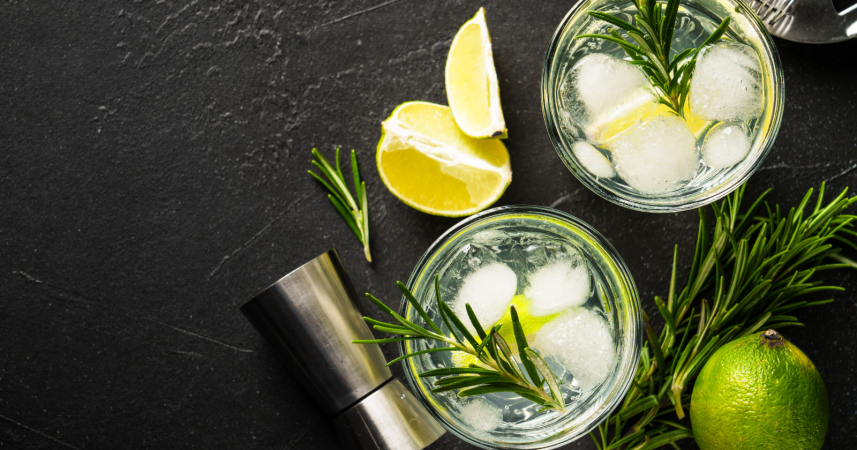
Everyone orders gin and tonics. But there's a particular way of ordering them that signals something different. It starts with the gin—not just premium, but specific. "Hendrick's and Fever-Tree, with cucumber if you have it." The specificity extends to the tonic, the garnish, even the glass preference.
This isn't snobbery, exactly. It's the product of having had enough experiences, in enough places, to know precisely what you want. These women don't apologize for their specificity or joke about being "particular." They state their preferences as facts, the way someone might specify their coffee order.
The confidence comes from decades of cultivation—knowing that Fever-Tree's quinine content matters, that botanical profiles vary wildly, that the wrong tonic can ruin good gin. It's knowledge that can't be googled in the moment or learned from a single article. It accumulates slowly, through repetition and exposure.
Final thoughts
These observations aren't prescriptive—ordering these drinks won't grant anyone entry into social circles or transform class position. That's not how cultural capital works. Instead, these patterns reveal something about how privilege manifests in small, everyday choices.
The women who order these drinks share something beyond wealth: a particular relationship with tradition and novelty. They're neither chasing trends nor explicitly rejecting them. They exist in a space where certain knowledge is inherited rather than acquired, where preferences develop over decades rather than seasons.
What's most striking isn't the drinks themselves but the ease with which they're ordered. No explanations, no apologies, no performance. Perhaps that's the real marker of class privilege—not what you order, but the assumption that your choices need no justification. In a world where we're constantly curating and explaining ourselves, that kind of unselfconscious confidence might be the ultimate luxury.
If You Were a Healing Herb, Which Would You Be?
Each herb holds a unique kind of magic — soothing, awakening, grounding, or clarifying.
This 9-question quiz reveals the healing plant that mirrors your energy right now and what it says about your natural rhythm.
✨ Instant results. Deeply insightful.