
Holding the elevator when you’re running late is a tiny decision that reveals a lot. It means you can handle stress without losing your humanity. Psychology suggests people who do this often share nine consistent qualities.
People who hold the elevator even when running late are doing something small that says a lot.
It is not dramatic. It is not life-changing. But it is one of those micro moments where your real personality leaks out. Because anyone can be patient when they have time.
The interesting part is what you do when you do not.
I spent most of my 20s in luxury hospitality, where the whole job is basically noticing what other people need before they ask. You learn fast that tiny gestures set the tone.
People remember how you made them feel, even if they forget the details. Holding the elevator door works the same way.
It is a quick decision under pressure. And psychology has a lot to say about what drives that kind of behavior.
Here are 9 qualities I usually see in the people who do it anyway.
1) Empathy
This is the most obvious one, and it is still the most important.
Empathy is the ability to imagine what someone else is experiencing, even if you have zero context.
The person running toward the elevator might be late for a meeting. Or picking up their kid. Or heading to an appointment they are nervous about.
You will never know.
Empathy says: I do not know your story, but I can imagine the stress.
A lot of research on prosocial behavior points to empathy as a common driver of small helpful acts.
And this is exactly that. A small helpful act.
The “cost” is a few seconds, but when you are running late, those seconds feel expensive.
If you want to build empathy, try this when you feel irritated: Ask yourself, “What might be going on in their day that I cannot see?”
2) A sense of social responsibility
Some people move through life like we are all sharing the same kitchen.
Do your part. Do not make a mess. Help keep things running.
Other people move like everyone else is background noise.
Holding the elevator is a shared-kitchen move.
It shows a belief that we are part of the same system, and the system works better when we cooperate.
Psychology often describes this as following social norms of helping, the unwritten rule that says if you can make life a little easier for someone without a major cost, you probably should.
In hospitality, this is everything.
You are not just serving one guest. You are helping maintain the flow of the whole room.
If you only think about yourself, service collapses.
People who hold the elevator tend to understand flow. Not in an abstract way. In a lived, everyday way.
Try practicing “room awareness” once a day. Notice where you can reduce friction.
3) Emotional self-control
When you are late, your brain can turn into a toddler.
Everything feels personal. Every delay feels like sabotage. Even the elevator feels like it is out to ruin your life.
That is stress, and stress pushes us into tunnel vision.
People who still hold the door usually have better emotional regulation.
They can tolerate a tiny inconvenience without letting it hijack their behavior.
They can pause, choose, and act. That skill shows up everywhere.
It shows up in relationships when you feel triggered. It shows up at work when you get criticism. It shows up around food when you are tired and craving anything salty and crunchy.
If you want a simple reset when you are rushed, unclench your jaw and slow your breathing for ten seconds.
Your body often calms your mind faster than your mind can calm itself.
4) A long-term mindset
Holding the elevator is a short-term loss for a long-term gain.
You give up a few seconds now, and you contribute to a better environment overall.
In psychology, this is closely related to delayed gratification and future-oriented thinking.
People who think long-term are more willing to tolerate small discomforts because they value what it leads to.
In a kitchen, this is like taking the time to sharpen your knife properly.
You lose time up front, but you gain speed, precision, and safety later.
In your life, this is like meal prepping, training consistently, or having the awkward honest conversation instead of avoiding it.
Short-term discomfort, long-term relief.
Ask yourself: “If everyone acted the way I am about to act, what would the world feel like?”
5) Humility
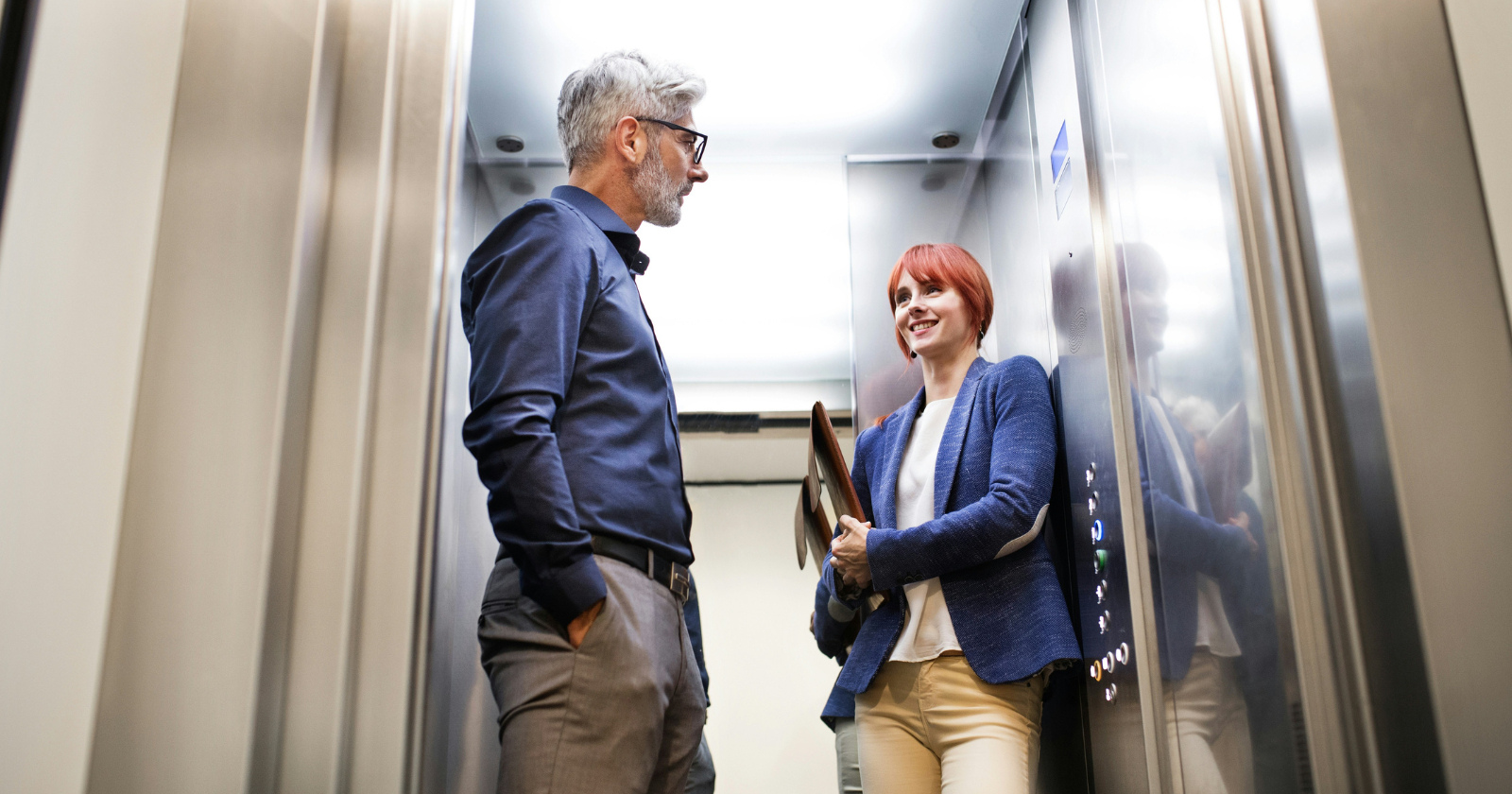
Holding the elevator is a quiet rejection of ego.
Ego says: My time is more important than your time.
Humility says: My time matters, but yours does too.
A lot of people confuse humility with low confidence. It is not that.
Humility is accurate self-importance.
You understand you are not the main character in a building full of other people trying to live their lives.
This is one reason I respect people who do small considerate things when no one is watching.
It suggests they are not performing kindness. They are practicing it.
If you feel yourself getting impatient, try remembering how many times you have been the one hoping someone would hold the door for you.
6) Quick perspective-taking
Empathy is feeling. Perspective-taking is mental simulation.
It is the ability to quickly map out what someone else is dealing with and what your actions will cause.
When you see someone running and you think, “If I let this close, they will wait for another elevator, and that could cost them several minutes,” you are doing perspective-taking.
Psychology links this ability to cooperation and better conflict resolution.
It makes sense. If you understand consequences beyond your own immediate bubble, you make better social decisions.
You do not have to become a saint. You just need to become less reactive and more aware.
A good practice is to create alternative explanations for annoying behavior.
Not to excuse it, but to keep yourself from spiraling.
Most stress is not caused by events. It is caused by the story we attach to events.
7) Pro-social confidence
Holding the elevator can take confidence, which sounds weird until you think about it. It is a social move.
People might not say thanks.
Someone inside the elevator might sigh or look annoyed.
The runner might step in like you are a doorman and they are royalty.
Some people stop being kind the moment their kindness is not rewarded.
The people who keep doing it anyway usually have a steady internal compass.
They are not overly dependent on approval. They can handle mild social awkwardness without letting it change who they are.
This connects to an internal locus of control, the belief that you choose your behavior regardless of how others respond.
In hospitality, you learn this quickly.
You can deliver perfect service and still deal with a guest who is determined to be miserable.
You do not become worse because they are worse.
A simple challenge: Do one helpful thing this week without telling anyone.
8) Respect for shared time
At first glance, holding the elevator looks like wasting time.
But people who do it often respect time in a broader way.
Not just their own time, but the shared time of everyone around them.
They understand flow.
In restaurants, flow is everything.
The best teams are not just fast. They are coordinated. They reduce bottlenecks. They communicate.
They stay aware of how their movements affect the rest of the system.
Holding the elevator is a flow decision.
It prevents someone from being delayed by minutes, which is usually a bigger hit than the few seconds you “lose.”
If you want to borrow this mindset for everyday life, aim to be smooth, not frantic.
9) Consistent values
Anyone can be considerate when it is convenient.
The real test is whether you are considerate when it costs you something.
This is why elevator moments are so revealing.
You are stressed, you are late, and you have a split second to choose between self-focus and decency.
People who hold the door anyway often have values that are not just things they agree with.
They are things they live. Their behavior stays relatively consistent even under pressure.
This is what integrity looks like in daily life.
Not big speeches. Just small repeated actions that match the person you believe you are.
If you want to build this, pick one value for the week.
Keep it simple. Be helpful. Be calm. Be respectful.
The bottom line
Holding the elevator is not going to transform your life overnight.
But it does reveal who you are when you are under pressure. And honestly, that is where most of life happens.
Not in the big dramatic moments, but in the tiny choices you repeat every day.
What you eat when you are tired. How you talk when you are stressed. Whether you treat strangers like humans when you are late.
The next time you see someone sprinting toward the elevator, consider holding the door.
Not because you are trying to be perfect.
Because you are practicing being the kind of person you actually respect.
Just launched: Laughing in the Face of Chaos by Rudá Iandê
Exhausted from trying to hold it all together?
You show up. You smile. You say the right things. But under the surface, something’s tightening. Maybe you don’t want to “stay positive” anymore. Maybe you’re done pretending everything’s fine.
This book is your permission slip to stop performing. To understand chaos at its root and all of your emotional layers.
In Laughing in the Face of Chaos, Brazilian shaman Rudá Iandê brings over 30 years of deep, one-on-one work helping people untangle from the roles they’ve been stuck in—so they can return to something real. He exposes the quiet pressure to be good, be successful, be spiritual—and shows how freedom often lives on the other side of that pressure.
This isn’t a book about becoming your best self. It’s about becoming your real self.