Before smartphones and streaming, joy was found in life’s simple routines. These eight everyday rituals capture a quieter, slower kind of happiness that younger generations rarely get to experience.
Ever notice how some of the simplest things used to bring a ton of joy?
I’m talking about the small, almost mundane moments that didn’t look like much from the outside — but somehow, they had weight.
These weren’t grand events or milestones. They were rituals — daily, habitual moments that shaped the rhythm of life.
Sure, every generation has its quirks. But the Boomers? They had something we’ve lost a little of: the ability to slow down and actually savor the ordinary.
Let’s take a little walk down memory lane (and maybe steal back a few lessons along the way).
1) Brewing a proper cup of coffee
There was a time when coffee wasn’t about Wi-Fi passwords or oat milk options.
It was a ritual.
The smell of fresh grounds filling the kitchen, the slow drip of a percolator, that first pour into a heavy ceramic mug — it wasn’t rushed or transactional. It was personal.
Today, we scroll through our phones while a machine does the work. But Boomers knew that brewing coffee wasn’t just about caffeine. It was a quiet, grounding act that marked the start of the day.
There’s something powerful about doing one thing, slowly, without multitasking. I sometimes try this myself — no phone, no distractions, just me, the grinder, and the smell of beans opening up. It’s like a mini meditation.
2) Writing by hand
Remember the feel of pen on paper? The way a letter looked different depending on your mood or the pen you used?
Boomers lived in a world where writing wasn’t a lost art — it was the main way to connect. Birthday cards, grocery lists, love letters — all written by hand.
Now, I’m not going to bash technology (I live on my laptop, too), but there’s something deeply satisfying about writing slowly.
Studies even show that handwriting improves memory retention and emotional regulation.
And when you read something in someone’s handwriting, you can feel them. It’s messy, human, imperfect — everything digital communication isn’t.
Sometimes I’ll write my goals or thoughts in a notebook just to get that tactile connection back. It’s a small thing, but it makes my ideas feel more real.
3) Sitting down for dinner
When’s the last time you ate dinner at a table without a screen nearby?
For Boomers, family dinners were non-negotiable. No phones. No TV. Just people sitting together, eating food, and — get this — actually talking.
In hospitality, I learned early that food isn’t just about taste. It’s about connection. Meals slow us down, ground us, and remind us we’re part of something bigger.
When I was younger, my parents made a point of eating together, and I didn’t appreciate it then. Now, as someone who’s often juggling work, travel, and deadlines, I get it.
That shared meal was more than a meal — it was a moment of belonging.
Even if you live alone, there’s a lesson here. Set the table. Pour a drink. Plate your food nicely. Ritualize the act of eating — it changes the way you experience it.
4) Talking on the phone for real
Not a “quick call.” Not a voice note. A real, unhurried phone conversation.
Boomers didn’t text goodnight or send memes to say “I miss you.” They picked up the phone, sat down, and talked.
There was tone, laughter, silence — all the little nuances that make connection real.
We’ve traded all that for convenience. I’m guilty too — I’ll text ten times before I make one call. But there’s a warmth in hearing someone’s voice that can’t be replicated.
There’s even research backing it up: phone calls release more oxytocin (the bonding hormone) than text-based interactions.
Yeah, maybe it’s time to call your parents. Or a friend. Or anyone who’d appreciate hearing your voice. It might just make both your days.
5) Reading the newspaper in the morning
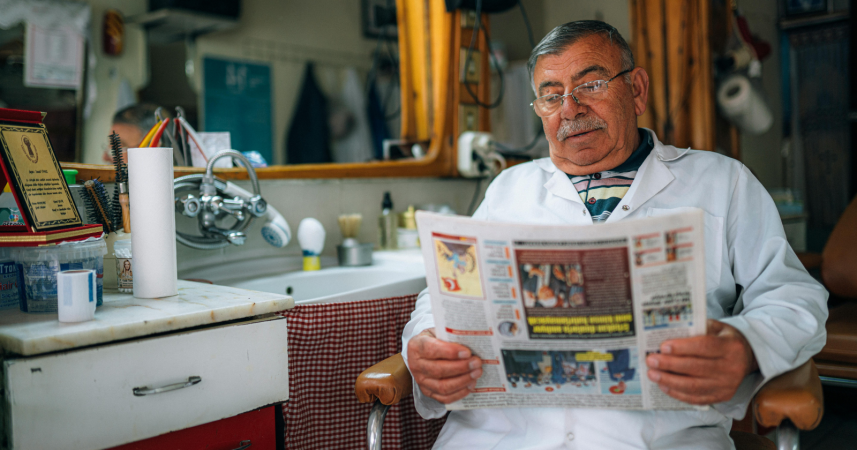
Before endless feeds and notifications, mornings started with newsprint and a cup of coffee.
Boomers didn’t “scroll.” They unfolded. They digested.
Reading the paper wasn’t just about getting the news — it was about starting the day with reflection. You could feel the paper in your hands, smell the ink, and take in information at a human pace.
Now, we get bombarded with updates before we even brush our teeth.
I tried going back to reading a physical paper once a week. The difference is insane. I actually remember what I read, and it feels less like an attack on my attention span.
If you’ve never done it, grab a Sunday paper and take it to a café. There’s a strange calm that comes with slowing down your intake of information.
6) Taking photos that actually meant something
Before selfies, filters, and cloud backups, taking a photo was an event.
Boomers didn’t snap twenty shots to find the perfect angle. They had 24 exposures in a roll, so each shot had to count.
Then came the wait — taking the film to get developed, flipping through prints days later, reliving the moment with fresh eyes. That anticipation made the memory sweeter.
Today, photos are instant — and instantly disposable. We scroll past them, never looking back.
There’s a charm in bringing intention back to photography. Try shooting with a disposable camera or Polaroid next time you travel.
It changes how you see things — you stop performing for the lens and start noticing what’s real.
7) Window shopping
Not buying. Just browsing.
Boomers made a day of it — strolling downtown, peeking into shop windows, chatting with store owners. It wasn’t about consumption; it was about curiosity.
Now, most of us “shop” from a couch. One click, one swipe, no story.
But walking through a market or boutique without the intention to buy is underrated therapy.
It reconnects you with your senses — the smell of leather, the sound of footsteps on tile, the feel of fabric under your fingers.
When I travel, I try to wander through local stores, not to purchase, but to look. It’s a reminder that not everything needs to be turned into a transaction.
8) Sending thank-you notes
This one feels almost extinct, but Boomers had it down to an art.
After a dinner, a gift, a stay — a handwritten thank-you card would show up in the mail a few days later. It was polite, yes, but also deeply personal.
We send quick texts or emojis now, but that extra effort once meant something. It showed gratitude with intention.
And gratitude, as countless studies show, isn’t just good manners — it’s good for your mental health. It reduces stress, builds connection, and even boosts happiness.
I’ve started doing this again — just short notes after meaningful interactions. The response is always the same: surprise, followed by warmth. Because people feel it.
The bottom line
Maybe it’s not that Boomers had better rituals — maybe it’s that they had fewer distractions.
They gave ordinary moments the attention they deserved. They knew how to be present, even when nothing particularly exciting was happening.
And that’s something worth bringing back.
If you slow down long enough to actually taste your coffee, write your thoughts by hand, or call instead of text — you’ll start to notice a quiet joy underneath it all.
The kind of joy that doesn’t need an algorithm’s approval or a notification to validate it.
Because some of life’s best moments aren’t meant to be optimized or shared — they’re meant to be lived.