Sometimes the most effective lessons are the ones that never needed explaining.
Every once in a while, I catch myself handling a situation in a way that feels strangely old school.
Not rigid or outdated, just steady and grounded, like I am not scrambling for the next best answer.
When I stop and think about where that instinct comes from, it rarely traces back to something I read recently. It almost always comes from watching how my parents moved through everyday life when I was growing up.
Parenting in the 70s had plenty of flaws, and I am not romanticizing all of it. But there were certain lessons baked into daily routines back then that quietly built independence, resilience, and judgment in a way many modern approaches struggle to replicate.
Here are eight of those lessons, and why they still matter.
1) Do your part without expecting praise
One of the most consistent lessons from that era was simple: you contribute because it is your responsibility, not because someone is applauding you. You did chores, helped clean up, and followed through because that was part of being in a household.
There were no reward charts or constant affirmation for basic tasks. The expectation was that you did what needed to be done, and then everyone moved on.
This approach built an internal sense of accountability rather than a dependence on external validation. You learned to associate effort with self-respect instead of attention.
As an adult, this lesson often shows up as reliability and quiet competence. People who grew up this way tend to follow through even when no one is watching, which is a rare and valuable trait.
2) Learn how to be bored
Boredom was not treated like a problem that needed immediate fixing. If there was nothing to do, you figured something out or you sat with that feeling until something emerged.
There was no endless stream of entertainment designed to keep you occupied every second. That empty space forced creativity, imagination, and self direction to develop naturally.
Psychologically, boredom tolerance builds patience and emotional regulation. It teaches you that discomfort does not automatically require escape.
Adults who learned this early are often better at deep work and long-term thinking. They are less likely to panic when stimulation drops or when progress feels slow.
3) Talk to adults like adults
Kids were expected to look people in the eye, answer questions clearly, and hold basic conversations with adults. You might not have enjoyed it, but you learned quickly how to engage respectfully.
This was not about being polished or impressive. It was about learning how to communicate across age and authority gaps without shrinking or acting out.
That early exposure often translates into stronger communication skills later in life. People who grew up this way tend to feel more comfortable in interviews, meetings, and difficult conversations.
It also builds confidence that does not rely on being the loudest voice in the room. You learn how to speak up without performing.
4) Fix it or work around it
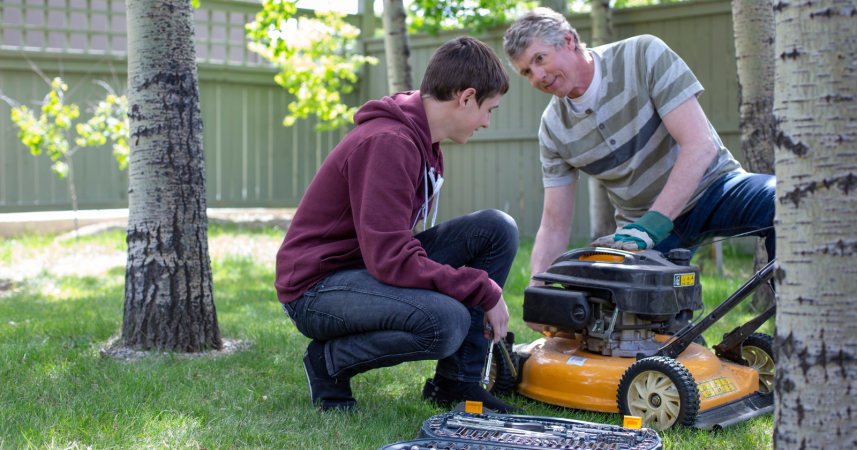
When something broke, the first instinct was rarely to replace it immediately. You tried to fix it, patch it, or at least understand why it stopped working.
This mindset encouraged problem-solving over convenience. You learned that frustration was part of the process, not a signal to quit.
I have mentioned this before, but a lot of decision-making confidence comes from knowing you can figure things out as you go. That belief is hard to teach through advice but easy to absorb through experience.
Adults who learned this lesson are often more adaptable. They are less intimidated by unfamiliar problems and more willing to experiment instead of freezing.
5) Actions matter more than intentions

Good intentions were not treated as enough on their own. If you said you were going to do something, the expectation was that you followed through.
Apologies mattered, but consistency mattered more. Trust was built through behavior over time, not through explanations or promises.
This lesson creates a strong link between identity and action. You learn that who you are is reflected in what you repeatedly do.
People raised with this mindset tend to be more dependable in relationships and work. They focus less on sounding good and more on showing up.
6) Money is a tool, not a personality
Money conversations in the 70s were often practical rather than aspirational. You learned about saving, budgeting, and limits without turning wealth into an identity.
There was less emphasis on lifestyle signaling and more emphasis on not wasting what you had. You learned that resources were finite and choices mattered.
This approach builds a healthier relationship with consumption. Money becomes something you manage rather than something you chase for validation.
Adults who grew up with this lesson often make more intentional financial decisions. They are less likely to confuse spending with success or deprivation with virtue.
7) You are responsible for your choices
Mistakes were treated as something you owned. You did not always get rescued from the consequences, even when those consequences were uncomfortable.
This taught cause and effect early. You learned to think ahead because outcomes were real and often immediate.
Psychology consistently links a sense of agency to resilience. When people believe their choices matter, they adapt faster when things go wrong.
Adults who internalize this lesson tend to avoid excessive blame shifting. They focus on what they can control rather than what feels unfair.
8) Life does not need constant optimization
There was less obsession with doing everything the best possible way. You did things because they worked well enough and fit into daily life.
Meals were simple, routines were predictable, and not every decision was up for debate. That simplicity reduced mental load in ways most people do not recognize until it is gone.
This lesson builds tolerance for imperfection and reduces decision fatigue. You learn that stability often matters more than novelty.
In a world obsessed with optimization and upgrades, this mindset can feel almost radical. But it often leads to calmer, more grounded adults.
Final thoughts
Not everything about growing up in the 70s deserves praise, and plenty of modern parenting insights are genuinely valuable. But some of the lessons embedded in everyday life back then still do a lot of heavy lifting.
If you recognize yourself in a few of these traits, it is worth appreciating where they came from. They were not taught through theories or techniques, but through repetition and example.
Sometimes the most effective lessons are the ones that never needed explaining.
What’s Your Plant-Powered Archetype?
Ever wonder what your everyday habits say about your deeper purpose—and how they ripple out to impact the planet?
This 90-second quiz reveals the plant-powered role you’re here to play, and the tiny shift that makes it even more powerful.
12 fun questions. Instant results. Surprisingly accurate.