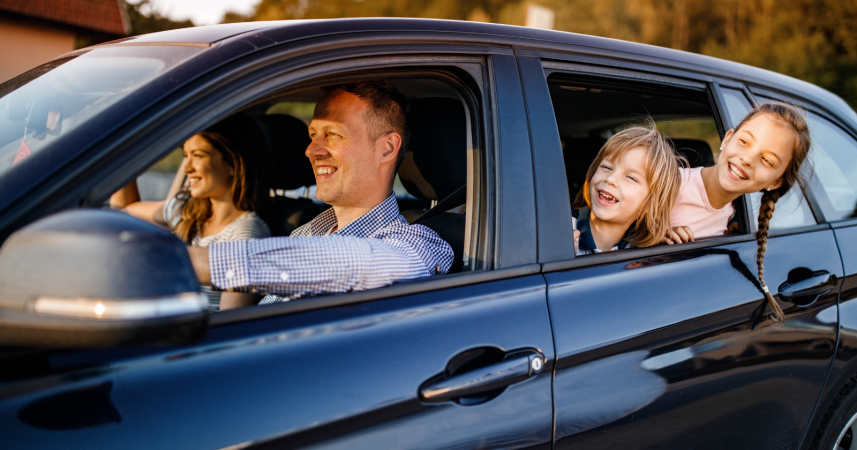
From wood-paneled station wagons with broken AC to beef jerky dinners at sketchy gas stations, those chaotic family adventures taught us more about resilience than any modern safety manual ever could.

Add VegOut to your Google News feed. 
The station wagon's vinyl seats stuck to the backs of my thighs as we piled in for another summer road trip. My three older sisters and I had already claimed our territories in the back, armed with nothing but a deck of cards and whatever snacks my mother had thrown into a paper bag that morning.
No iPads, no DVD players, not even individual seatbelts for everyone. Just four kids loose in the back of a wood-paneled wagon, heading down Interstate 80 with the windows rolled down because the AC had given out somewhere around 1973.
If this scene sounds familiar, you probably survived the glorious chaos of 70s road trips. Looking back now, I'm amazed we all made it to adulthood.
But somehow, those wild, unstructured journeys shaped us into remarkably resilient people. The complete lack of what we'd now call basic safety measures was just Tuesday back then.
1. Let you roam free in the back of the station wagon
Remember when the "way back" of the station wagon was prime real estate?
That rear-facing seat where you could make faces at the drivers behind you was the ultimate freedom. My sisters and I would take turns sprawling across the entire back area, using sleeping bags as makeshift beds during those twelve-hour drives to visit relatives.
There were no car seats past toddlerhood, no booster seats, and certainly no rule about staying buckled. We'd climb from front to back while the car was moving, playing an elaborate game of "the floor is lava" at 65 miles per hour.
My father would occasionally glance in the rearview mirror and yell "Settle down back there!" but that was the extent of the safety protocol.
The irony is that this complete physical freedom taught us to manage ourselves. We learned to negotiate space, to sense when roughhousing was getting too rough, and to create our own entertainment for hours on end. We developed an internal compass for risk that no amount of bubble-wrapping could have provided.
2. Stopped at any roadside attraction that caught their fancy
My parents had this wonderful philosophy about road trips: the journey was just as important as the destination. See a hand-painted sign for "World's Largest Ball of Twine"? We're pulling over. Some sketchy-looking reptile farm advertised on a barn? Absolutely stopping.
These spontaneous detours were never vetted on TripAdvisor or recommended by safety guides. We'd wander through poorly lit cave tours where the guide was clearly making up facts as he went along. We'd eat at diners where the health inspection certificate was suspiciously absent.
Once, we stopped at a "petting zoo" that was really just some farmer's collection of animals, including a mean-spirited llama that chased my sister around the pen while we all laughed until we cried.
These unplanned adventures taught us that the best stories often come from saying yes to the unexpected. They showed us that not everything needs to be researched, reviewed, and sanitized for our protection.
3. Left you in the car while they "ran in quick"
"I'll just be a minute" was the anthem of 70s parenting. Windows cracked, radio on, four kids in a hot car outside the grocery store. We'd take turns sitting in the driver's seat, pretending to drive, honking the horn if we got too bored.
Was it hot? Absolutely. Did we survive? Obviously. Did we learn to entertain ourselves and look out for each other? Without question.
My oldest sister would take charge, rationing the remaining snacks and making up games to pass the time. We became experts at spotting our parents emerging from store entrances from a hundred yards away, scrambling back to our assigned seats before they reached the car.
4. Fed you gas station food without a second thought
Nutrition labels weren't a thing, and neither was the concept of "road trip healthy snacks." Breakfast might be powdered donuts from a vending machine. Lunch was often hot dogs that had been rotating on those metal rollers since the Carter administration.
Do you remember those gas station bathrooms that required a key attached to a hubcap? We'd use them without hand sanitizer, then grab beef jerky with those same hands. My mother's idea of keeping us hydrated was making sure the cooler had Tab and RC Cola.
The beauty of this nutritional chaos was that food was never the focus. We were too busy looking out windows, playing license plate games, and fighting over who got to pick the next radio station to obsess over whether our snacks were organic or locally sourced.
5. Let you disappear at rest stops
"Meet back at the car in twenty minutes" was the only instruction we'd get at rest stops. No cell phones to track us, no designated meeting spots, just the assumption that we'd figure it out.
We'd scatter like dandelions in the wind. Racing up those wooden observation towers, exploring trails that led who knows where, talking to random truckers about where they were headed. The concept of "stranger danger" existed, but it was more of a vague suggestion than a ironclad rule.
This freedom at rest stops taught us to keep track of time, to remember where we'd parked, and to stick together when it mattered. We learned to read situations and trust our instincts about people and places.
6. Drove through the night while you slept uncovered in the back
Some of my fondest road trip memories are of waking up at 2 AM to see my father illuminated by the dashboard lights, steadily driving while everyone else slept. No GPS, just a road atlas and determination. We'd sleep sprawled across each other, no seatbelts, using bunched-up sweaters as pillows.
These night drives had a magic to them. Sometimes I'd climb carefully into the front seat to keep my dad company, and we'd talk in hushed voices about everything and nothing while the miles rolled by. He'd let me help navigate, teaching me to read the atlas by the dim overhead light.
7. Made you figure out your own entertainment
"I'm bored" was met with "Look out the window." That was it. That was the entire entertainment system. If we were lucky, we had a few comic books or a magnetic travel chess set, but mostly we had our imaginations and each other.
We became masters of the alphabet game, finding each letter in order on signs and license plates. We created elaborate stories about the people in passing cars. We sang every verse of "99 Bottles of Beer" until our parents begged us to stop.
What grew from this boredom was creativity, patience, and the ability to find amusement in simple things. We learned that entertainment didn't need to be provided; it could be created.
Final thoughts
Those 70s road trips were a master class in benign neglect, and somehow we thrived.
We learned independence, creativity, and resilience in the back of those station wagons. We discovered that adventure doesn't require perfect planning and that the best memories often come from the moments when everything doesn't go according to plan.
I'm not suggesting we abandon car seats or start leaving kids in hot cars again.
But there's something to be said for the confidence that comes from navigating a little chaos, the creativity born from boredom, and the bonds forged when families are stuck together with nothing but the open road and each other's company.