The most sophisticated homes aren’t always the biggest or most expensive; they’re the ones with thoughtful details that quietly elevate the space.

Add VegOut to your Google News feed. 
Elegance isn’t about marble countertops or designer furniture.
It’s about subtlety. It’s the feeling of calm, order, and warmth that hits you the moment you step into someone’s home.
We all know that one person whose place feels effortlessly stylish. Not flashy, not showy, just right.
The good news? You don’t need a big budget to create that feeling. You just need a few intentional touches.
Let’s get into it.
1) A consistent scent
Smell is powerful. It’s the one sense that connects directly to emotion and memory.
Think about the last time you walked into a boutique or a nice hotel. There was probably a distinct scent, right? Something fresh but not overwhelming. That’s deliberate.
Elegant homes usually have a subtle signature scent. Not air-freshener strong, not cloying candles, but a gentle consistency. Maybe it’s eucalyptus and cedar, or lemon and bergamot.
Personally, I’ve always associated the smell of fresh basil with home. I grow it on my kitchen windowsill, and when the sun hits it, the scent drifts through the space naturally.
Try this: pick one scent that feels calm and “you.” Diffuse it lightly in the main rooms or use naturally scented cleaning products with the same notes.
Consistency matters more than intensity.
2) Thoughtful lighting
If there’s one thing that separates a chaotic room from a calm one, it’s lighting.
Most homes rely entirely on overhead lights, which are harsh and unflattering. Elegant spaces use layers of lighting. A mix of warm lamps, soft wall sconces, candles, and natural light during the day.
It’s not about brightness. It’s about mood.
When I was traveling in Japan a few years back, I noticed how even the smallest tea shops played with light. A paper lantern glowing in one corner, soft daylight filtering through bamboo blinds.
It wasn’t about showing off. It was about creating presence.
Try dimmers if you can. If not, switch to warmer bulbs. Look for “2700K” on the box.
Even an inexpensive lamp with a soft bulb can make your living room feel like a retreat.
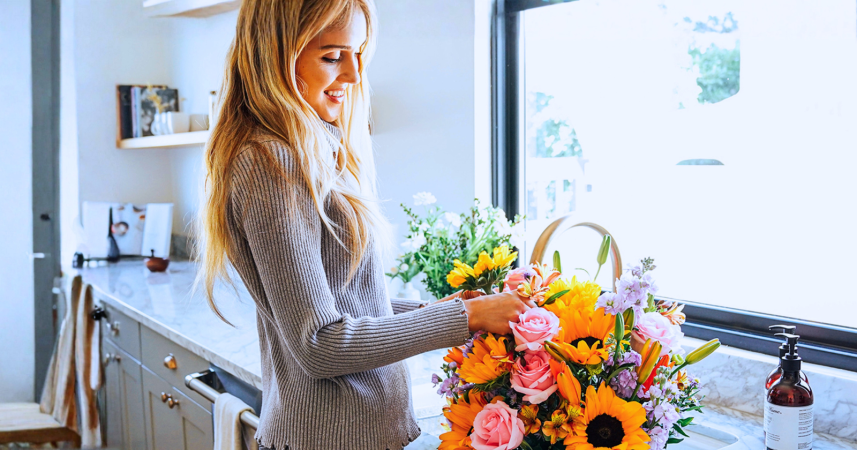
3) Fresh flowers or greenery
There’s something quietly grounding about having something living in your space.
It signals care. Care for your surroundings, and indirectly, care for yourself.
You don’t need fancy arrangements. A few stems of eucalyptus in a glass jar or a single monstera leaf in a vase can do the trick.
If you’re vegan like me, you might also enjoy the process of nurturing plants. It’s a form of mindfulness.
I’ve mentioned this before, but I think tending to plants teaches patience in a way few other habits can.
When friends come over, they often notice the small vase of wildflowers on my dining table. It’s not grand, but it makes people pause. It shows attention.
The key is to keep it fresh. A dying bouquet on the counter sends the opposite message.
4) Quality over quantity

Elegant spaces breathe. They’re edited.
It’s tempting to fill every surface with decorations or to keep buying more things because we think more equals better. But elegance comes from restraint and intention.
That might mean owning fewer mugs but choosing ones that feel good in your hand. Or having a single, well-framed piece of art instead of a dozen cheap prints.
I used to collect vinyl records (and still do), but I stopped displaying all of them at once. Now I rotate a small selection, the ones I actually play. The result is that the space feels curated, not cluttered.
When everything in your home feels chosen, not accumulated, elegance naturally follows.
5) Neutral tones with texture
Color can be powerful, but too much of it can be visually loud.
The most elegant homes I’ve seen use neutral palettes like whites, beiges, greys, and soft greens. Then they add warmth through texture.
Think linen cushions, a woven rug, or a matte ceramic vase.
The beauty of this approach is that it doesn’t date easily. It also makes small spaces feel more cohesive.
If you love color (and I get it, I grew up surrounded by bright California light), use it intentionally. Choose one or two bold pieces that pop against a calm background.
Textures add depth where color might overwhelm. Linen, wool, clay, and wood all make a space feel lived in, not staged.
Elegance isn’t about minimalism. It’s about harmony.
6) A clear surface (and a clear mind)
There’s a subtle psychology to clutter. Studies have shown that messy environments can increase stress hormones.
I notice it myself. When my kitchen counter is piled with dishes or mail, my brain feels noisy. When it’s clear, I breathe easier.
Elegant homes are rarely spotless, but they’re rarely chaotic either. They show a quiet sense of control. Not perfection, just presence.
Try this experiment: before bed, clear one surface. Your desk, your dining table, your kitchen island. Wipe it clean, leave only one intentional item like a candle, a book, or a bowl of fruit.
When you see it in the morning, you’ll feel a small hit of calm.
That’s elegance in practice. Not as a performance, but as a feeling.
7) Art that means something
You don’t need a gallery wall to show taste. But having at least one piece of art that reflects who you are changes the tone of a room.
It could be a framed print from a local artist, a photo you took on your travels, or even a page torn from an old book that moved you.
What matters is meaning.
When I first started photographing seriously, I printed one of my black-and-white shots, a quiet street in Lisbon at dawn.
I framed it simply and hung it in my living room. Guests often ask where I bought it, and I love telling them the story behind it.
That’s the thing. Elegance isn’t sterile. It’s personal, but curated.
Art that carries a story, even a humble one, elevates your space in a way store-bought décor never will.
8) A sense of hospitality
You can have the most beautiful furniture and still have a home that feels cold.
True elegance lies in how a space welcomes people.
That could mean offering a glass of water before someone has to ask, lighting a candle before guests arrive, or simply having somewhere comfortable for them to sit.
One of the kindest things a friend ever said to me after dinner was, “Your home feels calm.” That, to me, was the highest compliment.
Hospitality isn’t about performing perfection. It’s about creating ease, for yourself and for others.
I’ve been to friends’ homes where we sat on mismatched chairs, ate vegan tacos off thrift-store plates, and laughed all night. It was elegant in its own way because it felt genuine, warm, and thoughtful.
That’s the kind of elegance that lingers.
The small touches matter
The funny thing about elegance is that it doesn’t shout.
It whispers.
It’s in the scent that greets you, the way the light hits the wall, the care you’ve put into choosing what stays and what goes.
Elegance is less about showing who you want to be and more about reflecting who you are, clearly and calmly.
If your home feels peaceful, intentional, and welcoming, you’ve already nailed it.