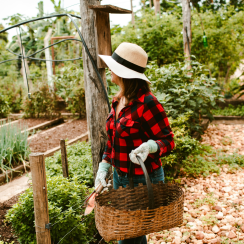
From library pilgrimages in wood-paneled station wagons to strategic grocery missions armed with envelope-system budgets and Sunday paper coupons, these weekend rituals defined a generation that knew every penny's worth and found magic in hand-me-downs and Hamburger Helper.

Add VegOut to your Google News feed. 
The smell of Hamburger Helper simmering on the stove while Saturday morning cartoons played in the background - that's what weekends smelled like in 1987.
There was something about the way the artificial cheese powder mixed with ground beef that created its own particular weekend aroma, one that meant Mom could stretch a pound of meat to feed six people and still have time to fold the laundry mountain that had accumulated all week.
Do you ever catch yourself remembering those weekend rhythms from childhood? Those little rituals that seemed so ordinary then but now feel like artifacts from another era?
Growing up in a lower middle class family during the 80s and 90s meant weekends had their own special choreography - part necessity, part tradition, all held together by parents who made magic happen with limited resources.
1. Saturday morning cartoons were sacred time
Before cable, before streaming, before you could watch whatever you wanted whenever you wanted, Saturday mornings belonged to us kids. We'd wake up before our parents, pour bowls of generic cereal that came in bags instead of boxes, and plant ourselves in front of the TV for hours of uninterrupted cartoon bliss.
The ritual was precise: you started with the good stuff at 7 AM and watched straight through until American Bandstand came on, signaling the tragic end of kid programming.
We four sisters would negotiate who got the good spot on the couch, who had to sit on the floor, and who controlled the dial (yes, the actual dial you had to get up and turn). Those mornings felt luxurious because during the week, TV time was strictly rationed. But Saturdays? Saturdays were ours.
2. The weekly library pilgrimage
Every Saturday afternoon, like clockwork, we'd pile into our wood-paneled station wagon for the trip to the public library.
This wasn't just about books - though I could check out my maximum limit of twelve and devour them all by the following Saturday. The library was free entertainment, free air conditioning in summer, free heat in winter, and a place where having a library card made you feel rich.
My father would drop us off while he did the grocery shopping, armed with coupons clipped from the Sunday paper and a calculator to make sure we stayed within budget.
We'd spend an hour or two exploring different sections, and I remember feeling like those stacks held entire worlds I could access, regardless of what was in our bank account.
3. Grocery shopping was a family event
Speaking of grocery shopping, this wasn't a quick errand but a strategic mission. Have you ever noticed how grocery stores seemed bigger back then? Or maybe it's just that when you're carefully counting every penny, the journey through those aisles takes longer.
We'd follow Mom through the store with the precision of a military operation. Generic brands filled our cart - the black and white labels that simply said "CORN" or "PEAS."
She had her envelope system: cash divided into categories, and when the grocery envelope was empty, that was it until next week. Sometimes she'd let us choose one "splurge" item to share, like a box of Little Debbie cakes, which we'd ration throughout the week like they were gold bars.
4. Sunday dinner happened no matter what
This is one tradition I wrote about in my piece on family bonds, but it bears repeating because it was the anchor of our week. Sunday dinner wasn't fancy - usually a pot roast that had been cooking all day while we were at church, or spaghetti with sauce that simmered for hours.
But everyone sat down together, no exceptions.
The dining room table, with its mismatched chairs and the tablecloth my mother had sewn from remnant fabric, became our family's center of gravity. We'd share our weeks, argue about whose turn it was to do dishes, and exist together in that space between the weekend ending and Monday beginning.
5. Yard sales were treasure hunts
Saturday mornings in spring and summer meant yard sale expeditions. We'd scan the classifieds on Friday night, map out our route, and leave early with a thermos of coffee and a few dollars in quarters and singles. These weren't shopping trips so much as adventures in possibility.
My mother had an eye for quality hidden among the chaos. She'd find winter coats for next year, board games with all their pieces, books that would become Christmas presents.
She taught us to look past the surface wear to see potential. "Good bones," she'd say about a wooden chair that just needed new paint, teaching us that value wasn't always about what something looked like right now.
6. The Sunday paper was an event
Remember when the Sunday paper was thick enough to use as a doorstop? That thud on the front porch meant the week's entertainment had arrived. Everyone had their section claimed: Dad got news and sports first, Mom took the coupons and store circulars, we kids fought over the comics.
But the real magic was in those coupons. Sunday afternoon meant spreading them across the kitchen table, scissors in hand, organizing them by store and expiration date. It was like planning a battle strategy where victory meant getting two boxes of cereal for the price of one.
7. Hand-me-down exchanges with cousins
Twice a year, usually on weekends, we'd meet up with extended family for what we called "the exchange." Families would bring bags and boxes of outgrown clothes, and we'd sort through them like it was Christmas morning. What didn't fit any of the cousins went to church for other families who needed them.
These exchanges were social events too - kids playing while adults caught up, potluck dishes covering folding tables, and that feeling of abundance that came from sharing what we had.
New school clothes might have meant "new to you," but when your cousin passed down that jean jacket you'd been admiring, it felt like winning the lottery.
8. Making your own fun was mandatory
Boredom was met with "go outside and play" or "find something to do." So we did. We built elaborate worlds in the backyard with nothing but sticks and imagination.
We put on plays in the garage, charging neighbors a nickel for admission. We made up games with rules so complex we'd forget them by the next weekend and have to start over.
Without money for movies or mini golf or the other entertainment that cost money, we became experts at creating our own adventures. A cardboard box wasn't trash - it was a spaceship, a castle, a time machine. The creek behind our house wasn't just water and rocks - it was an expedition waiting to happen.
Final thoughts
Looking back on these weekend rituals, what strikes me isn't what we lacked but what we had: time together, creativity born from constraint, and parents who made stretching a dollar look like an art form. These weren't hardships exactly, just the rhythm of life when you're making it work with what you've got.
Those weekends taught us resilience without calling it that, showed us that joy doesn't require a credit card, and proved that the best memories rarely cost much at all.
Sometimes I catch myself missing the simplicity of those times, when a library card felt like a passport and Saturday morning cartoons were the height of luxury.