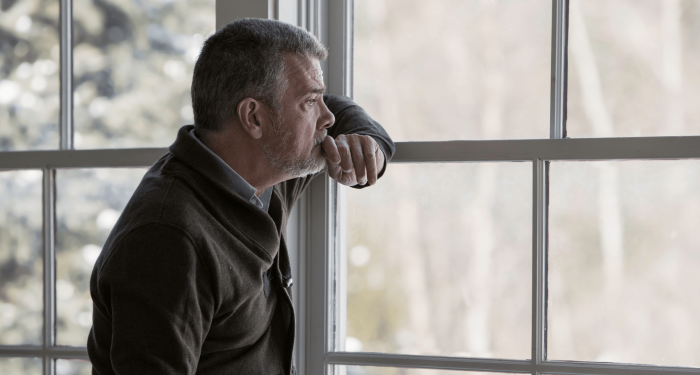
The goal isn’t to stop asking for advice, but to hear your own voice clearly enough that guidance becomes a supplement, not a crutch.
Ever notice how some people can make a decision in seconds, while others need to text three friends, call their partner, and maybe sleep on it for a week?
If you’re someone who struggles to make choices without outside input, you’re not broken.
You’re not weak.
And you’re definitely not alone.
I’ve seen this pattern everywhere.
In relationships. In careers. Even in restaurants, where someone asks the waiter what they should order, then asks again just to be safe.
Decision-making doesn’t exist in a vacuum.
It’s shaped early, reinforced often, and quietly carried into adulthood.
Let’s talk about eight childhood experiences that can make trusting your own judgment feel uncomfortable, risky, or downright impossible.
Not to assign blame.
Just to understand what’s really going on.
1) Your opinions were frequently dismissed
Did you hear some version of “You’re too young to understand” growing up?
When a child’s thoughts, preferences, or ideas are brushed aside again and again, they learn something subtle but powerful.
Their inner voice doesn’t matter.
Over time, that lesson sticks.
As an adult, this can show up as constant self-doubt.
You might have an instinct about what to do, but it doesn’t feel solid enough.
So you look outward for validation.
I’ve felt this myself in work settings.
Early in my career, I’d defer even when I had a strong opinion, because somewhere along the way I learned that confidence without permission was dangerous.
When your voice wasn’t welcomed early on, trusting it later feels unnatural.
2) You were praised for being agreeable, not decisive
Some kids are rewarded for being easy.
They don’t argue.
They don’t push back.
They go along with the plan and keep the peace.
Sounds positive, right?
The problem is that approval becomes conditional.
You’re liked when you don’t rock the boat.
Fast forward to adulthood, and making a decision feels loaded.
What if someone disagrees? What if it causes friction?
So instead of choosing, you poll the room.
In hospitality, I saw this dynamic constantly.
The most agreeable staff were loved, but often struggled to take initiative.
They waited for cues instead of acting.
If you learned that harmony mattered more than autonomy, decision-making can feel like a social risk.
3) You grew up with overly critical caregivers
When mistakes were met with harsh criticism, the safest option was often to avoid choosing at all.
Because choosing meant the possibility of being wrong.
And being wrong meant judgment.
This creates a mindset where decisions feel like tests you can fail, rather than neutral steps forward.
I’ve read about this in multiple psychology books over the years, and it always hits close to home.
When criticism outweighs encouragement, perfectionism sneaks in.
And perfectionism kills momentum.
Asking others what to do becomes a way to outsource responsibility.
If it goes wrong, at least it wasn’t fully on you.
4) You weren’t allowed to make age-appropriate choices
Some parents, with good intentions, overmanage.
They choose what you wear. What you eat. Who you spend time with. How your future should look.
The result? You never get reps.
Decision-making is a muscle.
If you don’t use it early, it stays weak.
I think about this whenever I travel.
The first few solo trips I took were uncomfortable.
Choosing where to eat, where to go, how to spend the day felt oddly stressful.
But the more I did it, the easier it became.
If you weren’t given space to practice autonomy as a kid, it makes sense that you’d lean on others now.
5) Your environment was unpredictable
 In chaotic or unstable households, decisions can feel dangerous.
When moods shift quickly or rules change without warning, choosing wrong can have real consequences.
So you learn to scan the environment instead of listening inward.
What does everyone else think?
What’s the safest option?
Who can tell me what won’t cause trouble?
This hyper-vigilance can follow you into adulthood.
You might be great at reading people, but disconnected from yourself.
I’ve met incredibly intuitive adults who struggle to answer simple questions like “What do you want?” because they were trained to prioritize external signals over internal ones.
6) You learned that authority figures knew best
If you grew up in a strict hierarchy, questioning decisions may not have been encouraged.
Rules were rules.
Instructions were followed, not debated.
That kind of upbringing can create a deep respect for expertise, which isn’t a bad thing.
But it can also weaken trust in your own judgment.
As an adult, this shows up as constant fact-checking and reassurance-seeking.
You might feel the need to consult someone “more qualified” before acting.
I love learning from experts.
I read constantly.
But there’s a line where learning turns into avoidance.
At some point, you have to decide.
7) You were punished for making the wrong choice
Some kids aren’t just corrected when they choose poorly.
They’re shamed.
And shame has a long shelf life.
When mistakes are tied to your worth, decisions become emotional landmines.
You hesitate. You overthink. You delay.
This often shows up in relationships.
People who ask friends what they should say, how they should feel, or whether they’re “allowed” to want something.
The fear isn’t about the decision itself.
It’s about what it might say about you.
8) Finally, you never saw confident decision-making modeled
Lastly, and this one’s big, you might not have seen adults around you make calm, confident choices.
If caregivers were indecisive, anxious, or constantly second-guessing themselves, that becomes the blueprint.
We learn more from what we observe than what we’re told.
If every decision came with stress, debate, or regret, it’s no surprise you’d approach choices cautiously.
Here’s the good news though.
Patterns learned can be unlearned.
Decision-making isn’t about always being right.
It’s about building trust with yourself.
One small choice at a time.
Start with low-stakes decisions.
What to eat. How to spend an hour. What book to read next.
Choose. Sit with it. Move on.
That’s how confidence grows.
The bottom line
If you struggle to make decisions without consulting others, it doesn’t mean you lack intelligence or intuition.
It often means you adapted well to your early environment.
And adaptations can be updated.
Understanding where your hesitation comes from isn’t about digging up the past for fun.
It’s about loosening its grip on your present.
You don’t need to stop asking for advice altogether.
That’s not the goal.
The goal is learning to hear your own voice clearly enough that advice becomes a supplement, not a crutch.
And like a good meal, that kind of confidence is built slowly, with attention, patience, and a lot of practice.
As always, I hope this gave you something useful to think about.
If You Were a Healing Herb, Which Would You Be?
Each herb holds a unique kind of magic — soothing, awakening, grounding, or clarifying.
This 9-question quiz reveals the healing plant that mirrors your energy right now and what it says about your natural rhythm.
✨ Instant results. Deeply insightful.