From vintage mixers that witnessed decades of birthday cakes to love letters that still carry a ghost of cologne, these cherished possessions reveal a profound generational divide about what makes something worth keeping—and what younger people might be missing about the stories objects can hold.

Add VegOut to your Google News feed. 
Last week, I stood in my friend's basement, surrounded by towers of yellowing National Geographic magazines dating back to 1972.
She was finally downsizing after forty years in the same house, and tears rolled down her cheeks as she touched each stack.
"You don't understand," she said when her daughter suggested recycling them. "Your grandfather read these to me when I was little."
And in that moment, watching three generations navigate what to keep and what to release, I realized how differently we all relate to our possessions.
The generational divide around stuff isn't just about hoarding versus minimalism. It's about what objects mean to us, what stories they hold, and how we define legacy itself.
After helping several friends through the downsizing process and facing some of these decisions myself, I've noticed certain items that my generation clings to with particular fervor - things that often perplex our children and grandchildren.
1) Boxes of handwritten letters and cards
In my closet sits a shoebox containing every letter my late husband wrote me during our courtship. The paper has softened with age, and his handwriting - that particular slant I knew so well - makes my heart catch every time.
When my daughter spotted it during a recent visit, she photographed a few with her phone, suggesting I "digitize them to save space."
But you can't digitize the feel of paper between your fingers or the faint scent of cologne that somehow still lingers after all these years. For those of us who courted through letters, who waited days for responses, who recognized our loved ones by their penmanship alone, these boxes aren't clutter.
They're archaeological evidence of relationships built slowly, word by careful word. The younger generation, raised on instant messages that disappear into the digital ether, might never understand the weight of a love letter you can hold.
2) Complete sets of fine china
Remember when owning a complete twelve-piece china set meant you'd truly arrived as an adult? We registered for them at our weddings, inherited them from our mothers, displayed them in china cabinets like trophies of domestic accomplishment.
Now I watch younger generations embrace mismatched vintage plates from thrift stores, and while I admire their casual approach to entertaining, something in me still believes in the power of a matching table setting.
These dishes represent more than just plates and bowls. They hold memories of holiday dinners when the whole family gathered, of carefully planned dinner parties where we used the "good stuff."
They remind us of a time when occasions felt more occasional, when we marked special moments by bringing out special things.
3) Physical photo albums and loose photographs
The other day, I spent an entire afternoon going through photo albums, trying to decide which to keep. Each image - slightly out of focus, oddly colored by today's standards - tells a story that goes beyond what's captured in the frame.
There's the thumb print on the corner from developing them at the drugstore, the handwritten dates on the back, the way certain photos have faded while others remain vivid.
Our children suggest scanning everything, creating digital archives. But how do you explain that flipping through an album is a different experience than swiping through a screen?
That finding a forgotten photo tucked between pages is a small miracle that algorithms can't replicate?
4) Collections of vinyl records and CDs
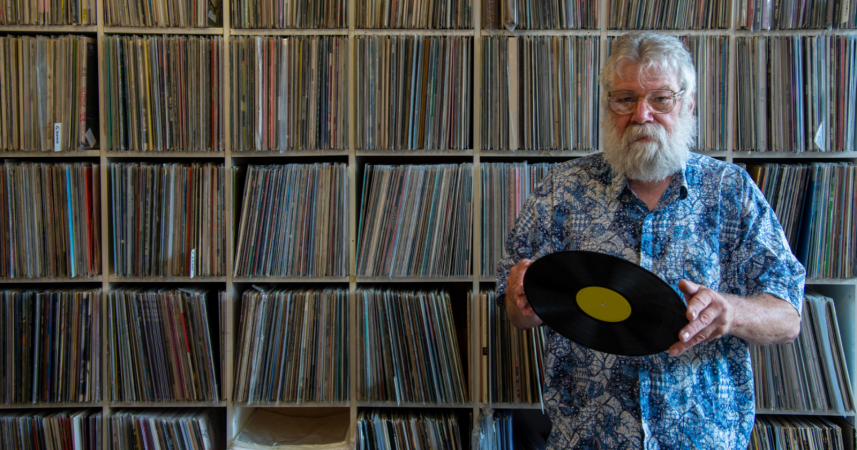
My neighbor recently asked his son to help him move seven boxes of vinyl records. The son held up his phone and said, "Dad, I have ten thousand songs right here."
But those of us who spent Saturday afternoons flipping through record bins, who saved up to buy that one special album, who remember the ritual of carefully placing the needle on the groove - we know it was never just about the music.
Each album cover is a piece of art, each liner note a treasure trove of information we memorized. We can tell you exactly where we bought certain records, who we were with, what was happening in our lives.
Spotify playlists might be convenient, but they don't carry the same emotional archaeology.
5) Outdated kitchen appliances that still work
In my kitchen stands a stand mixer from 1978, the same model my mother used. It weighs as much as a small child and takes up precious counter space. "Why not get a new one?" visitors ask, pointing out the dents and the slightly wonky speed settings.
Because this mixer has kneaded four decades of bread, whipped cream for countless birthday cakes, and its familiar whir is the soundtrack to every holiday baking session I can remember.
We hold onto these appliances not because we're opposed to progress, but because they represent durability in an age of planned obsolescence.
They're proof that things used to be built to last, and keeping them running feels like a small victory against throwaway culture.
6) Stacks of recipe cards and cookbooks
When I discovered my mother's recipe box tucked away in the attic years ago, I found more than instructions for casseroles.
Her careful notations - "add extra vanilla," "John's favorite," "good for potlucks" - were glimpses into a life I only partially witnessed. These aren't just recipes; they're family histories written in cups and tablespoons.
Sure, you can find any recipe online now. But you can't find my grandmother's specific version of apple pie, the one she adjusted for high altitude, with the crust recipe she got from her neighbor in 1952.
These cards and splattered cookbook pages are passports to different eras of cooking, when convenience foods were revolutionary and Jell-O salads were the height of sophistication.
7) Sentimental furniture pieces that don't match modern décor
That mahogany secretary desk that dominates my living room? Completely impractical. It doesn't accommodate a laptop well, the drawers stick, and it definitely doesn't match my other furniture.
But my father refinished it in his garage the summer before he died, and I can still see where he carefully repaired the damaged veneer.
Younger generations might prioritize aesthetic cohesion and functionality, but we see these pieces as anchors to our past. They're not just furniture; they're witnesses to our lives, silent participants in decades of daily living.
8) Books we'll never read again
Three walls of my home office are lined with books. Have I read them all? Yes. Will I read them again? Probably not. But each spine is a memory - where I was when I read it, what I was going through, who recommended it.
My old lesson plan notebooks are tucked between novels, thirty-two years of teaching captured in fading ink.
Digital readers are marvelous inventions, but they can't replicate the satisfaction of seeing your literary journey displayed on shelves, of pulling out a book and finding notes in the margins from a younger version of yourself.
Final thoughts
Perhaps what younger generations don't understand isn't really about the stuff itself. It's about what these objects represent to us - tangible connections to people we've lost, physical evidence of lives well-lived, anchors in an increasingly ephemeral world.
We're not just holding onto things; we're holding onto the stories they tell, the people they connect us to, and the versions of ourselves they help us remember.
And maybe, just maybe, that's something worth understanding.