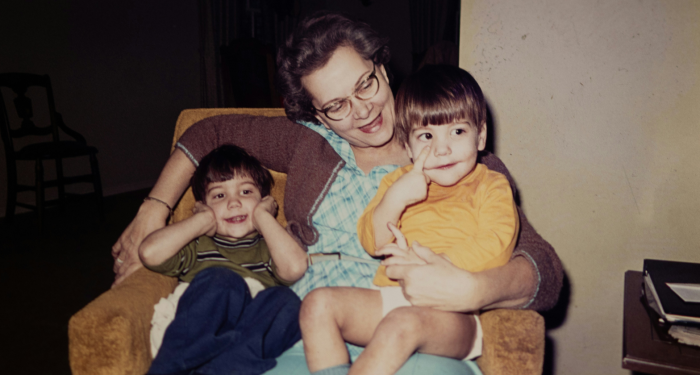
Boomers often mean these as sweet compliments. Younger generations hear them as loaded or judgmental. Here are eight that land as passive-aggressive.

Add VegOut to your Google News feed. 
We’ve all been there.
You’re grabbing coffee, waiting for your order, and someone older drops what they believe is a sweet compliment.
You smile because you’re not trying to start a war before 9 a.m. But inside, you’re thinking, was that kind, or was that a subtle jab wrapped in a polite tone?
That’s the generational gap in a nutshell.
A lot of boomers were raised on teasing, tough love, and social norms where you comment on people’s bodies, careers, and life choices like it’s small talk.
Younger generations grew up with more focus on boundaries, emotional awareness, and not turning every conversation into a performance review.
I spent most of my 20s in luxury food and beverage.
In hospitality, you learn fast that intention is not the same thing as impact.
You can mean well and still leave someone feeling weird. Like serving a beautiful steak with no salt.
Great effort, disappointing experience.
Here are eight compliments boomers often think are charming, but younger people frequently hear as passive-aggressive.
If you’ve ever felt that quiet sting after someone praised you, you’re not imagining it.
1) “You look so much better now”
This usually shows up after weight loss, a haircut, clearer skin, or a style upgrade.
Boomers often mean you look healthier, happier, more confident.
Younger people hear so you thought I looked bad before?
It also taps straight into diet culture, which has messed with a lot of us.
Even if someone did lose weight intentionally, commenting on their body can feel like you’re rewarding them for shrinking, or implying they needed to.
In restaurants, I’ve watched this kind of comment change the vibe instantly.
Someone says it with a smile, the other person laughs politely, and then you see that tiny pause in their eyes.
Because the compliment comes with a “before” version that apparently was not good enough.
If you want to be kind, compliment something that doesn’t compare them to their past self. You could say:
- “You’ve been glowing lately.”
- “That haircut suits you.”
- “You look really happy.”
2) “You’re so articulate”
On paper, this sounds harmless.
In real life, it can carry a loaded subtext.
Boomers often mean you communicate well, you’re smart, you’re impressive.
Younger people hear I didn’t expect you to be.
That’s why this one can feel especially gross depending on who it’s said to.
Women, immigrants, people of color, and younger workers hear it all the time, and it can land like surprise disguised as praise.
If you genuinely admire how someone speaks, make it specific and about what they did, not about your expectations. Something like:
- “You explained that really clearly.”
- “I like how you framed that.”
- “You make complicated stuff easy to understand.”
3) “You’re brave for wearing that”
This one is a classic backhanded compliment with a friendly face.
Boomers often mean you’re bold, confident, expressive.
Younger people hear that’s a risky choice and I’m not sure it’s working.
“Brave” belongs in contexts like skydiving, leaving a toxic job, or telling your landlord the faucet has been broken for six months.
In fashion, it often implies the outfit is strange, unflattering, or attention-seeking.
I once wore a fitted shirt after months of consistent training.
An older relative said, “You’re brave wearing something that tight.”
I laughed, but the message was clear.
They were uncomfortable, and they wanted me to know it.
If you like someone’s style, say that. For example:
- “That looks great on you.”
- “That color is perfect.”
- “Your style is on point.”
4) “Must be nice to have so much free time”

This one gets aimed at remote workers, freelancers, entrepreneurs, people who travel, or anyone who dares to go to the gym at 2 p.m.
Boomers often mean I’m impressed you can live like that.
Younger people hear you don’t work as hard as I did.
It’s praise mixed with resentment, and you can feel it immediately.
It’s like someone telling you your meal looks delicious, but they say it through gritted teeth.
A lot of younger people are actively trying to escape the idea that burnout is a personality trait.
Many of us watched older generations work themselves into stress, health problems, and unhappy relationships.
When we choose flexibility, it’s not laziness. It’s a different definition of success.
If you admire someone’s lifestyle, lead with curiosity instead of judgment. You could ask:
- “That’s awesome. How do you structure your day?”
- “I need to get better at making time for myself.”
- “How did you pull that off?”
5) “You’re not like other people your age”
This is meant to be flattering, but it’s also a drive-by insult to everyone else in your generation.
Boomers often mean you’re mature, responsible, grounded.
Younger people hear I already assume your generation is a mess, but you’re the exception. It puts you in an awkward spot.
If you accept the compliment, it sounds like you’re agreeing that your peers are terrible.
If you push back, you seem ungrateful.
If you want to compliment someone’s maturity, do it without dragging an entire age group. Better options are:
- “You’ve got a good head on your shoulders.”
- “You seem really thoughtful.”
- “You handle yourself well.”
6) “When are you going to get a real job”
Sometimes it’s said as a joke. Sometimes it’s said with a smile. Either way, it can hit hard if you’re doing something unconventional.
Boomers often mean I’m worried about stability, and I don’t understand this path.
Younger people hear what you’re doing doesn’t count.
If you work in content, wellness, food, creative fields, or entrepreneurship, you’ve probably heard this in some form.
It’s especially irritating because a lot of these “not real” jobs involve real effort, real skill, and a level of self-management most people would struggle with.
In my hospitality days, I saw people dismiss restaurant work as not serious.
Meanwhile, we were managing teams, handling complaints, selling premium products, and staying calm while everything on the floor was on fire.
It was real. It just didn’t come with a cushy title.
If you don’t understand someone’s work, ask about it without putting it down first. You can say:
- “What do you actually do day to day?”
- “How does that business work?”
- “Where do you want it to go long term?”
7) “You’d be so pretty if you just smiled more”
This one is famous for a reason.
Boomers often mean you look nicer when you smile, I’m trying to be friendly.
Younger people hear I want your face to perform happiness for my comfort. It’s also gendered as hell.
Women get it constantly. But honestly, nobody likes being told what expression to wear in public.
In hospitality, smiling is part of the job, but even then, you don’t demand it.
The best guests never demanded anything.
They treated staff like humans, and you smiled naturally because you felt safe and respected.
If you want to brighten someone’s day, say something kind that doesn’t require them to rearrange their face. You can go with:
- “Hope you’re having a good day.”
- “It’s nice to see you.”
Or compliment something they chose, like their outfit, their energy, or their work.
8) “You’re so sensitive”
This one pretends to be a compliment while quietly invalidating your experience.
Boomers often mean you care a lot, you’re empathetic, you notice things.
Younger people hear your feelings are inconvenient.
Many boomers were taught to suppress emotions and push through.
Younger generations were taught to name emotions, process them, and communicate boundaries.
When a younger person reacts to a rude comment, the older person labels them “sensitive” instead of reflecting on what they said.
Here’s my take. Sensitivity is not weakness. It’s awareness. It’s like having a refined palate.
If you can taste the difference between cheap olive oil and the good stuff, you’re not picky. You’re perceptive.
Same with emotions and social dynamics.
If you mean someone is caring, just say that. Try:
- “You’re really thoughtful.”
- “You’re perceptive.”
- “You care deeply, and that’s a strength.”
The bottom line
Most of these comments aren’t evil.
They’re just outdated.
A lot of boomers learned social skills in a world where teasing was normal, emotional restraint was praised, and you commented on people’s bodies and life choices like it was harmless small talk.
Younger generations are trying to do it differently, not because we’re fragile, but because we’re tired of pretending that rude things are charming.
If you’re a boomer reading this, the upgrade is simple: Be specific, be curious, and don’t disguise judgment as praise.
If you’re younger and these lines keep landing weird, trust that reaction.
A real compliment leaves you feeling seen, not small.
And if you ever want to cut through the fog in one sentence, there’s always this:
“What do you mean by that?”