Simple objects from the 70s and 80s can trigger whole waves of nostalgia, from heavy TV remotes to Polaroid snapshots warming in your hand. These everyday items shaped our childhoods more than we realized.
Growing up in the 70s or 80s came with a certain texture that doesn’t exist anymore, and a lot of that texture lives inside the objects we used every single day.
Before the internet pulled our attention into ten windows at once, life moved slower, and because of that slowness, the things around us became tied to the moments we lived through them.
It’s funny how an object can feel like a time capsule.
You pick it up or even just see it in a thrift store, and suddenly your brain wakes up an entire memory you didn’t know you still had stored somewhere.
So I wanted to explore seven of these items that instantly transport so many of us back to childhood.
If you grew up in that era, there’s a good chance at least one of these will hit you right in that sweet nostalgic spot.
Let’s dive in.
1) The TV remote that felt like lifting a small weight
The TVs of that era were practically furniture, and the remote controls that came with them were built like they were designed for NASA.
I still remember the one we had at home with only four buttons and a weight that seemed way too excessive for something that only controlled sound and channels.
Half the time the remote didn’t even work consistently, which meant getting up anyway and turning the giant plastic knob on the TV itself.
We didn’t think anything of it back then, but looking at it through today’s tech-filled world makes it feel almost ceremonial, like tuning an instrument instead of changing a channel.
Something was grounding about how limited everything was.
We weren’t flipping through hundreds of streaming options, we were deciding between whatever happened to be on, which surprisingly made us more present.
Even now, whenever I stumble across one of those old remotes in a thrift shop, it pulls me straight back to being a kid sitting cross-legged on the carpet, eating popcorn that definitely wasn’t vegan yet and waiting for a show to start rather than binge-watching an entire season in one weekend.
2) The rotary phone that made every call feel intentional
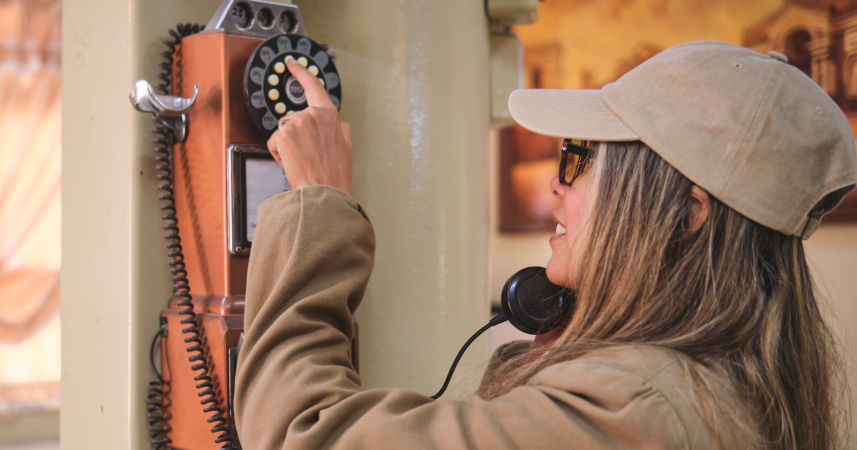
Rotary phones were a whole ritual. You had to fully commit to dialing because every number required a turn of the wheel and a wait as it spun itself back.
If you messed up even one digit, you had to start over, which taught all of us a kind of patience that’s rare today.
Calling a friend wasn’t something you did mindlessly or in a rush, it felt like a purposeful act.
Behavioral science often talks about how friction creates awareness, and the rotary phone was friction beautifully built into daily life.
Every call was a micro decision and every micro decision felt meaningful.
When I hear that familiar clicking sound in old movies now, it transports me right back to kitchens with patterned wallpaper, cords stretched across rooms, and late-night conversations whispered while twisting the cord around my fingers.
3) The cassette tape you had to rescue with a pencil
There’s something almost poetic about the fact that a number two pencil was the unofficial tool for fixing the most precious thing many of us owned.
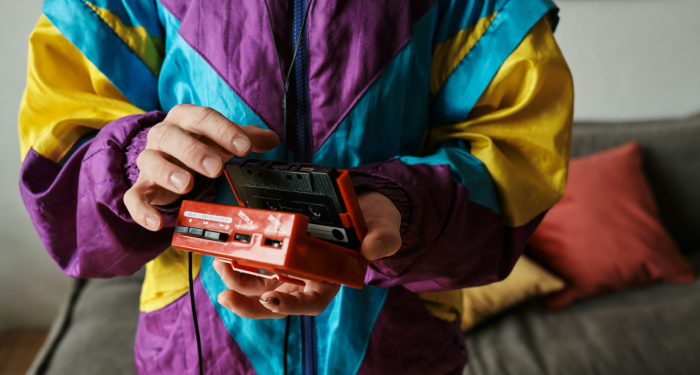
When your favorite cassette got eaten by your Walkman, the only move was to slowly twist the exposed tape back inside using the pencil as a little crank.
I can still feel the quiet concentration of sitting on the floor and turning that pencil, hoping I hadn’t stretched the tape too far.
And the relief when the music actually played again felt almost like winning a small emotional lottery.
Listening to music back then was immersive because you didn’t skip around. You listened to whole albums because fast-forwarding didn’t give you perfect control.
That slowness meant you lived inside the music instead of sampling it.
Anytime I see a cassette peeking out of a cardboard box at a yard sale, I instantly recall that muscle memory of rescuing a tangled tape.
It takes me back to the early days of falling in love with music long before music was something you could carry in unlimited quantities in your pocket.
4) The Polaroid camera that made every moment feel like magic
There was nothing like the anticipation of taking a Polaroid photo.
You pressed the button and watched the machine spit out a blank square that you shook like it was a mysterious treasure waking up.
My family didn’t take photos often, but when someone brought a Polaroid to a birthday party or vacation, it changed the entire vibe.
Suddenly everyone leaned in closer, smiled bigger, and waited together for the moment to appear. Instant photography felt like a miracle before miracles became normal.
What I love about Polaroids, even now, is how they gave us tangible memories.
You held your moment, literally held it, and you could watch the colors appear like a secret being revealed just to you.
Today I take thousands of digital photos as part of my photography hobby, but no matter how high tech the equipment is, I still crave that tactile magic.
The smell of developing film, the soft whir of the camera, the surprise of not knowing how the photo would turn out until it decided to show you.
One Polaroid could hold a whole era in a way a digital file just can’t compete with.
5) The metal lunchbox that showed the world exactly who you were

Your lunchbox was basically your identity. It was the original version of customizing your laptop stickers or curating your social media profile.
Whether you carried He-Man, Strawberry Shortcake, Star Wars, Care Bears, or something a little more obscure, people knew who you were the moment you walked into the school cafeteria.
Kids today have endless choices, but back then, the selection felt just right and somehow more meaningful.
I vividly remember carrying a tin lunchbox with a band logo on it, hoping it made me look older or cooler than I actually was.
Spoiler: it didn’t. But it made me feel connected to something, and when you’re a kid, feeling connected is everything.
Psychologically, these lunchboxes were early forms of self expression. They showed what you loved without you having to say a word.
That’s probably why seeing one now instantly brings back the sound of opening those metal clasps and the smell of whatever snack was packed inside.
When I see them lined up in thrift stores now, the sound of metal softly clinking together brings me straight back to school hallways, trading cookies, and the comfort of knowing exactly which lunchbox was mine in a sea of lookalikes.
6) The boombox that turned any space into your personal universe
Boomboxes weren’t just music players.
They were portable worlds. If you had one, you basically had the power to shift the entire mood of a room, a backyard, or a group of friends sitting in a driveway.
I used mine constantly. Creating mixtapes from the radio was one of the purest joys of that era.
You sat there listening closely, waiting for the DJ to stop talking before hitting record, hoping nobody barged into the room making noise, and praying the song played all the way through.
Those tapes were tiny autobiographies.
Every track said something about who you were becoming. Every order had meaning, even if we couldn’t fully articulate that meaning yet.
Research today shows how strongly music shapes our sense of self, and it makes perfect sense when I look back at those long afternoons sitting outside with the boombox at my feet.
The click of the cassette door, the static between stations, the warmth of the pavement beneath me. It was all part of the same memory.
Anytime I hear that clunky mechanical sound of a cassette being pushed into place, I go right back to those summer days, making the world feel bigger simply because I could carry music wherever I went.
7) The glass butter dish that lived in almost every fridge
This one might seem small, but that’s what makes it powerful. Nearly every kitchen I visited as a kid had the same thick glass butter dish with the simple slide-on lid.
It wasn’t flashy, and nobody ever talked about it, but it was part of the rhythm of daily life.
Breakfast toast, family dinners, late-night snacking, that dish was always quietly there in the background like a steady heartbeat.
Nostalgia works in funny ways. Sometimes the objects that bring back the strongest memories aren’t the loud ones.
They’re the quiet ones that witnessed the most moments without needing to draw attention to themselves.
Memory researchers call these anchor objects.
They aren’t tied to one big event, they’re tied to hundreds of tiny ones, and the brain bundles them together into a deep feeling of familiarity and safety.
Every time I see a similar butter dish in a minimalist kitchen store, I’m caught off guard because for a split second, my mind goes back to those warm kitchens with patterned curtains, the hum of an old fridge, and the comfort of knowing exactly where everything was.
The bottom line
The objects from our childhood didn’t just exist around us, they shaped how we experienced the world.
They were the backdrop to our routines, the tools for our creativity, and the props in all the small moments that eventually formed our identities.
Today everything is faster, lighter, and more disposable, but these objects remind us of a time when life had more built-in pauses.
And in those pauses, we made some of our most lasting memories.
If any of these brought back a wave of nostalgia for you, that’s the brain doing what it does best.
It reconnects us with the past not to trap us there, but to give us a clearer sense of who we are now.
Sometimes all it takes is the sight of a cassette tape or a heavy TV remote to remember just how far we’ve come and how much those small moments shaped us along the way.
If You Were a Healing Herb, Which Would You Be?
Each herb holds a unique kind of magic — soothing, awakening, grounding, or clarifying.
This 9-question quiz reveals the healing plant that mirrors your energy right now and what it says about your natural rhythm.
✨ Instant results. Deeply insightful.