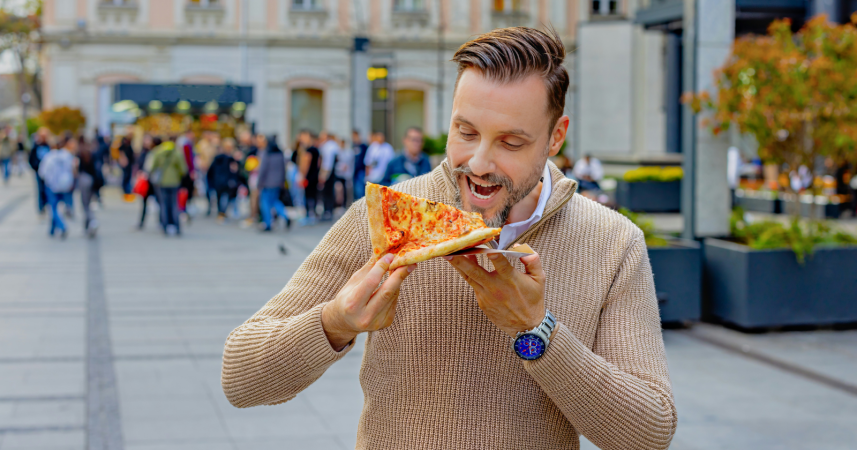
After a year of eye-rolling at Europeans' "lazy" habits, this American discovered that our obsession with efficiency is actually making us miserable—and less productive.

Add VegOut to your Google News feed. 
Before moving to Barcelona for a year, I'll admit it: I was that American who rolled my eyes at what I considered "pretentious" European habits.
You know the type. The guy who thought a 20-minute lunch break wolfed down at your desk was peak efficiency. Who considered leisurely dinners a waste of productive time.
But here's the thing about actually living somewhere versus just visiting. When you're forced to adapt to local rhythms and customs, you start to realize that maybe, just maybe, those "inefficient" Europeans have figured out something we Americans are missing.
After spending twelve months living and working in Barcelona (with plenty of side trips to France, Italy, and beyond), I came back to the States with a completely different perspective.
Those habits I once dismissed? Turns out they're not pretentious at all. They're just... better.
1. Taking actual lunch breaks (and I mean real ones)
Remember when I mentioned eating at your desk? Yeah, that was me. In my luxury hospitality days in New York, I wore my "too busy for lunch" badge like some twisted honor. I'd grab whatever was quickest and shovel it down while answering emails.
Then I landed in Barcelona, where my colleagues literally looked at me like I'd grown a second head when I suggested eating at my desk.
"Why would you do that?" my coworker asked, genuinely confused.
In Europe, lunch isn't just about refueling. It's a mental reset. A chance to actually taste your food. To have a real conversation. To step away from work and come back refreshed.
The first few weeks, I felt guilty taking a full hour. By month three, I realized my afternoon productivity was through the roof. Turns out your brain works better when you give it an actual break. Who would've thought?
2. Walking everywhere (yes, even when you have a car)
Americans love efficiency. Point A to Point B in the fastest way possible. That usually means driving, even if it's just five blocks.
But Europeans? They walk. Not because they have to, but because they want to.
I watched my Barcelona neighbors walk to get groceries, walk to meet friends, walk just to walk. At first, I thought it was because parking was impossible (which, okay, it kind of was). But even people with cars chose to walk.
After a few months of forced walking (my apartment was a 20-minute walk from the metro), something shifted. I started noticing things. The way the light hit the buildings at sunset. New restaurants opening up. Neighbors I'd never met.
Plus, I dropped ten pounds without even trying. Just from walking. No gym membership required.
3. Shopping daily for fresh food
Back in Boston, I was the king of the weekly Costco run. Load up the SUV, stock the freezer, and you're set for two weeks. Maximum efficiency, right?
Wrong.
Europeans shop differently. Small amounts, fresh ingredients, multiple times per week. My local market in Barcelona became part of my daily routine. The fishmonger knew my name. The produce guy would save the good tomatoes for regular customers.
At first, it drove me crazy. Why make three trips when you could make one? Then I tasted the difference. Bread baked that morning. Fish caught yesterday. Tomatoes that actually tasted like tomatoes.
During my culinary training, my instructors always emphasized fresh ingredients, but I never really got it until I lived it. There's something about buying what you need for that day's meals that changes your whole relationship with food. You waste less. You eat better. You actually enjoy the process.
4. Dinner at 9 PM (or later)
This one nearly killed me the first month. In the States, I was eating dinner by 6:30, in bed by 10. In Spain? Restaurants don't even open until 8:30.
"How do you not starve?" I asked a local friend.
She laughed. "We eat a proper lunch. And we have merienda."
Merienda. That little afternoon snack around 5 or 6. Just enough to tide you over until the late dinner. Once I adapted to this schedule, something magical happened. Dinners became events. Three-hour affairs with friends, multiple courses, actual conversation.
No one was rushing home to catch a show or get to bed early. The meal was the entertainment. And you know what? I slept better eating later and taking time to digest while socializing, rather than cramming food down and immediately crashing on the couch.
5. Taking all your vacation days (and nobody guilting you about it)
In my New York hospitality days, taking two weeks off in a row was basically career suicide. You'd come back to passive-aggressive comments about how "must be nice" to take so much time off.
Europeans? They take their four to six weeks and nobody bats an eye. It's expected. Encouraged, even.
My Barcelona colleagues would disappear for three weeks in August and nobody panicked. The work got done. The world didn't end. They came back actually refreshed, not more stressed from the pile of work waiting for them.
I finally took a proper three-week vacation while living there, something I'd never done in fifteen years of working in the States. You know what happened? Nothing. The work was there when I got back, but I was actually excited to tackle it instead of dreading it.
6. Embracing the art of doing nothing
Americans are obsessed with productivity. Every moment needs to be optimized. Even our relaxation is scheduled and purposeful. Meditation apps. Yoga classes. Side hustles.
Europeans have mastered something we've lost: the art of doing absolutely nothing.
Sitting at a cafe for two hours with one coffee? Normal. Spending Sunday afternoon on a bench watching people walk by? Standard practice. No phone scrolling. No productivity podcasts. Just... being.
I fought this hard at first. The guilt was real. Shouldn't I be doing something useful? Learning a new skill? Working on something?
But once I surrendered to it, I discovered something. My brain needed that emptiness. That's when the good ideas came. When problems solved themselves. When I actually felt rested instead of just less tired.
7. Prioritizing experiences over stuff
Finally, this might be the biggest shift. Europeans spend their money differently. Smaller homes, fewer things, but richer experiences.
My Barcelona apartment was tiny by American standards. No walk-in closets. No garage full of stuff I never used. But my neighbors? They traveled constantly. Ate out regularly. Spent money on concerts, theater, long dinners with friends.
When I returned to visit friends in Boston, their huge houses felt suffocating. All that stuff to manage. All that space to clean. For what? To store things you use twice a year?
I've since downsized dramatically. Sold the expensive car. Moved to a smaller place. But I'm traveling more. Eating better. Actually living instead of just maintaining a lifestyle.
Final thoughts
Look, I'm not saying Europeans have everything figured out. Or that American ambition and efficiency are inherently wrong. But after a year of living differently, I can't unsee what I've learned.
Those "pretentious" habits? They're actually about prioritizing what matters. Health. Relationships. Enjoyment. Presence.
Since returning to the States, I've kept many of these habits. I take real lunch breaks. I walk when I could drive. I shop more frequently for fresher food. I actually use my vacation days.
And you know what? I'm more productive than ever. Turns out that working yourself into the ground isn't the path to success. Sometimes the most productive thing you can do is take a three-hour dinner with friends.
Maybe it's time we Americans admitted that our obsession with efficiency isn't always that efficient. Maybe those Europeans aren't being pretentious. Maybe they're just living better.
If You Were a Healing Herb, Which Would You Be?
Each herb holds a unique kind of magic — soothing, awakening, grounding, or clarifying.
This 9-question quiz reveals the healing plant that mirrors your energy right now and what it says about your natural rhythm.
✨ Instant results. Deeply insightful.

Adam Kelton
Adam Kelton is a writer and culinary professional with deep experience in luxury food and beverage. He began his career in fine-dining restaurants and boutique hotels, training under seasoned chefs and learning classical European technique, menu development, and service precision. He later managed small kitchen teams, coordinated wine programs, and designed seasonal tasting menus that balanced creativity with consistency.
After more than a decade in hospitality, Adam transitioned into private-chef work and food consulting. His clients have included executives, wellness retreats, and lifestyle brands looking to develop flavor-forward, plant-focused menus. He has also advised on recipe testing, product launches, and brand storytelling for food and beverage startups.
At VegOut, Adam brings this experience to his writing on personal development, entrepreneurship, relationships, and food culture. He connects lessons from the kitchen with principles of growth, discipline, and self-mastery.
Outside of work, Adam enjoys strength training, exploring food scenes around the world, and reading nonfiction about psychology, leadership, and creativity. He believes that excellence in cooking and in life comes from attention to detail, curiosity, and consistent practice.
More Articles by Adam