Visiting that wealthy friend’s house showed me that what I thought was “just how life is” was actually “just how my life was set up.”
You know that weird feeling when you visit someone else’s house and suddenly realize your version of “normal” might not be all that universal?
That happened to me hard the first time I went over to a wealthy friend’s place as a teenager.
Until then, I thought everyone’s home looked and worked more or less like mine.
Same food, same routines, same random chaos but walking through his house felt like stepping into a parallel universe.
Not in a fancy, gold-tap, marble-everywhere way.
More in the small details that hit you in the gut and make you think, “Oh. Life can be like this too.”
Here are six things from my parents' house that felt totally normal... right up until I saw another version of “normal” and started questioning everything:
1) The bottomless bag of cheap snacks
In my parents' kitchen, there was always one main snack zone.
It lived on top of the fridge or in a giant plastic bag hanging off a chair.
Inside: Discount chips, instant noodles, generic cookies, and neon-colored drinks that probably should have come with a warning label.
If you were hungry, you grabbed something from The Bag.
Then I went to my wealthy friend's house.
I opened their pantry looking for chips and found… almonds, good quality dark chocolate, dried fruit, fancy granola, and sparkling water.
There were snacks, but they weren’t designed to nuke your energy and your blood sugar.
It felt oddly intimidating because everything seemed intentional.
Like someone had actually decided how they wanted to feel after eating.
That was the first time I realized your “default” food environment is quietly shaping you every single day.
If you grew up like me, you probably didn’t think in terms of “food environment.”
You thought, “What’s cheap?” and “What’s convenient?” Full stop.
The problem is, we carry that default into adulthood.
However, you just need to make slightly better options the easiest options.
Maybe that means:
- Keeping a bowl of fruit on the counter instead of cookies.
- Buying good coffee so you are not tempted by sugary drinks.
- Swapping one ultra-processed snack for something with actual fiber and protein.
Tiny shifts, yet big impact over time.
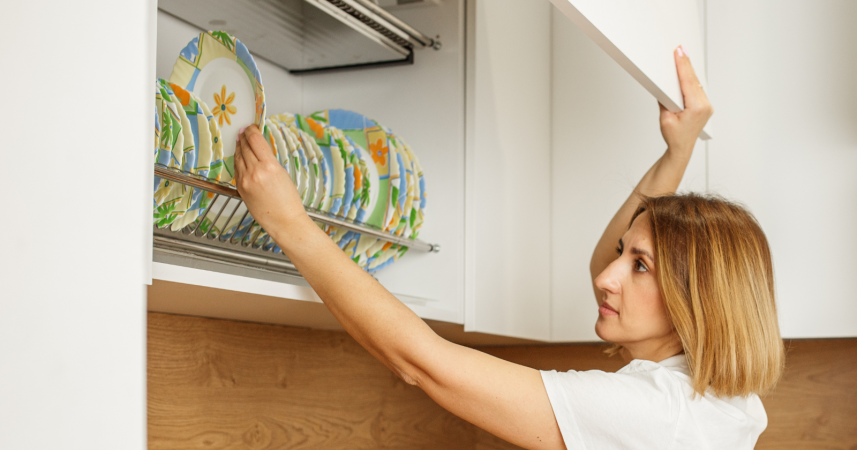
2) The cabinet of "good plates"
Growing up, we had two kinds of plates.
There were the everyday ones: Scratched, mismatched, and sometimes chipped.
Then there were “the good plates.”
The good plates lived in a high cabinet; you only saw them on birthdays, Christmas, or when important guests came over.
As a kid, I was low-key terrified of breaking one.
They were part porcelain, part myth.
When I visited my wealthy friend, his family had what looked like expensive plates.
However, here was the twist: They used them every day.
We ate regular Tuesday-night pasta on dishes that, in my house, would have been locked up for “special moments.”
That messed with my head a bit.
At home, the message was: “Take care of the good things by not using them.”
In his house, the message was: “Take care of the good things by using them well.”
That idea shows up everywhere in life as we save the nice candle for “one day,” we save the outfit for “a big event,” and we save the restaurant for “a special occasion.”
Meanwhile, life is happening and today is the special occasion.
I am saying: if you already own something you love, use it.
Eat dinner on the plate that makes you smile, burn the candle, and wear the shirt.
When you treat your current life as worthy of your “good” stuff, your brain slowly gets the hint: You are allowed to enjoy what you have now, not just in some fantasy future.
3) The always-on TV altar
In my parents’ house, the TV was basically a family member.
It lived in the center of the living room, it was almost always on, and even when no one was really watching.
News, game shows, random reruns. Constant background noise.
I did homework to the soundtrack of people yelling answers on quiz shows.
We ate with the TV on.
If you tried to turn it off, it suddenly felt uncomfortably quiet.
Then I spent an afternoon at my wealthy friend's house.
Their living room had a TV, but it was not the main event. It was off.
There were books on the coffee table, plants, and soft music playing from a speaker in the corner.
People were actually talking to each other.
It felt calm in a way I didn't realize a home could feel.
Only then did it hit me: my nervous system had grown up in “always-on” mode.
Constant stimulation felt normal, and sitting in silence felt weird.
As an adult, I see this all the time: We say we want more focus, better sleep, deeper conversations.
One thing I stole from that wealthy friend's house was the idea of making “off” the default.
You just need to decide what version of “normal” you want your brain to adapt to.
4) The chaotic kitchen drawer
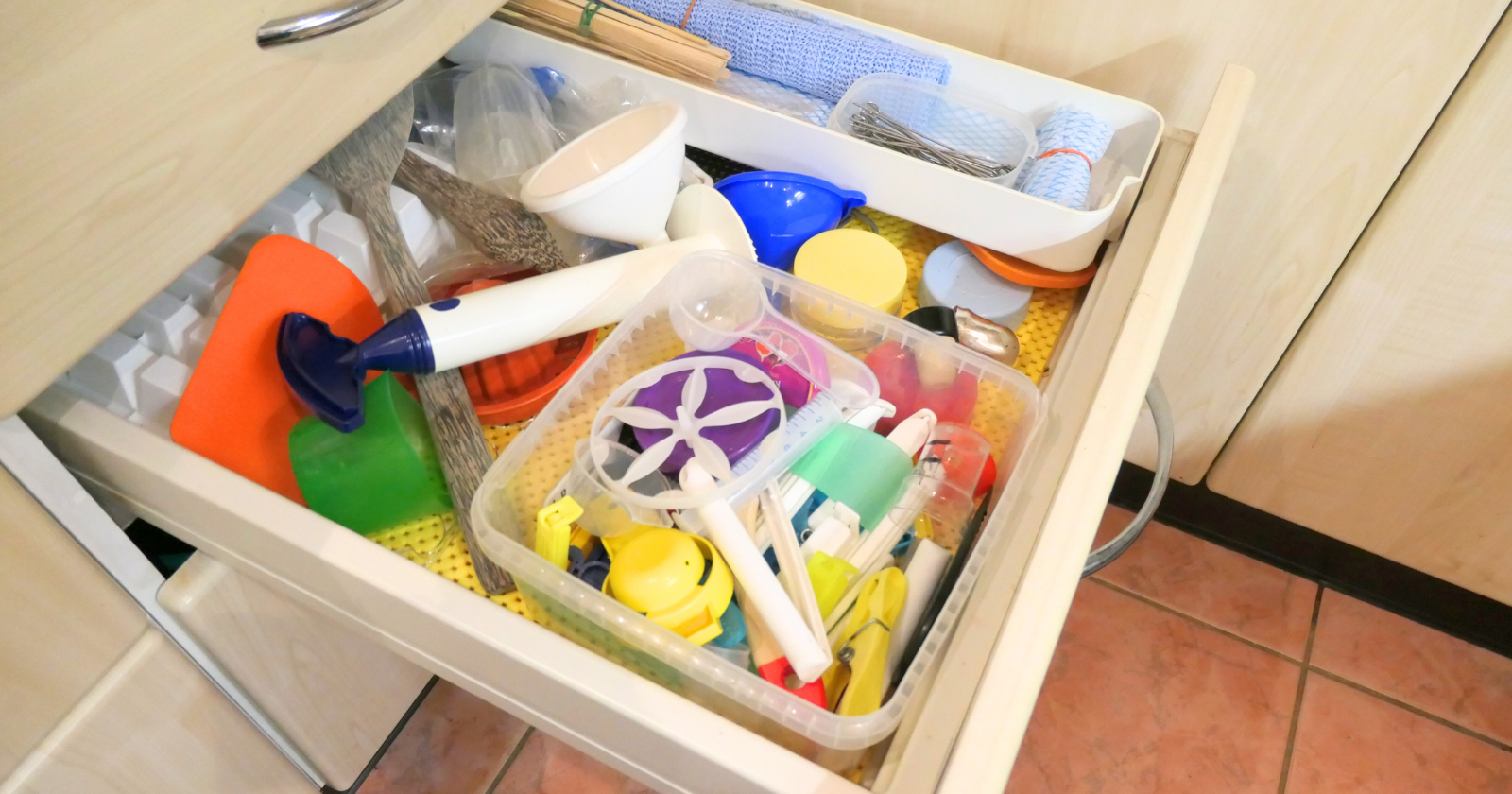
You probably know this drawer.
In my parents’ house, it started as one drawer in the kitchen.
Inside was everything: Old menus, mystery keys, soy sauce packets from five years ago, dead batteries, random tools, and even rubber bands that had fused into a single sticky ball.
By the time I was in high school, the junk drawer had become a junk zone.
Stuff overflowed into other drawers, onto counters, into random boxes “for later.”
It felt completely normal.
Every house has a space like that, right? Then I opened a drawer in my wealthy friend's kitchen looking for a fork.
It was peaceful, with cutlery lined up neatly and containers with matching lids.
No chaos and no avalanche of junk.
You might think this is just about aesthetics, but it is deeper.
Living in constant clutter adds friction to everything: You waste time looking for basic things, you feel subtly stressed every time you open a drawer, and you keep telling yourself you will “sort it out soon,” which drains mental energy.
Order is about lowering resistance so you have more energy for things that actually matter.
5) The pile of scary paperwork
On the side of our microwave growing up, there was always a stack of paper: Bills, reminders, letters from school, and random official-looking envelopes no one wanted to open.
In my kid brain, money and admin felt like this looming, slightly shameful monster in the corner of the kitchen.
Then I walked into my wealthy friend's house and saw something very different.
On the wall near their kitchen table, there was a simple whiteboard and a small organizer: Upcoming bills, due dates, school forms, all neatly arranged.
Visible and under control; his parents would actually talk about money out loud without the air getting tense.
At home, the unspoken rule was: Money is stressful and bills are scary, we do not talk about it unless something is wrong.
In his house, the energy was more: Money is a tool and bills are just part of life, we deal with things before they become emergencies.
The physical environment reflected the mindset.
If you grew up with the “scary stack” vibe, you might be carrying that into adulthood.
Make your money and admin visually organized, not emotionally loaded.
You are just teaching your nervous system that adult responsibilities can live in the open without eating you alive.
6) The things that stayed broken
Finally, there was all the stuff in my parents' house that just stayed broken.
The chair you were warned not to lean back on, the cabinet door that only closed if you kicked it, and the lightbulb that never got replaced, so that corner of the hallway stayed dim for months.
When I went to my wealthy friend’s place, I noticed something strange.
Things worked as door handles turned properly, lights came on, and the table did not wobble when you cut your food.
If something broke, it got fixed. No big speech. No drama. Just, “Yeah, that hinge was loose, I called someone.”
It took me years to realize how deep that difference goes.
Living with broken things teaches you:
- “Just work around it.”
- “Don’t ask for too much.”
- “This is fine, I can adapt.”
Sometimes that is a necessary survival skill, but it can bleed into everything.
You stay in a job that is not working, you tolerate friendships that drain you, and you put up with systems that waste your time because “that’s just the way it is.”
Every time you fix one tiny broken thing, you send yourself a message: “My comfort and ease matter.”
That feeling is addictive in a good way.
The bottom line
Visiting that wealthy friend’s house did something more useful: It showed me that what I thought was “just how life is” was actually “just how my life was set up.”
You do not need a bigger house or a richer life to shift that, because all you need is to start noticing: Where am I on autopilot? What feels “normal” only because I have never seen another option? Which tiny upgrade would make my daily life kinder, calmer, or more intentional?
You can give yourself the same shift from right where you are, using what you have, in the home you live in now.