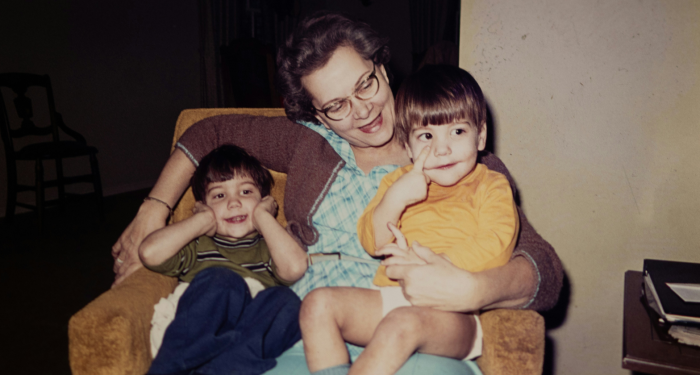
The bag is empty, your fingers are dusted orange, and something inside you is already scanning the kitchen for what comes next.

Add VegOut to your Google News feed. 
The bag is empty. Your fingers are dusted orange, or maybe coated in that slick residue that clings to the roof of your mouth like a question you can't quite form. You ate the whole thing. You know you ate the whole thing because the evidence is crumpled in your lap. And yet something inside you, something older and more honest than the part of your brain that tracks calories, is already scanning the kitchen for what comes next. Not because you're hungry. Because you were never fed.
I came across a video from VegOut recently that explores this same gap from the angle of persistent fatigue—why eating can leave you more drained than nourished—and it adds another layer to understanding what our bodies are actually trying to tell us when we feel empty after a meal.
I'm fifty-three and I've been circling this feeling for decades. The hollow twenty minutes after a bag of chips that somehow weighs heavier than the hollow before it. The strange guilt of having consumed without being satisfied, like reading an entire book and retaining nothing. My mother used to say the food I ate "went right through me," and she meant it as a comment about metabolism. She was closer to the truth than either of us understood.
The Gap Between Eating and Being Fed
There's a distinction most of us never learned to make, and it's the one that explains why a bowl of lentil soup can leave you feeling settled for hours while a drive-through meal that contained twice the calories has you rummaging through the pantry before the evening news. Eating is mechanical. Being fed is neurological, hormonal, emotional. The two overlap when food is whole, when it arrives with fiber and micronutrients and the complex textures your body evolved to interpret as nourishment. They diverge, sometimes violently, when food has been engineered to bypass the systems that tell your brain the job is done.
Ultra-processed food (and by that I mean the stuff that bears almost no resemblance to anything that once grew or grazed: the extruded, flavored, coated, shelf-stable products that research suggests make up a significant portion of the American diet) does something peculiar. It satisfies the mouth. It triggers dopamine. It floods the reward centers with a signal that says yes, good, more. But it often fails to activate the slower, deeper satiety pathways that whole foods engage. Your gut receptors, your stretch receptors, your hormonal cascade of satiety signals, the ones that collectively whisper enough, receive a muted signal. Or a confusing one. Or none at all.
So your brain registers that eating happened. It has the dopamine receipt. But the body's accounting department, the metabolic back office that tracks whether actual nourishment arrived, flags the transaction as incomplete. And that discrepancy, that gap between the event of consumption and the experience of being fed, creates a restlessness that most people interpret as hunger when it's really something closer to confusion.
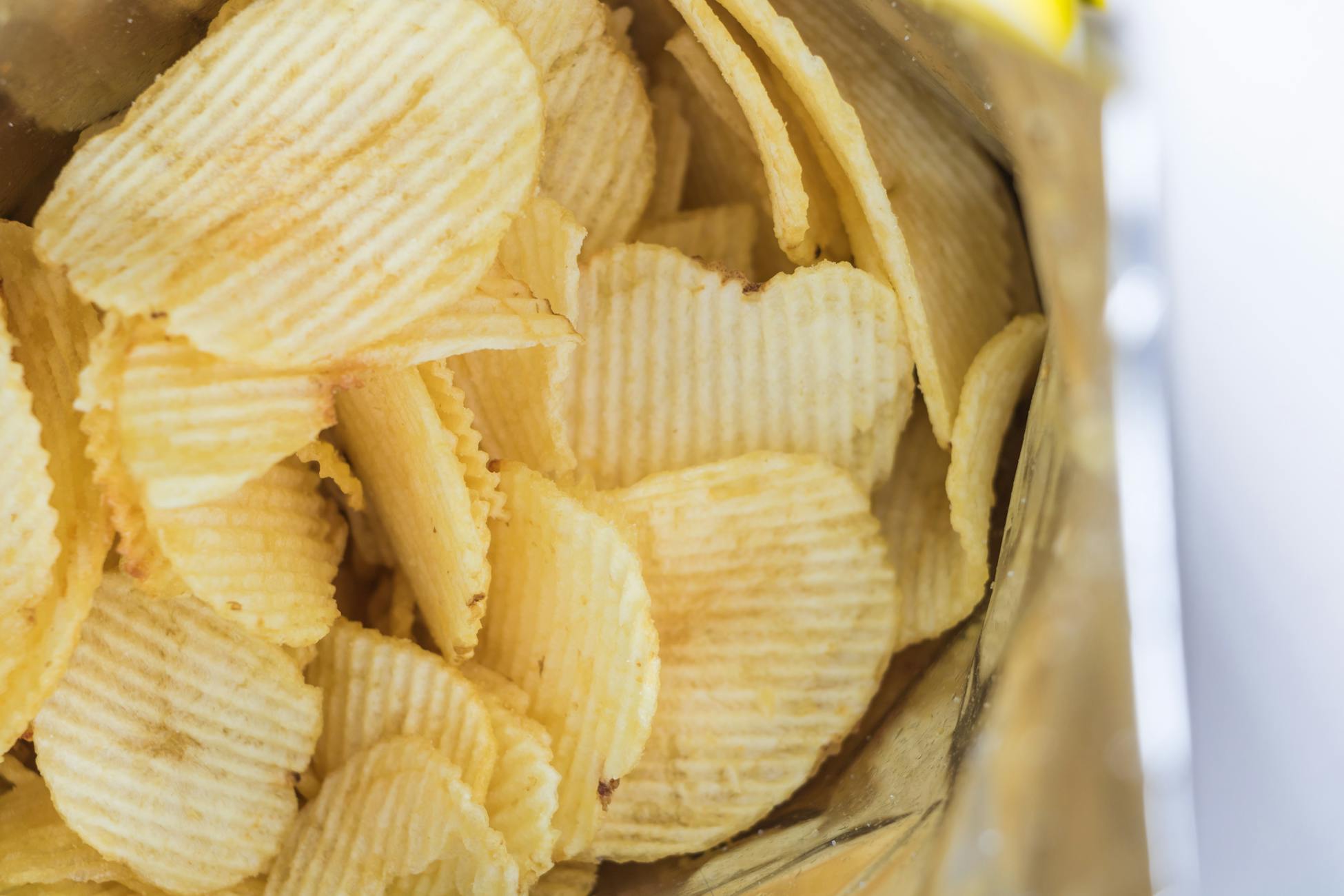
Your Body Keeps a Ledger You Can't See
I spent years thinking I had a willpower problem. I'd eat a frozen meal, feel nothing, eat another. I'd finish a sleeve of cookies and feel almost angry, as though someone had promised me something and reneged. It took a long time to understand that the anger was legitimate. My body had been promised something. Every bite of hyper-palatable food sends a signal that nutrition is incoming. The sweet taste primes insulin release. The salt suggests minerals. The umami implies protein. And when the nutritional payload turns out to be mostly refined starch, seed oils, and flavor chemicals, the body doesn't just shrug. It recalibrates. It asks again. It reaches.
Research has shown that when participants eat ultra-processed versus unprocessed diets, even when matched for calories and macronutrients, those eating ultra-processed foods tend to consume significantly more calories per day. They eat faster. They gain weight. Those eating unprocessed foods lose weight without trying. Same macros. Same availability. The variable is the processing itself.
Hundreds of extra calories a day, consumed by people who weren't trying to overeat and had no dietary restrictions imposed on them. That number haunts me. Because it suggests the overeating isn't a character flaw. It's a mechanical response to food that speaks the language of nourishment without delivering the substance of it.
The Emotional Echo
Here's where it gets personal, and where I think the psychology matters as much as the biochemistry. That twenty-minute window after ultra-processed food, the one where the emptiness creeps back in, carries an emotional signature. It feels like disappointment. Like reaching for someone's hand and finding air. And if you grew up in a household where food was love, where a full plate meant someone cared, then that post-meal emptiness isn't just physical. It echoes something older.
I think about my father, who worked overnight shifts and showed affection primarily through what he brought home from the gas station at 6 AM. Donuts in a plastic clamshell. Cheese danishes wrapped in cellophane. He wasn't neglectful; he was exhausted and doing his best with the currency he had. But the food he offered was incapable of completing the emotional transaction it was meant to represent. I ate the donuts and wanted more, and the wanting wasn't greed. It was the gap between gesture and nourishment, playing out in miniature every single morning.
People who study self-control often frame overeating as a failure of discipline. But discipline assumes you're fighting a fair opponent. Ultra-processed food is designed, explicitly and expensively, to override your regulatory systems. Food scientists have developed techniques to engineer the precise ratio of sugar, fat, and salt that maximizes craving. That's an adversarial relationship between the eater and the eaten, and framing the eater's loss as moral failure is convenient for the companies doing the engineering.

What Nourishment Actually Feels Like
The first time I ate a meal that truly fed me, I mean registered as complete, I was forty-six years old and sitting at a friend's kitchen table eating black bean soup with roasted sweet potato and a pile of braised greens. Nothing fancy. Nothing Instagram-worthy. But about thirty minutes after eating, I noticed something unfamiliar: I wasn't thinking about food. My body had gone quiet. The hum of low-grade wanting, the one I'd carried so long I thought it was just part of being alive, had stopped.
I almost cried, and I'm not someone who cries easily. Because in that silence I understood, for the first time, how loud the wanting had been. How much mental energy I'd spent, every single day, managing the gap between eating and being fed. The constant negotiation (should I eat again, am I actually hungry, maybe just a snack, maybe just something small) wasn't a personality trait. It was a symptom.
Whole plant foods do something that ultra-processed foods structurally cannot: they deliver nutrients in the matrix your body expects. Fiber slows absorption. Micronutrients complete enzymatic processes. Phytochemicals communicate with gut bacteria in ways we're only beginning to map. The result is a satiety that doesn't just fill space in your stomach but actually resolves the biological inquiry your body initiated when you sat down to eat. The question was "do we have what we need?" and the answer, finally, is yes.
The Reach That Never Ends
The cruelest part of the ultra-processed cycle is how it mimics emotional patterns that many of us already carry. The reach for more. The hope that the next one will be the one that satisfies. The low-grade shame of wanting something you just had. If you've ever been in a relationship where affection was offered in bursts but never sustained, where someone gave you just enough to keep you hoping but never enough to let you rest, then you already know what ultra-processed food does to your nervous system. It's a pattern that behavioral psychology recognizes as one of the most effective ways to create compulsive behavior in any mammal.
I've watched people I love cycle through this for years. My sister, who keeps a drawer of protein bars at her desk and eats three by noon, each one a tiny promise that the next will be the one that quiets the noise. My neighbor, who orders delivery every night and throws away half of it because she's searching for the meal that makes her feel like someone cooked for her, even though the feeling she's chasing requires a human being in a kitchen who knows her name. The food industry has gotten extraordinarily good at selling the appearance of nourishment. The packaging promises energy, protein, wholeness. The body opens the package and finds a debt.
And so the reaching continues. Not because people are weak, or undisciplined, or lack information. Because the food itself creates the conditions for its own re-consumption. That's the business model. A product that satisfies is a product you buy once. A product that almost satisfies, that gets you close enough to keep believing, is a product you buy every day for the rest of your life.
Sitting With Enough
I don't have a clean ending for this because the truth doesn't come with one. I still eat ultra-processed food sometimes. I still feel the hollow afterward. The difference now is that I recognize the hollow for what it is, and I've stopped blaming myself for it. The people who approach food as a quality question rather than a quantity problem tend to find a kind of peace that calorie-counters and macro-trackers rarely do. Enough is a feeling before it's a number.
The shift, when it came, wasn't dramatic. I started cooking more. Simple things. Beans from a pot, vegetables roasted on a sheet pan, rice that took thirty minutes instead of thirty seconds. I started noticing that meals made from recognizable ingredients left me quieter afterward. Stiller. And the stillness accumulated into something I can only describe as trust, a slow rebuilding of the relationship between my body's asking and the world's answering.
Twenty minutes after a bowl of lentils, I'm not thinking about food. Twenty minutes after a bag of chips, I'm opening the fridge. The difference between those two states contains an entire philosophy of eating, one the food industry hopes you never articulate. Because the moment you name the gap, you stop blaming yourself for falling into it. And the moment you stop blaming yourself, you start making choices that actually close it.
The bag is empty. But you don't have to be.
If You Were a Healing Herb, Which Would You Be?
Each herb holds a unique kind of magic — soothing, awakening, grounding, or clarifying.
This 9-question quiz reveals the healing plant that mirrors your energy right now and what it says about your natural rhythm.
✨ Instant results. Deeply insightful.

Adam Kelton
Adam Kelton is a writer and culinary professional with deep experience in luxury food and beverage. He began his career in fine-dining restaurants and boutique hotels, training under seasoned chefs and learning classical European technique, menu development, and service precision. He later managed small kitchen teams, coordinated wine programs, and designed seasonal tasting menus that balanced creativity with consistency.
After more than a decade in hospitality, Adam transitioned into private-chef work and food consulting. His clients have included executives, wellness retreats, and lifestyle brands looking to develop flavor-forward, plant-focused menus. He has also advised on recipe testing, product launches, and brand storytelling for food and beverage startups.
At VegOut, Adam brings this experience to his writing on personal development, entrepreneurship, relationships, and food culture. He connects lessons from the kitchen with principles of growth, discipline, and self-mastery.
Outside of work, Adam enjoys strength training, exploring food scenes around the world, and reading nonfiction about psychology, leadership, and creativity. He believes that excellence in cooking and in life comes from attention to detail, curiosity, and consistent practice.
More Articles by Adam