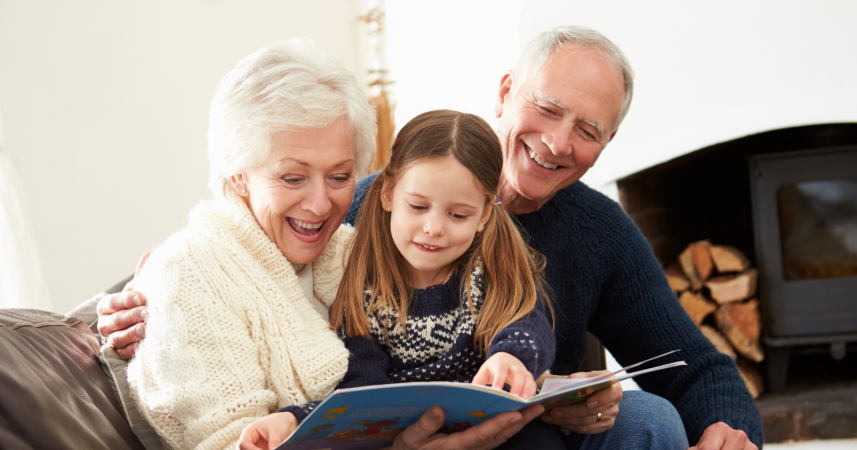
The most unforgettable grandparents aren’t the flashiest—they’re the ones who make kids feel safe, seen, and deeply loved in the smallest everyday moments.
When I was six, my abuelito used to sit on a rickety bench under the orange tree in our backyard with a bowl of watermelon slices and a flyswatter in hand. He’d call me over with a simple “Ven acá, mija” and pat the bench beside him.
We didn’t always talk. Sometimes we just sat and listened to the birds, or he’d hum a tune while peeling oranges with his thumb like it was a craft. But I never questioned whether he wanted me there. I knew he did—every single time.
Looking back, he wasn’t trying to impress me or “teach life lessons.” He just showed up in a way that made me feel seen. Safe. Loved.
If you’re wondering whether you’re making a difference as a grandparent, chances are, you already are.
But if you’re curious what truly sticks with kids—long after the toys are forgotten—here are 8 signs you’re the kind of grandparent they’ll never stop appreciating.
1. You don’t try to compete with their parents
My grandmother had this rule: Never undermine my mom in front of me. Even when she disagreed (which I found out years later), she’d pull my mom aside privately, never make it a performance.
She didn’t say things like, “Well, your mom doesn’t let you have sweets, but I will.” She’d say, “Let’s check with your mom first.”
That balance made her feel like a teammate—not a wildcard.
Great grandparents know that their role isn’t to be the “fun one” at the expense of trust. They support the parents’ boundaries, even if they offer a softer landing. They don’t say “Don’t tell your mom”—because they’re not about secrets. They’re about safety.
When a child sees you respect their parents, they learn what healthy communication looks like. And believe it or not, they relax more around you when they don’t feel caught in the middle.
2. You make them feel like their time matters
Kids don’t talk in bullet points. They meander, loop, and trail off. Their stories include every single Pokémon, irrelevant backstories, and plot holes you could drive a truck through.
But if you still nod along, ask questions, or wait patiently as they flip through their drawings looking for just the right one—you’re doing something quietly powerful.
You’re telling them their words are worth listening to.
You’re not checking your watch. You’re not correcting their grammar mid-story. You’re present.
And presence, for kids, is the clearest expression of love they understand. Even 10 minutes of undivided attention—no phone, no rush—can become a memory they come back to years later.
3. You let them be little
Kids spill things. They forget things. They melt down for reasons that make no logical sense.
Strong grandparents don’t treat every tantrum like a teachable moment. They recognize when a child is dysregulated, not defiant.
You don’t have to fix the emotion. You just need to stay close.
That might look like quietly wiping up the spilled juice without a sigh. Or sitting nearby while they pout instead of saying “This is ridiculous.”
As Dr. Mona Delahooke writes, behaviors are "communication of an unmet need.” What looks like stubbornness is often stress. What looks like laziness is sometimes overstimulation.
Letting kids be little doesn’t mean letting go of all rules. It means meeting them where they are, not where you wish they were.
4. You tell stories—not just give advice
Kids will forget most of the advice you give them. But your stories? They stick.
The best grandparents use storytelling to teach, not lecturing. They talk about the time they got stage fright in the school play—or how they used to sneak mangoes from a neighbor’s tree and got caught.
Your stories remind kids that you were once a kid too. That you messed up. That you tried things and failed and still turned out okay.
It builds trust. It invites questions. It opens the door for them to share their stories too—without fear of judgment.
And in those exchanges, something magical happens. They learn how to navigate the world without even realizing they’re learning.
5. You create rituals, not just visits
Every Friday night, my abuelito would make us popcorn—on the stove, never in the microwave. He’d toss it with cinnamon and a little salt, pour it into a big metal bowl, and we’d sit outside as the sun went down.
It wasn’t fancy. It wasn’t Instagram-worthy. But to me, it felt sacred.
That popcorn ritual became our thing. And even now, when I smell cinnamon, I think of him.
The best grandparents understand that rituals aren’t about extravagance. They’re about consistency and connection.
Maybe it’s a secret handshake. Maybe it’s a silly song you always sing at bathtime. Maybe it’s letting them choose your outfit when they sleep over.
These small, predictable things give kids a sense of belonging. It tells them: This is our time, and it matters.
6. You ask questions that go beyond “how was school?”
Let’s be honest: “How was school?” rarely gets a meaningful answer. You’ll usually get “Fine,” “Good,” or “I don’t remember.”
Great grandparents know how to get creative.
You ask, “If today had a soundtrack, what song would be playing?”
Or “Who made you laugh today?”
Or “If you could trade lunches with anyone in your class, who would it be?”
The goal isn’t to pry—it’s to open up space.
By asking questions that make kids think, imagine, or reflect, you’re showing them their inner world matters.
And when kids feel seen on that level, they open up in ways they never do with adults who only ask about grades or chores.
7. You show up the way they need
Some grandkids want to chat your ear off. Others want to play pretend for hours. And some just want to sit quietly next to you, each doing your own thing.
The grandparent every child dreams of notices those differences—and adapts.
You don’t try to force eye contact if it makes them uncomfortable. You don’t demand hugs if they’re not feeling affectionate. You respect their social battery. You follow their cues.
That kind of flexibility teaches kids a beautiful lesson: that love can be quiet, and it can take many forms.
When a child feels loved as they are, not as they perform, they begin to feel safe in their own skin.
8. You model self-respect
Kids notice everything. The way you speak to a rude customer service rep. The way you handle a disagreement with their parents. The way you react when plans change unexpectedly.
In other words, you teach them more through how you behave than anything you say.
When you set boundaries calmly…
When you apologize without spiraling into guilt…
When you say, “I need a minute,” instead of snapping…
You're modeling emotional regulation, resilience, and self-respect.
These are not just adult skills—they’re life skills. And by embodying them, you plant seeds your grandkids will carry with them long after you're gone.
Final words
Being the grandparent every child wishes they had isn’t about being perfect or endlessly available.
It’s about showing up—with curiosity, patience, and a willingness to see kids not just as little versions of you, but as whole people becoming themselves.
And the beautiful thing is? You don’t need to do anything flashy. Just be consistent. Be warm. Be real.
That alone makes you unforgettable.
If You Were a Healing Herb, Which Would You Be?
Each herb holds a unique kind of magic — soothing, awakening, grounding, or clarifying.
This 9-question quiz reveals the healing plant that mirrors your energy right now and what it says about your natural rhythm.
✨ Instant results. Deeply insightful.