While some retirees find themselves watching from the sidelines as younger generations pass them by, others have discovered specific habits that keep them at the heart of family gatherings, community projects, and meaningful cross-generational friendships—and the difference isn't what you might expect.

Add VegOut to your Google News feed. 
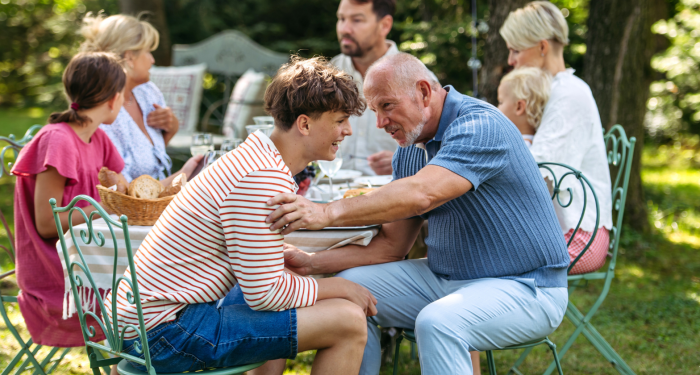
Last week at the library, I watched two different scenes unfold. At one table, a grandfather was helping his teenage granddaughter research colleges on his tablet, both of them laughing over something on the screen. At another, a woman about my age sat alone, watching a group of young people work on a project together, her expression wistful and distant. The contrast struck me deeply. Some of us in retirement seem to naturally bridge the generational divide, while others feel like we're watching life through a window we can't quite open.
After three decades of teaching high school English, I thought I understood young people pretty well. But retirement has taught me that staying connected across generations requires more than just proximity or even genuine affection. It takes intentional choices and, sometimes, a willingness to feel a bit foolish.
They embrace technology without letting it intimidate them
When my granddaughter first asked if we could FaceTime, I had no idea what she was talking about. The thought of video calls terrified me. What if I pressed the wrong button? What if I couldn't figure out how to hang up? But watching her face light up when she could show me her new bedroom from three states away made every awkward learning moment worth it.
The retirees who stay connected don't necessarily become tech wizards. They simply refuse to let technology become a wall between them and the people they love. I took classes at the senior center, yes, but more importantly, I asked my grandchildren for help. Nothing bonds you with a 14-year-old quite like admitting you need their expertise. Now, my youngest grandson and I exchange silly photos through something called Snapchat, and while I still don't understand all the filters, I understand the joy in his messages perfectly well.
They show genuine curiosity about younger people's lives
Do you know what your grandchildren actually do for fun? Not what you assume they do, but what truly excites them? The most connected retirees ask questions without judgment. They listen to music they don't understand, watch shows that seem bizarre, and ask about video games with sincere interest.
One afternoon, my 22-year-old grandson spent an hour explaining cryptocurrency to me. Did I understand it all? Hardly. But I understood his passion for it, his hopes for his financial future, and his pride in teaching me something new. That conversation opened doors to many others about his career dreams and concerns that he might not have shared if I'd dismissed his interests as incomprehensible modern nonsense.
They share their stories without lecturing
Young people actually love hearing our stories, but there's a crucial difference between sharing and preaching. The retirees who connect best tell stories that invite conversation rather than shut it down. Instead of "In my day, we did things properly," try "Here's what happened to me once, and I'm still trying to figure out what it meant."
I've found that vulnerability creates connection across any age gap. When I tell my grandchildren about the mistakes I made, the times I was scared, or the dreams I had to adjust, they lean in. They see me as a person, not just a repository of outdated wisdom. And surprisingly often, they share their own struggles in return.
They stay current without trying to be young
There's nothing quite as uncomfortable as watching someone my age try to use teenage slang or dress like they're 25. But staying current doesn't mean pretending to be younger. It means staying engaged with the world as it is now, not as it was in 1985.
I read contemporary books, not just the classics I taught for years. I know the names of current musicians even if I prefer my old favorites. I understand the basics of social media platforms even if I don't use them all. This isn't about being cool. It's about being able to participate in conversations about the world my younger family members actually inhabit.
They create new shared experiences
Memory lane is lovely, but you can't live there. The most connected retirees actively create new memories with younger generations. They don't just reminisce about old family vacations; they plan new adventures that everyone can enjoy.
When I started learning Italian at 66, my teenage granddaughter asked if she could learn with me. Now we practice together over video calls, planning a trip we'll take together someday. We're not looking backward; we're building something forward. These shared projects create bonds that feel alive and growing, not preserved in amber.
They respect generational differences
I've been thinking a lot about generational perspectives lately, especially after reading Jeanette Brown's new guide on thriving in retirement. If you've been following my recent posts, you know I keep coming back to this resource because it captures something I've been grappling with. Brown talks about how retirement is really an identity shift, not just a career exit, involving grief, relief, excitement, and confusion all at once.
This really hit home for me because I realized that just as I'm navigating my own identity shift, younger generations are dealing with their own complex transitions and challenges that I need to respect, not dismiss. It's free, by the way, and worth grabbing if you're wrestling with similar questions.
The retirees who stay most connected don't assume their way was the right way or that young people today have it easier. They acknowledge that every generation faces unique challenges. When my grandchildren talk about climate anxiety or the gig economy, I listen. Their worries are real, even if they're different from what kept me up at night at their age.
They maintain their own identity while staying flexible
Here's what might seem like a paradox: the retirees who connect best with younger generations are often the ones most comfortable in their own skin. They don't need validation from young people, but they're open to learning from them. They have their own interests and friendships but make room for intergenerational connections too.
I still love my book club with peers who get my references to old TV shows. But I also joined a community garden where I work alongside people from eight to eighty. Having my own full life means I can engage with younger people from a place of genuine interest, not desperate need.
They recognize the value exchange goes both ways
Perhaps most importantly, connected retirees understand that intergenerational relationships aren't charity work. Young people have so much to offer us beyond tech support. They bring fresh perspectives, challenge our assumptions, and yes, keep us sharp and engaged with life.
My great-grandchild, all of two years old, teaches me to see wonder in puddles and excitement in birds. My adult grandchildren help me understand how the world is changing and why it matters. These aren't just relationships where I dispense wisdom from on high. They're genuine exchanges where I often receive more than I give.
Final thoughts
Staying connected across generations isn't about keeping up with every trend or pretending the years haven't passed. It's about remaining curious, humble, and genuinely interested in the people around us, regardless of their age.
Some days I still feel that gulf between generations, but more often now, I find myself part of conversations that span decades, where age becomes less important than our shared humanity. That grandfather in the library wasn't just helping with college research; he was choosing connection over comfort, engagement over ease. And that choice, renewed daily, makes all the difference.