While the rest of us sync our grocery lists to the cloud, they're discovering that inefficiency might be its own reward
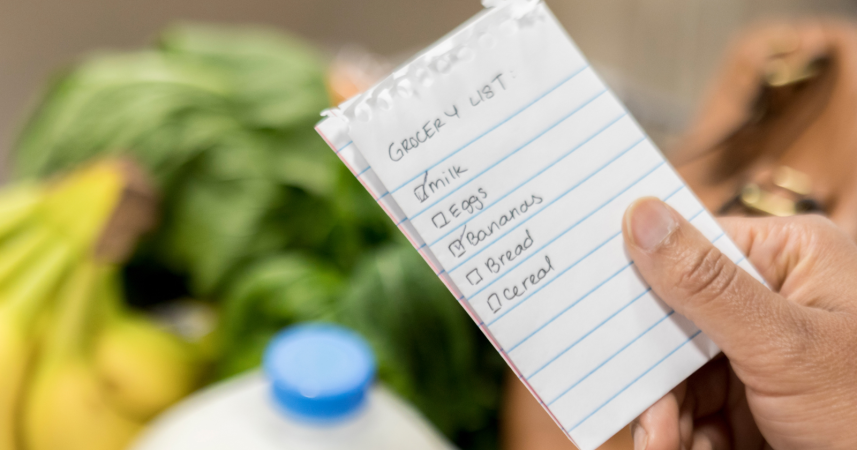
The shopping list I found on the floor at Trader Joe's was written on paper that had been folded and refolded many times. "Nice to see someone else still uses paper," I said with a laughed, returning it to its owner. She smiled sheepishly. "My daughter keeps trying to get me to use an app. But then how would I know I bought lemons three weeks ago for that recipe I never made?"
She showed me the list—I could actually see "lemons" written faintly beneath today's items, a ghost from a previous shop.
That interaction stayed with me. In a world where phones can do everything, the paper list persists. And the more I've paid attention, the more I've noticed that people who choose paper over pixels for their shopping lists share certain approaches to life that go beyond simple preference.
Here are 9 qualities I keep observing in people who still reach for pen and paper when it's time to shop.
1. They understand that memory is physical
Paper list writers often tell me they remember things better when they write them by hand. Research supports this—the physical act of writing activates different brain regions than typing. But it goes deeper.
These individuals frequently take handwritten notes in meetings, send actual birthday cards, keep recipe boxes instead of Pinterest boards. They've discovered that moving your hand across paper creates a different relationship with information. The grocery list becomes a physical artifact of planning and care.
"I can picture where I wrote 'tomatoes' on the list," one friend explained. "Top left corner, next to the coffee stain. That helps me remember why I needed them."
2. They value single-purpose moments
A paper list can't buzz with notifications. It can't tempt you to check Instagram while you're comparing yogurt prices. It does one thing: it holds your grocery list.
People who choose paper lists often protect other single-purpose experiences too. They own alarm clocks instead of using phones. They keep physical calendars on kitchen walls. They read books in bed. They've recognized that multifunctional devices can fracture attention in ways that simple tools don't.
These aren't luddites—many work in tech or use smartphones expertly elsewhere. They've simply decided that grocery shopping deserves its own dedicated tool.
3. They trust incomplete systems
Phone apps promise perfect organization: items sorted by aisle, automatic quantity tracking, shared lists that sync instantly. Paper lists offer none of this. They can be forgotten, lost, or rendered illegible by a leaky milk carton.
Yet paper list people seem comfortable with this imperfection. They navigate by landmarks rather than GPS, cook by taste rather than strict measurements, plan vacations with loose itineraries. They've learned that perfect systems can paradoxically create more anxiety than accepting some chaos.
"Sometimes I forget the list entirely," another paper devotee told me. "Then I have to shop from memory, which means I come home with interesting things I didn't plan for. My best meals come from those trips."
4. They create visible reminders of care
A shopping list on the kitchen counter is a different artifact than one hidden in a phone. It's visible evidence of planning, care, and domestic attention. Kids add items in crayon. Partners scribble notes in margins. The list becomes a family communication channel.
These visible paper trails often extend beyond grocery lists. Paper list people tend to leave notes on mirrors, stick reminders on dashboards, tape important things to refrigerators. They understand that care work—the planning and maintaining that keeps households running—deserves to be seen, not hidden in digital folders.
5. They resist optimization culture
Every shopping app promises to make you more efficient. They'll learn your habits, suggest items, streamline reordering. Paper lists offer no such optimization. You write "milk" every single week, by hand, like someone who hasn't heard the good news about technology.
But people who stick with paper resist optimization elsewhere too. They take scenic routes when highways would be faster. They cook from scratch when meal kits exist. They maintain friendships that require effort over convenience. They've opted out of the exhausting mandate to constantly streamline existence.
6. They find thinking in constraints
A paper list has edges. It runs out of space. This forces decisions: what's truly needed? What can wait? The constraint becomes a feature, not a bug.
I notice paper list people often excel in situations requiring creative constraints. They're good at packing light, decorating small spaces, working within budgets. They've learned that infinite options can paralyze, while limits can liberate. The finite paper becomes a tool for priority-setting in a world of endless choices.
I've started noticing this in my own lists. The back of an envelope forces decisions—there's no room for the aspirational groceries, the items I buy and never use. The constraint becomes clarity.
7. They maintain tactile connections
There's satisfaction in crossing items off a paper list—the scratch of pen on paper, the visible progress. Phone apps try to replicate this with haptic feedback and swoosh sounds, but it's not the same.
Paper list writers maintain other tactile practices. They journal in notebooks, prefer board games to video games, garden with hands in soil. They've noticed that physical interaction provides grounding that screens can't match. The shopping list becomes one way to stay connected to the texture of daily life.
8. They practice selective technology adoption
Choosing paper for shopping lists doesn't mean rejecting all technology. Instead, these people tend to be thoughtful about which tools deserve their digital attention and which don't. They might use sophisticated work software while keeping personal tasks analog.
This selective adoption extends beyond lists. They're often the ones who still wear analog watches while tracking workouts digitally, who use e-readers for travel but keep physical books at home, who video call distant family while writing thank-you notes by hand. They've developed a nuanced relationship with technology rather than an all-or-nothing approach.
9. They honor transitional rituals
Writing a shopping list marks the transition between planning and doing. Paper list writers tell me about their routines: Saturday morning coffee while making the list, checking pantry shelves with list in hand, the satisfied feeling of recycling a completed list.
These small rituals appear throughout their lives. They maintain bedtime routines, have specific ways of starting workdays, create buffers between activities. They understand that transitions deserve attention, that moving mindfully between tasks creates a different quality of experience than constant rushing.
Final thoughts
There's something worth considering in the persistence of paper lists. In an age of apps for everything, when efficiency is marketed as virtue, the paper shopping list offers something else: a chance to slow down, to touch something real, to create visible evidence of care.
The woman from Trader Joe's was right about those ghost lemons. Our paper carries history in ways our phones don't. Each crossed-off item becomes part of a record—not backed up to any cloud, but held in hand.
They're not behind the times. They're choosing which aspects of the times deserve their participation. In a world increasingly lived on screens, that's its own wisdom—written by hand, one grocery item at a time.
If You Were a Healing Herb, Which Would You Be?
Each herb holds a unique kind of magic — soothing, awakening, grounding, or clarifying.
This 9-question quiz reveals the healing plant that mirrors your energy right now and what it says about your natural rhythm.
✨ Instant results. Deeply insightful.