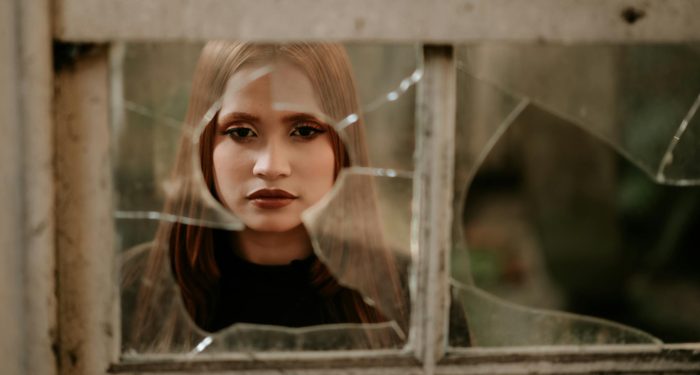
Burnout isn’t flames — it’s a slow leak. Here’s how I spotted mine and learned to refill, for real.

Add VegOut to your Google News feed. 
The week I finally admitted I was burnt out, I was technically thriving.
I had fresh stamps in my passport, a camera roll full of golden-hour rooftops, and a color-coded calendar that looked like confetti.
Friends were texting me for Barcelona tips. Editors were saying yes.
And yet I was standing in a Lisbon bakery, staring at a pastry I love, and feeling… nothing. Not sadness. Not joy. Just the dull hum of a fridge.
Burnout, in my head, looked like collapse. Tears on a keyboard. Sleeping fourteen hours straight. A dramatic quit email with too many commas. What I had was different: I could still hit my deadlines, still lace my shoes for a morning run, still smile in photos.
My life looked like a very full cup. Inside, it was a cracked mug with a slow leak.
Burnout wears good makeup
No one warns you that burnout can be tidy. Mine wore red lipstick and a neat bun. It used polite phrases: “I’ll squeeze that in.” “No, really—happy to help.” “It’s only for this month.”
I kept thinking, If I’m burnt out, why am I still producing?
Because sometimes productivity is the costume.
High-functioning burnout looks like being the reliable one. You deliver while shrinking. You say yes because it is safer than explaining no. You take on one more assignment because it’s easier than facing the quiet.
The quiet, for me, sounded like a train station at 3 a.m. — echoey, cold, with announcements you can’t quite hear. I filled it with motion.
New cities, new pieces, new plans.
Movement is a beautiful thing. But it can also be a very elegant avoidance strategy.
The symptoms no one clapped for
Here’s how mine showed up, in case this is you, too.
- I wasn’t sleeping badly — I was sleeping shallow. I woke up on the hour like a security guard in my own life.
- I wasn’t skipping meals — I was grazing on “easy” food that kept me functional but not fed. Half a protein bar. Coffee that tasted like permission. Almonds by the handful standing over the sink.
- I wasn’t missing workouts — I was turning movement into penance. If I felt foggy, I ran harder. If I felt anxious, I lifted heavier. Sweat as a receipt for worthiness.
- I wasn’t avoiding people — I was curating them. The friends who asked “How’s your heart?” got rain checks. The ones who asked for restaurant recs got instant replies. It’s easier to be helpful than honest.
And the work? Still getting done. Still good. But it took three times the effort for half the joy.
That, I’ve learned, is a reliable metric: when delight shrinks and drag expands, the engine is running hot.
The tiny humiliation that changed everything
The moment I knew I had to stop wasn’t grand. It was a Tuesday.
A kind waiter set a cappuccino on my table with a little heart in the foam, and I cried because I didn’t know what to do next. Not metaphysically. Literally next.
Answer the email? Edit the draft? Call my mom? Eat the croissant? The decision felt heavy as wet wool.
I walked home, sat on the floor, and wrote three sentences:
I am not okay.
No one is coming to grant me permission to rest.
If I keep going like this, what I love will start to feel like a threat.
Sometimes the paperwork for change is that small.
How I refilled the cup (without quitting my life)
I didn’t move to a cabin or delete the internet. I made unglamorous, non-Instagrammable swaps that, over a few months, changed everything.
1) I swapped “squeeze it in” for “I’ll get back to you tomorrow.”
Buying time became my first boundary. Most emergencies weren’t. The emails that still felt urgent after 24 hours were almost always clear and solvable — the rest solved themselves.
2) I swapped stackable tasks for single threads.
Monotasking is a boring superpower.
I started a rule: one tab, one task, one timer. Forty minutes on, ten off. If a thought barged in (“remember to book the train”), it went on paper, not into a new window.
3) I swapped willpower for design.
I moved my phone charger to the kitchen. I put my running shoes by the door and my laptop on a shelf at 9 p.m. I put a novel on my pillow, so I had to pick it up to go to sleep.
When I forgot who I wanted to be, my apartment remembered for me.
4) I swapped heroic workouts for consistent ones.
Three or four brisk walks a week, two short strength sessions, a long stretch on Sundays. Movement became a daily kindness, not a debt payment.
5) I swapped “catch up with everyone” for “call two people.”
Depth over breadth. I picked two humans who know my real voice and put recurring calls on the calendar. We keep them short. We don’t cancel.
I am less lonely by design.
6) I swapped caffeine after two for water with a squeeze of citrus.
Not because coffee is evil—because my sleep stopped fracturing when I treated my afternoon energy like a candle, not a blowtorch.
7) I swapped the endless scroll for a small, repeatable end to the day.
I light a cheap candle. I do a five-minute kitchen reset. I wash my face slowly, like I’m in a gentle commercial for a life I get to keep. It sounds ridiculous. It works.
None of this is impressive. That’s the point. Burnout thrives on spectacle. Recovery thrives on boring rituals.
The commitments I broke up with
I also had to end a few romances.
1) The romance with urgency.
That buzzy, caffeinated feeling that says your worth is measured in speed? I weaned off it like sugar. Urgency is a seasonings — not a food group.
2) The romance with being needed.
It feels good to be the person who knows, who fixes, who shows up. It also turns love into labor. I started asking, “Do I want to be needed here, or do I want to be known?” The answers were… clarifying.
3) The romance with immaculate timing.
Life didn’t punish me when I answered tomorrow. Clients didn’t fire me when I proposed a later deadline with a thoughtful plan. Trains still ran.
The biggest consequences were internal: my pulse stopped sprinting.
What came back when I rested
This is the part I wish I could bottle and hand you.
My appetite returned — literal and otherwise. Food tasted like itself again. Tomatoes were loud. Butter was kind. I could tell the difference between “I’m hungry” and “I’m empty.”
Ideas returned, not as a torrent, but as a steady drip I could trust. A paragraph on a walk. A metaphor in the shower. An opening sentence while I was chopping garlic.
Creativity is shy when it’s hunted. It comes when it feels safe.
And then the fragile things showed up: patience, playfulness, kindness for the person in my mirror. I didn’t have to give myself pep talks to be gentle; gentleness arrived as a side effect of being a mammal with enough sleep and actual meals.
If you’re squinting at your own cup right now
Maybe you’re reading this and thinking, "I’m not burnt out, I’m just tired".
I hope that’s true. Tired gets better with a weekend. Burnout needs a different kind of repair.
Here’s a three-step field test that helped me:
-
The 4 p.m. check-in.
How do you feel most late afternoons — steady, spiky, or smudged out? If “smudged” is your baseline, your nervous system is asking for help. -
The joy-to-drag ratio.
Pick something you usually love — your craft, your kid’s laugh, a perfect peach. Has the delight shrunk for more than a few weeks? That ratio is data. -
The honesty rehearsal.
Say out loud to an empty room: “I’m exhausted, and I need help.” If that sentence makes you tear up or get angry, congratulations — you found the door.
And if you can, add one dull ritual today.
A walk without your phone. Fifteen screens-off minutes before bed. Actual breakfast.
Recovery is built from tiny floors you can stand on, not grand staircases you’ll never climb.
What I keep now, no matter what the calendar says
- I keep white space on my schedule like it’s an appointment with someone powerful — because it is.
- I keep one day a week without social plans and one morning without an alarm.
- I keep a running list called “things that make me feel human” and I treat it like medicine when my edges go fuzzy: fresh air, making something with my hands, calling my brother, cleaning my desk, watching the sea for ten minutes without photographing it.
- I keep reminding myself that rest isn’t the reward for finishing life. It’s the infrastructure that lets me build it.
So yes, you can’t pour from an empty cup. But you also can’t pour well from a cup that’s cracked, or one you only fill with the emotional equivalent of vending-machine coffee.
Burnout, for me, didn’t look like flames. It looked like frost: quiet, numbing, creeping in thin layers over things I love until they went quiet, too.
The thaw was slow. It was measurable. It was worth everything I didn’t post about while it was happening.
And the life on the other side?
It tastes like butter and tomatoes and something warm you can finally hold with two steady hands.