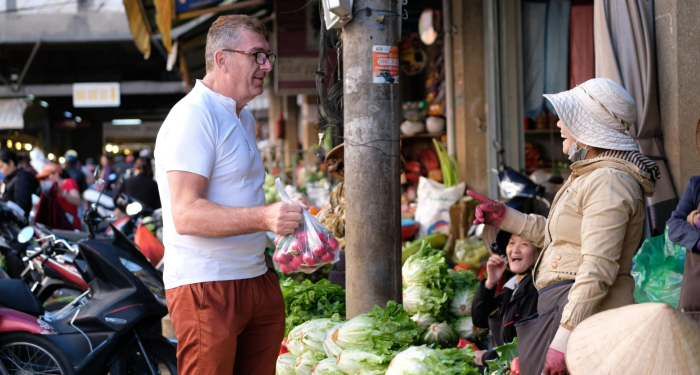
After 80+ countries as a vegan traveler, I discovered the ones who thrive aren't those with the best apps or strongest willpower—they're those who accepted before leaving home that they'll sometimes be the difficult guest who disappoints people, and that's perfectly okay.

Add VegOut to your Google News feed. 
Here's a photo from a temple in Kyoto: A fellow vegan traveler crying into her phone outside a restaurant because she accidentally ate fish stock.
Here's another: Me, same city, same week, laughing with locals over a completely plant-based feast they'd prepared just for me.
The difference between us wasn't preparation. We'd both done our homework, downloaded the same apps, memorized the same phrases. The difference was something I'd figured out months before boarding that plane - something behavioral scientists call "identity-based acceptance."
And after 80+ countries of navigating everything from Mongolian steppes to Argentine steakhouses as a vegan, I can tell you this: The travelers who thrive aren't the ones with the most willpower or the best planning apps. They're the ones who accepted one counterintuitive truth before they ever left home.
You're going to disappoint people. And that's okay.
The truth nobody tells you about vegan travel
When I first went vegan eight years ago after watching a documentary that shook me to my core, I thought the hardest part would be finding food. Turns out, finding plant-based meals in Bangkok or Barcelona is the easy part.
The hard part? Sitting across from a grandmother in rural Greece who's spent three hours cooking lamb specifically for you, the honored guest.
The hard part is watching her face fall when you explain you can't eat it.
I learned this lesson the hard way at my own grandmother's Thanksgiving table, watching her cry because I wouldn't eat her famous turkey stuffing. That moment taught me something crucial: Being vegan isn't just about what you eat. It's about accepting that your choices will sometimes hurt people you care about.
And here's where the research gets interesting.
Studies in behavioral psychology show that people who frame their choices as part of their identity ("I am vegan") rather than restrictions ("I don't eat animal products") experience less decision fatigue and more satisfaction with their choices.
But there's a catch - they also have to accept the social costs that come with that identity.
Why acceptance beats preparation every time
You can download all the translation apps you want. You can memorize how to say "no meat, no fish, no eggs, no dairy" in seventeen languages. I've done all that.
But if you haven't made peace with being the difficult one, the different one, the one who causes extra work - you're going to crack.
I've watched it happen. Vegans who cave and eat the fish in Japan because they can't bear to seem rude. Vegetarians who give up and eat meat in Mongolia because they feel guilty about the hassle. They didn't lack willpower. They lacked acceptance of what their choice really meant.
Think about it: Every meal in a new country is a potential social minefield. You're not just navigating menus. You're navigating centuries of culture, tradition, and hospitality norms that revolve around sharing food.
When someone in rural Vietnam kills a chicken in your honor, that's not just dinner. That's respect, generosity, and connection all wrapped up in one meal. Refusing it feels like refusing all of those things.
The mental shift that changes everything
So what's the alternative? Embrace being the villain in someone else's story.
I know how harsh that sounds. But hear me out.
I've mentioned this before, but the moment I stopped trying to make everyone comfortable with my choices was the moment travel became joyful again. Instead of apologizing profusely and explaining endlessly, I started saying simply: "I don't eat animal products. What can you recommend?"
No lengthy justifications. No guilty expressions. Just clear, kind boundaries.
The research backs this up. Psychologists studying "moral identity" find that people who own their choices without over-explaining experience less anxiety and more authentic connections. They might face more initial resistance, but they build stronger long-term relationships based on honesty rather than people-pleasing.
What this looks like in practice
In Morocco, I sat with a Berber family who'd prepared a tagine with lamb. Instead of panicking or pretending to eat, I simply explained my choice and asked about the vegetables and bread. The grandmother was confused at first, maybe a bit offended.
But then she became curious. We spent the next hour with her teaching me to make her special harissa blend while I shared why I'd made this choice.
Did she understand completely? Probably not. Was she slightly put out? Definitely. But was it a genuine exchange between two people being honest about who they are? Absolutely.
Compare that to my friend who spent two weeks in Peru pretending to eat guinea pig, sneaking it into napkins when no one was looking, stressed beyond belief, and ultimately getting food poisoning from something she reluctantly ate to avoid seeming rude.
The unexpected benefits of being "difficult"
Here's what nobody tells you: Once you accept being the difficult one, magical things start happening.
Restaurant owners get creative, proud to show you they can make something special. Fellow travelers seek you out, curious about your experiences. Locals introduce you to their one vegan cousin or that hidden Buddhist restaurant only they know about.
In Taiwan, a night market vendor spent twenty minutes creating a completely new dish just for me, calling over other vendors to collaborate.
In Istanbul, a restaurant owner closed his kitchen to personally make me a meal, sitting with me afterward to ensure it was perfect. These connections happened because I was clear about my needs, not in spite of it.
You become memorable. You become a story they tell. "Remember that American who wouldn't eat fish sauce? I created a whole new recipe for them!"
The real cost of people-pleasing
Let's talk about what happens when you don't accept this truth. You end up exhausted, resentful, and ironically, creating more awkwardness than if you'd just been upfront.
You hover anxiously at every meal. You make scenes trying to secretly dispose of food. You lie, badly, about allergies or stomach problems. You turn what could be a simple "no thank you" into an elaborate performance that fools no one and stresses everyone.
Worse, you start avoiding experiences. You skip the homestay in favor of a hotel. You eat alone instead of joining group meals. You miss out on the very connections that make travel meaningful.
Wrapping up
After visiting over 80 countries as a vegan, I can tell you this with certainty: The people who thrive aren't the ones trying to make their veganism invisible. They're the ones who've accepted that their choice will sometimes make them the difficult guest, the challenging customer, the person who doesn't fit neatly into the expected script.
And that's okay. Actually, it's more than okay - it's liberating.
You don't need more willpower to maintain your values while traveling. You don't need better planning apps or more phrases memorized. You need to make peace with disappointing some people along the way.
Because here's the thing: You can either disappoint others occasionally, or you can disappoint yourself constantly. Once you accept that trade-off, really accept it, travel becomes an adventure again instead of an endless negotiation with your own values.
The world is full of incredible plant-based food, creative chefs, and understanding people. But you'll only find them if you stop apologizing for who you are and start showing up as yourself - even if that makes you the difficult one at the table.