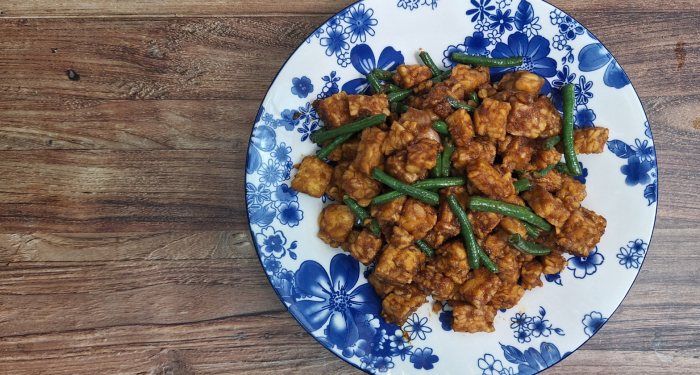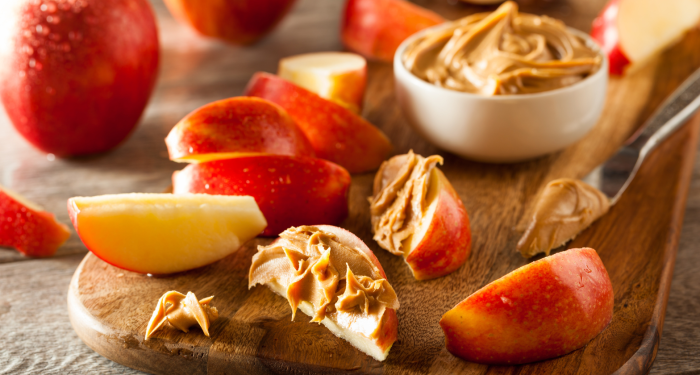
Whether it’s a smoothie you can build blindfolded or toast you’ve perfected down to the minute, repeating your first meal of the day says a lot about you.
You and I both know breakfast can be deeply personal.
Ask ten people what they eat in the morning and you’ll get ten tiny autobiographies.
For a lot of us, there’s comfort in repetition.
A bowl of overnight oats, perfectly jammy egg on toast, and the same smoothie, measured and memorized like a favorite song.
I spent my twenties in luxury hospitality, where mornings started before sunrise and everything ran on ritual.
Mise en place wasn’t just for the kitchen; it was a way of thinking.
Now, as a writer who still loves a good tasting menu and the magic of street food, I notice something funny about folks who stick to the same first meal every day.
Psychology has a few names for it—habit loops, automaticity, cognitive load—but let’s keep it simple.
If you’re a “same-breakfast” person, I’d bet you share several personality traits that show up well beyond the plate:
1) Disciplined consistency
If you default to one breakfast, you’ve basically outsourced willpower to a routine.
In behavioral psychology, repetition builds automaticity.
The more a behavior repeats in the same context, the less effort it takes to execute.
Mornings are chaotic for most of us, so locking in one reliable choice is a clever move.
You don’t negotiate with yourself—you just do.
When I worked service, the most reliable people weren’t the flashiest.
They were the ones who set up their station the exact same way every shift—knife here, salt there—so they could produce under pressure.
Breakfast can work like that.
The discipline you practice at 7:00 a.m. bleeding into how you answer emails at 9:00, train at 6:00, and show up for your people at 8:00 p.m.
You’re the type who recognizes that consistency beats intensity; you’d rather hit singles every day than swing for a home run once a month.
2) Low decision fatigue
Ever stood in front of the fridge and felt your brain seize up? That’s choice overload, and it’s real.
If you’ve committed to one breakfast, you’ve quietly solved a daily cognitive tax.
The fancy term is “reducing decision fatigue.”
The practical translation: You spend fewer mental calories on trivial choices so you can spend more on meaningful ones.
This was a survival tactic for me in kitchens.
By turning prep into a clockwork sequence—wash, chop, label—I saved my brain for the unexpected moments: A surprise VIP table, a last-minute menu change, a fridge that decided to die on a Saturday night.
Your breakfast routine signals you’re a prioritizer.
You don’t need twenty options; you need energy for priorities.
When you’re consistent here, it’s a good sign you know where your attention belongs—and where it doesn’t.
3) Conscientious planning
People who repeat the same meal tend to plan ahead without announcing it.
You probably shop in a tight loop.
You know exactly how many bananas you go through, which oat brand doesn’t taste like cardboard, and whether you need a new jar of almond butter this week.
That’s conscientiousness in action—a trait linked with reliability, follow-through, and better long-term outcomes.
In the kitchen, conscientiousness looks like labeling containers with dates and never cutting corners on food safety.
In life, it looks like setting calendar alerts, paying bills early, and keeping promises without drama.
Your breakfast might be small, but it’s a visible anchor point.
It says, “I take care of the boring things so the exciting things don’t explode.”
It also quietly reduces friction.
You’ve pre-committed to ingredients, equipment, and steps.
On days when you’re tired or stressed, future-you still gets fed because past-you set the table.
4) Identity clarity

Here’s a big one: Repeating the same breakfast often reflects a stable sense of self.
We like to think we make food choices in the moment, but most of us eat our identity.
Are you “the smoothie person,” “the eggs-and-hot-sauce person,” or “the chia pudding person”?
Labels are shortcuts; they make behaviors easier to execute because they’re tethered to who you believe you are.
In hospitality, identity is why a great dining room hums the same way every night.
The staff are that level of service as they’ve internalized it.
When you internalize your morning meal, you’ve done a tiny version of that.
You’ve moved a choice from “What should I do?” to “What do people like me do?”
Identity clarity is powerful.
When life goes sideways, you don’t flail as much because you’ve got a few non-negotiables.
Eat, move, write, call your mom.
These are rails that keep the train on track.
5) Optimization mindset
People who repeat meals often nerd out on micro-improvements.
Tell me you haven’t fine-tuned your breakfast over time—swapped cow’s milk for oat, bumped protein by ten grams, traded jam for fresh berries, learned the exact blender time that gets you the texture you like.
That’s an optimizer talking, but an optimization mindset doesn’t mean perfectionist.
In psychology, perfectionism spirals when the goal is flawlessness.
Optimization is quieter; it asks, “What’s the 1% tweak that makes this easier, healthier, or more enjoyable?”
You’re probably the person who upgrades your coffee grinder burrs, organizes your spices by cuisine, and knows the fastest path to your gym from the office.
I learned this mindset by watching pastry chefs obsess over croissant lamination.
One degree too warm and the butter breaks; one minute too long and you lose lift.
Excellence is thousands of micro-choices made consistently.
Breakfast is your daily lab for that way of thinking.
6) Sensory loyalty (with healthy boundaries)
If you eat the same breakfast every morning, you probably value rituals and sensory comfort.
Rituals stabilize mood.
They tell your nervous system, “We’re safe.”
The crunch of toast, the citrus hit from a slice of grapefruit, the warmth from a perfect cup—these are signals.
In psychology, predictable cues can lower stress and improve focus because your body isn’t bracing for impact.
Here’s the cool part: people with sensory loyalty also tend to know their boundaries.
You’re loyal to your ritual, but you’re not rigid.
You can travel and adapt.
I’ve been in hotel rooms in three time zones in the same week and still found my version of “home” in a simple yogurt bowl with honey and nuts.
It wasn’t identical, but the core was there.
Your style suggests you appreciate comfort without depending on it.
You know how to build familiarity into unfamiliar settings—an incredibly useful life skill.
7) Emotional resilience
Lastly, I notice a quiet resilience in people who repeat a morning meal.
When stress rises, the first thing to wobble is often our basics—sleep, food, movement.
If your breakfast holds steady when the rest gets loud, it’s a sign you’ve built some emotional shock absorption.
You don’t let a missed train or a tough email choose your diet for you.
In the kitchen, resilience looked like this: A dish gets sent back, the printer spits out twelve new tickets, the fryer oil foams for no reason—and the sauté cook still salts from up high and plates clean.
Ritual protects performance as it gives you a minimum viable day.
From a psychological angle, that’s called self-regulation.
You feel the feelings and still stick to the values-aligned action.
Your morning bowl or toast or smoothie becomes proof: even when the world tugs, you can anchor yourself.
Here’s something I’ve learned from reading widely in behavioral science and watching people in restaurants: Confidence is the quiet conviction that you’ll show up for yourself in small ways.
The bottom line
Whether it’s a smoothie you can build blindfolded or toast you’ve perfected down to the minute, repeating your first meal says a lot about you.
It points to disciplined consistency, low decision fatigue, conscientious planning, identity clarity, an optimization mindset, sensory loyalty with flexibility, and emotional resilience.
You’re not stuck because you’ve turned a single daily choice into a system that supports the rest of your life.
If that’s you, keep going; if you want it to be, start small.
Your future self will thank you—probably before the coffee’s even done.
What’s Your Plant-Powered Archetype?
Ever wonder what your everyday habits say about your deeper purpose—and how they ripple out to impact the planet?
This 90-second quiz reveals the plant-powered role you’re here to play, and the tiny shift that makes it even more powerful.
12 fun questions. Instant results. Surprisingly accurate.