From the moment I watched my friend's eyes light up at the sight of moving rice — yes, rice with red ant larvae — I realized my entire understanding of "normal" was about to shatter in the most unexpected way.

Add VegOut to your Google News feed. 
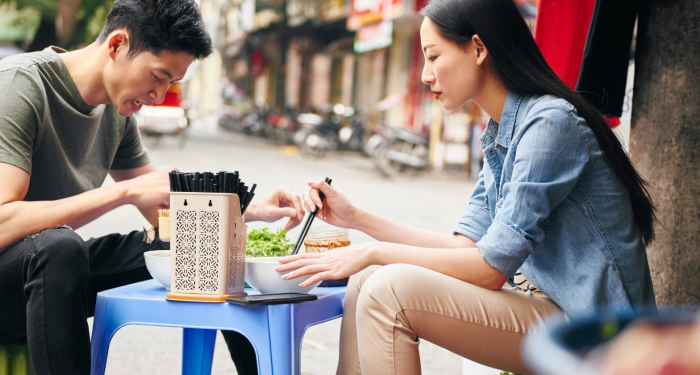
Picture this: You're sitting on a tiny plastic stool that's definitely not made for Western-sized bodies, sweat dripping down your back in the 95-degree Bangkok heat, watching a grandmother stir-fry something in a wok that's seen at least three decades of daily use.
The smell hits you first – fish sauce, garlic, chilies – then you see it. A plate of what looks like regular fried rice, except it's moving. Actually moving.
That was me three years ago, staring at a dish that would fundamentally reshape how I understood not just food, but my entire worldview. I'd come to Thailand for what I thought would be a career pause, maybe six months to reset after burning out in the luxury restaurant world.
Instead, I stayed for three years and left with something more valuable than any Michelin star experience could have taught me.
The dish that changed everything
It was red ant larvae fried rice. Let that sink in for a moment.
Not the ants themselves, but their eggs and larvae, tossed with jasmine rice, herbs, and a squeeze of lime. In Northern Thailand, this isn't poverty food or some tourist dare. It's a seasonal delicacy that locals genuinely get excited about when the rains come and the ants are harvesting.
The first time I encountered it, I was about two months into my Bangkok adventure, feeling pretty confident about my culinary openness.
I'd eaten street food daily, learned to love durian (yes, really), and could order in basic Thai without pointing at pictures. But watching my friend's eyes light up when she spotted this dish at a local market? That threw me.
"You have to try this," she said, already ordering two plates before I could process what I was looking at.
Here's what got me: It wasn't the texture (surprisingly pleasant, like tiny bursts of butter). It wasn't even the mild, nutty flavor.
What unsettled me was realizing that my entire framework for categorizing food as "normal" or "weird" was completely arbitrary. This dish that made my stomach turn at first glance was someone else's childhood comfort food.
When "strange" becomes Tuesday lunch
After that red ant rice experience, I started paying attention to my knee-jerk reactions to unfamiliar foods. Blood soup for breakfast? Sure, millions of people start their day with it. Fermented fish paste that could clear a room? It's been sustaining communities for centuries.
The thing about spending extended time eating what locals eat is that you can't maintain your outsider perspective forever. At some point, usually around month three, you stop translating everything through your home culture's lens. You stop comparing. You just eat.
I remember the exact moment this shift happened for me. I was at a food stall near my apartment, one I'd been visiting regularly, and the owner asked if I wanted to try something new. Without hesitation, I said yes. Didn't ask what it was, didn't need a description. Just yes.
That level of food trust would have been unthinkable for me back home, where I'd scrutinize restaurant menus online before committing to dinner plans. But here? I'd learned that my narrow definitions of edible, appetizing, and normal were holding me back from incredible experiences.
The privilege of being picky
Living in Southeast Asia taught me that being selective about food is largely a first-world luxury. When you grow up with abundance, you can afford to say "I don't eat that" or "that's gross."
But for most of human history and still for much of the world today, you eat what's available, what's seasonal, what your environment provides.
Those ant larvae? They're an excellent source of protein that appears reliably during certain months. That fermented fish? It preserves seafood in tropical heat without refrigeration.
Every "weird" food I encountered had a logical reason for existing, usually rooted in survival, nutrition, or making the most of available resources.
This realization hit especially hard because I'd spent years in high-end restaurants where we'd fly in specific mushrooms from Japan or source lamb from New Zealand. The contrast was staggering.
Here were communities creating incredible flavors from whatever grew, swam, or crawled nearby, while my former world obsessed over ingredients from thousands of miles away.
Beyond the plate
What started as discomfort with unfamiliar food evolved into questioning all my assumptions about normalcy. If I could be so wrong about something as basic as what constitutes acceptable breakfast food, what else was I missing?
The lessons went deeper than diet. Watching how Thai communities approached mealtime, always shared, never rushed, made me realize how isolated and hurried my own eating habits had been. I learned to slow down, not just with eating but with thinking, deciding, living.
Those three years taught me that my "normal" was just one tiny possibility in an infinite spectrum of human experience. Every time I sat down to eat something that would have horrified my former self, I was really practicing openness to different ways of being in the world.
Final thoughts
I still think about that first plate of red ant larvae rice. Not because it was particularly delicious (though it was actually pretty good), but because it represents the moment my world got bigger. Way bigger.
Coming back home after three years, I notice how often we use food as a boundary marker, a way to separate ourselves from others. "I could never eat that" becomes a way of saying "I'm not like those people." But what if we're missing the point entirely?
That grandmother stirring her wok in the Bangkok heat wasn't making "weird" food. She was making lunch. The distinction only existed in my head, built from years of cultural conditioning about what's acceptable to eat.
These days, when I encounter something unfamiliar, whether it's food, ideas, or ways of living, I try to remember that moment with the moving rice. My first instinct might be to recoil, to label it as strange or wrong.
But that's just my narrow definition talking. The real question isn't whether something fits into my existing framework of normal. It's whether I'm brave enough to expand that framework.
Because here's what six months of eating like a local taught me: Normal doesn't exist. It's just what you're used to. And you can get used to just about anything if you're willing to sit with the discomfort long enough to let it transform you.
If You Were a Healing Herb, Which Would You Be?
Each herb holds a unique kind of magic — soothing, awakening, grounding, or clarifying.
This 9-question quiz reveals the healing plant that mirrors your energy right now and what it says about your natural rhythm.
✨ Instant results. Deeply insightful.

Adam Kelton
Adam Kelton is a writer and culinary professional with deep experience in luxury food and beverage. He began his career in fine-dining restaurants and boutique hotels, training under seasoned chefs and learning classical European technique, menu development, and service precision. He later managed small kitchen teams, coordinated wine programs, and designed seasonal tasting menus that balanced creativity with consistency.
After more than a decade in hospitality, Adam transitioned into private-chef work and food consulting. His clients have included executives, wellness retreats, and lifestyle brands looking to develop flavor-forward, plant-focused menus. He has also advised on recipe testing, product launches, and brand storytelling for food and beverage startups.
At VegOut, Adam brings this experience to his writing on personal development, entrepreneurship, relationships, and food culture. He connects lessons from the kitchen with principles of growth, discipline, and self-mastery.
Outside of work, Adam enjoys strength training, exploring food scenes around the world, and reading nonfiction about psychology, leadership, and creativity. He believes that excellence in cooking and in life comes from attention to detail, curiosity, and consistent practice.
More Articles by Adam