Italians take food seriously, and a careless comment can ruin your credibility in seconds. These 9 remarks will instantly make them doubt your taste buds.
There’s a special kind of bravery involved in making casual food comments around Italians.
I’ve spent enough time in hospitality to know that Italians don’t just eat food. They guard it the way a dragon guards treasure.
And honestly? I love them for it.
But if you want to see an Italian raise an eyebrow so high it touches the ceiling, casually drop one of these tiny comments into a conversation.
You’ll learn very quickly that taste buds are a cultural battleground.
Let’s dive in.
1) "I cut my spaghetti with a knife"
If you ever want to watch an Italian physically recoil without being touched, try this line.
I learned this the hard way when traveling through Rome in my early twenties.
I was at a tiny trattoria, one of those places where the chef is also the owner and the owner is also the guy yelling at someone in the back.
Twirling my spaghetti wasn’t going well.
I panicked. Grabbed the knife. Started cutting.
The woman at the next table gasped like I had kicked the Pope.
Cutting spaghetti is one of those things that feels logical until you realize you have just violated a centuries old code of conduct.
But it is more than etiquette. It signals impatience.
A lack of willingness to engage with the ritual of eating.
If there is one thing Italians understand deeply, it is that how you eat matters just as much as what you eat.
2) "Alfredo pasta is the most authentic Italian dish"
Somewhere in Rome, a chef just felt a sharp pain in his chest.
The American version of Alfredo with heavy cream, butter, maybe chicken tossed in is delicious, no argument there.
But it is about as Italian as a pumpkin spice latte.
Yes, there is a dish in Italy called fettuccine al burro, but it is simply pasta tossed with butter and Parmigiano. And half the time they do not even call it Alfredo.
Tell an Italian that their cuisine is defined by the Olive Garden version and they will look at you the way a sommelier looks at someone ordering a three hundred dollar bottle of wine with ice cubes.
One part pity. One part existential dread.
3) "I prefer my pasta well done, really soft"
If you want to challenge an Italian’s belief in the goodness of humanity, say this sentence slowly and clearly.
For Italians, pasta is not just food. It is texture. It is timing.
It is a trust fall between you and boiling water.
Ask for your pasta soft and they will assume your taste buds have gone on strike.
The cultural attachment to al dente is real.
There is a reason. The slight bite in the center keeps the starches intact, helps with digestion, and practically speaking makes the sauce cling better.
But tell an Italian you want your spaghetti to feel like mashed potatoes and you might as well tell them you microwaved water.
4) "I love putting ketchup on my pasta"
There is no faster way to get disowned by someone else’s grandmother.
To an Italian, ketchup on pasta is culinary blasphemy on the level of putting pineapple in carbonara.
You will probably hear a story about someone’s cousin’s neighbor who did this once and was never the same afterward.
Here is the funny part.
Many Italians grew up with passata, a simple and vibrant tomato puree often eaten in quick meals.
When they see ketchup, a sugary vinegar forward condiment, invading their sacred pasta bowls, it feels like an attack on childhood itself.
Do they overreact? Maybe.
But do I blame them? Not at all.
5) "Italian food is great, but it needs more spice"
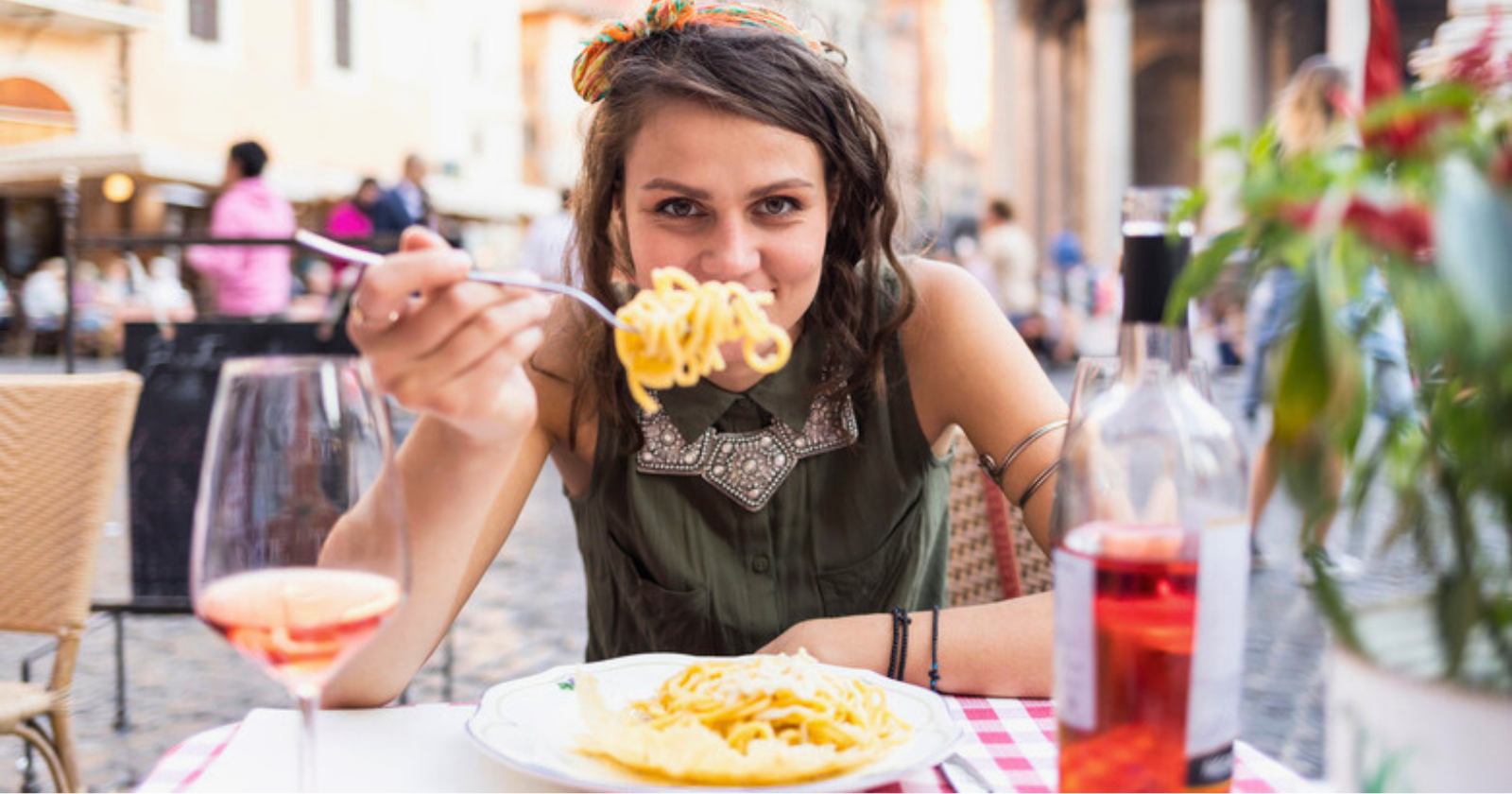
As in chili spice. Heat. Fire. Something that makes you sweat.
I get where people are coming from. After spending time in Thailand and Mexico, my tolerance for heat changed too.
But telling an Italian their cuisine needs more spice is like telling a French pastry chef their croissant needs more frosting.
Italian food is not about heat. It is about balance. Freshness.
Ingredients doing exactly what they are meant to do without shouting over each other.
Saying it needs more spice is a direct blow to their culinary philosophy.
On the plus side, if you say this at dinner, you will immediately find out who at the table grew up in Calabria.
They will hand you a jar of homemade chili oil before you finish your sentence.
6) "I love garlic bread with my pasta, so authentic"
I once said this in Florence and genuinely thought someone was going to perform an exorcism on me.
Garlic bread, at least the version slathered in butter and herbs, is not a traditional pairing with Italian pasta dishes.
It is more of an Italian American classic.
It is nostalgic. Comforting. Delicious.
But authentic? Not so much.
Real Italian meals involve bread, sure, but it is usually plain, often unsalted like in Tuscany, and used more as a tool than a flavor bomb.
Tell an Italian garlic bread is essential and they will react like you just said Leonardo da Vinci painted the Sistine Chapel.
Technically true in the sense that he was alive at some point.
But hilariously wrong.
7) "I do not really care which olive oil I use. They are all basically the same"
This one hurts them deeply.
Olive oil is not just oil in Italy. It is identity.
People have preferred regions, family producers, harvest dates, olive varieties.
It is like wine, but more personal.
Growing up in food and beverage, I learned quickly that a great olive oil can change an entire dish.
It can make a simple tomato sing.
It can salvage bland bread.
It can elevate a bowl of vegetables into something you actually want to eat.
Say all olive oils taste the same and you are essentially admitting you have never tasted a good one.
Which, to be fair, might be true.
But Italians will take that as a mission to educate you, aggressively.
8) "Pizza is pizza. I do not get why it matters where it is from"
Careful. Them’s fighting words.
Pizza in Italy is not just a dish. It is geography.
Naples. Rome. Sicily.
Each region has a completely different style, history, and emotional attachment.
Saying all pizza is the same is like saying all music is the same because it has sound.
If you tell an Italian it does not matter, they will look at you like you have missed the point of civilization.
I still remember trying Roman pizza for the first time, thin and crisp, almost cracker like, and thinking that it had nothing to do with Naples.
And that is exactly the point. Italian cuisine is not monolithic.
It is local. Hyperlocal.
When someone disregards that, it strikes a nerve.
9) "Pasta is just pasta. I can use any shape for any dish"
Finally, the comment that can end friendships.
Some people truly believe pasta shapes are interchangeable.
Penne. Spaghetti. Farfalle. All the same. Just different vibes. But to Italians, pasta shape is strategy. Function. Physics.
A sauce clings differently to ridges than to smooth surfaces.
Short pasta stands up to hearty sauces.
Long pasta pairs with delicate flowing ones.
There is a reason there are over three hundred shapes.
A reason entire families argue about which shape goes with which dish.
Say it does not matter and watch chaos unfold.
And for the last point, here is the truth. Even if you do not personally care about pasta geometry, Italians see this comment as proof that you are eating with speed, not intention.
That you are fueling rather than savoring. And that, to them, is the real crime.
The bottom line
If you have ever made one of these comments, do not worry. Your taste buds are not doomed.
What I have always admired about Italian food culture is how fiercely it protects integrity, connection, and simplicity.
These little reactions are not snobbery. They are pride.
A reminder that food is more than calories or convenience. It is history. Identity.
A way of caring for people.
Next time you sit down with an Italian friend, maybe skip the ketchup on pasta confession and instead ask them how their nonna made tomato sauce.
Trust me, they will light up.
And you might walk away with a new recipe, a deeper appreciation for Italian cuisine, and maybe even slightly upgraded taste buds.
Until next time.