Small gestures carry big meaning in Japan.
Travel has a way of humbling you.
You think you’re being friendly or casual, and then you realize you just did something that reads as careless in another culture.
Japan is one of the most welcoming places I’ve visited, but it is also a place where the little things carry a lot of meaning.
As someone who spent years in luxury hospitality, I learned that good manners are just a form of paying attention.
In Japan, attention to detail is the whole game.
Below are six small gestures that can accidentally rub people the wrong way, along with simple fixes:
1) Treating chopsticks like pointers or tools
Ever catch yourself talking with your hands? Now imagine doing that while holding chopsticks.
In Japan, waving chopsticks around, pointing with them, or spearing food with the tips can look childish or rude.
The big one to avoid is leaving chopsticks stuck upright in a bowl of rice.
That’s part of a funeral ritual, so it lands badly at the table.
Another move that seems harmless but feels off is passing food chopstick-to-chopstick.
That also echoes a funeral custom.
Even if your intent is generous, the symbolism is heavy.
What to do instead? Rest your chopsticks on the holder when you talk.
If there is no holder, make one with the paper sleeve or place the tips on the edge of a small plate.
When sharing, use the serving utensils provided.
If none are available, reverse your chopsticks and use the clean, unused end to pick up the shared bite, then flip them back for your portion.
Small adjustments, big difference.
As a former restaurant manager, I used to train new servers with one line I stole from a chef: “Tools are for food, not for emphasis.”
2) Wearing shoes where they do not belong
Shoes inside looks normal in many places.
In Japan, the line is clear, especially with tatami rooms, private homes, and some traditional restaurants or inns.
Wearing outdoor shoes on tatami can damage the mats and it signals that you were not paying attention.
That one tiny habit can undo an otherwise perfect first impression.
Look for visual cues: Is there a genkan, the little step at a home or ryokan entrance with a shoe shelf or a row of slippers?
That is your prompt to remove shoes and slip into the provided footwear.
If you see slippers lined up outside a restroom, swap into those, and then switch back when you leave; if you are given special slip-ons for a tatami room, use them.
It can feel like a lot of swapping, but it keeps spaces clean and sacred.
3) Treating quiet public spaces like your living room
Japan runs on an invisible current of consideration.
Nowhere is that more clear than trains, subways, and elevators.
Taking a phone call on a crowded train, speaking at full volume with friends, or blasting videos without headphones can feel intrusive to everyone around you.
It is not that people never talk on trains, it is that the norm leans toward soft voices and minimal noise.
Think of public transport as a shared library on wheels.
If you need to take a call urgently, step off at the next stop and handle it on the platform.
Keep notifications off.
Use headphones, and if you are watching a clip, keep the volume low enough that only you hear it.
Even small noises, like tapping your foot or rustling a snack bag over and over, add up in a quiet car.
I learned this lesson the hard way with a group of colleagues after a long dinner in Tokyo.
We were excited, recapping the meal like analysts after a big game.
A gentle look from an older gentleman across the aisle said it all.
We lowered our voices, and the energy of the car seemed to exhale.
The ride felt calmer, and so did we.
4) Eating while walking in busy streets
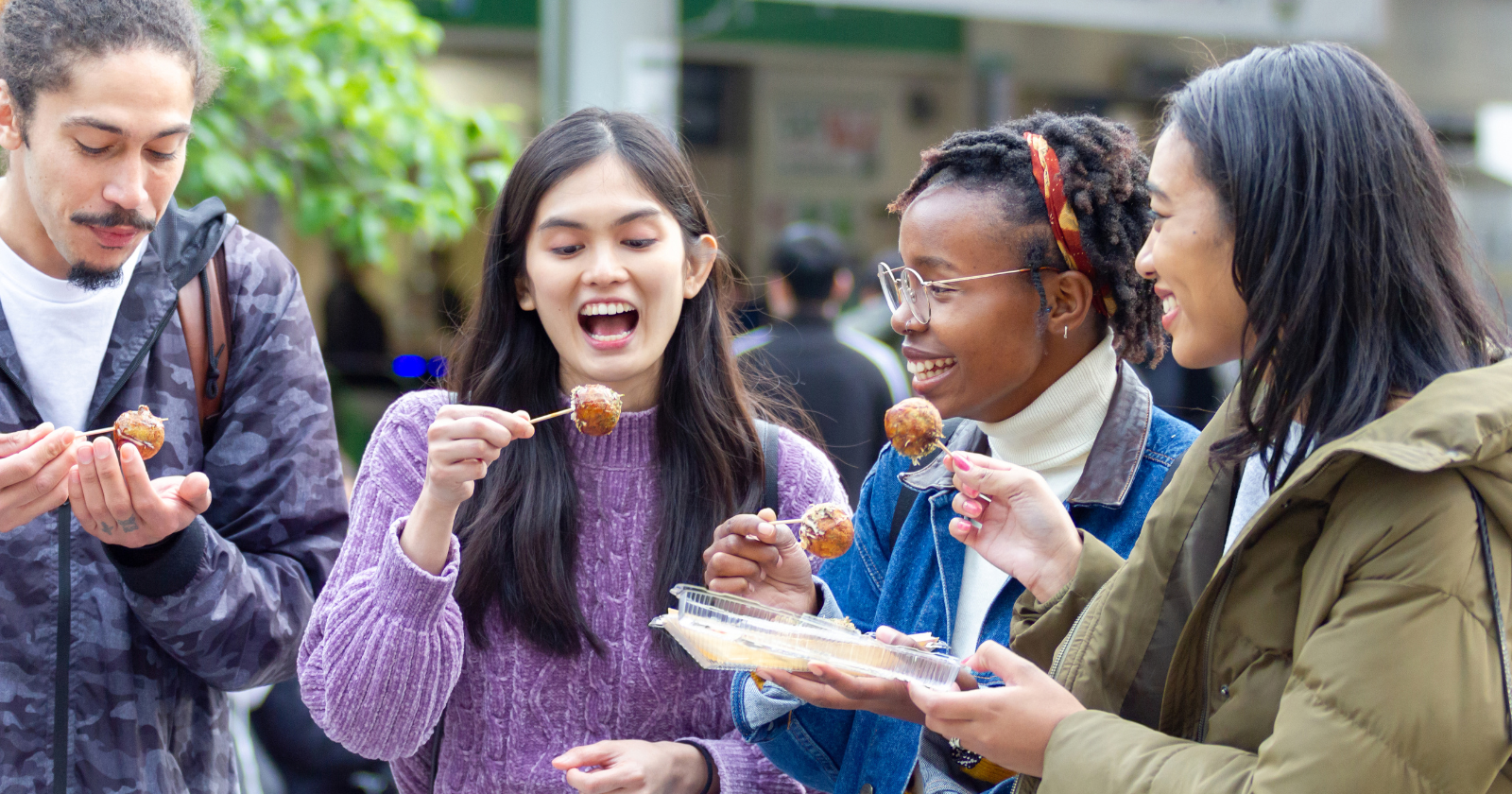
Street food is a love language, and I am all for it.
That said, in many Japanese cities it is considered poor form to walk and eat at the same time.
You will certainly see exceptions, especially at festivals or designated food streets, but the general idea is that eating deserves a moment and a place.
Walking while chewing can lead to spills, litter, or just a sense that you are not present.
The fix is easy: If you buy something from a stand, look for a small counter or standing area.
Many shops place bins or trays nearby for wrappers and sticks.
Finish your bite there, say thank you, and then move on.
You will taste more when you are not dodging pedestrians anyway.
One of my favorite moments in Osaka was eating takoyaki at a tiny counter while watching the vendor move like a conductor.
Pausing to eat made the food taste better!
5) Handling money like a casual handoff
Tipping is not part of everyday life in Japan, and that alone can trip people up.
Add in money-handling rituals and there is room for awkwardness.
Slapping cash on the counter, handing bills directly into someone’s hand when a tray is present, or crumpling receipts into a ball before you leave can all feel sloppy.
When there is a small tray on the counter, place your cash or card on it and let the staff pick it up; when you receive change, wait for it to be placed down and then collect it.
If you pay by card and you are given a pen to sign, place the pen back neatly; if you want to compliment great service, do it with your words.
From my time in fine dining, I know that money etiquette is less about the money and more about the interaction.
The tray routine slows everyone down just enough to make the exchange clear and respectful.
You both know where the yen is, and you both leave with a sense of order.
6) Mixing intimacy with first meetings
Finally, it is easy to bring Western warmth into a first meeting and go straight for the hug or a big back pat.
In Japan, physical space is often part of respect, especially with new acquaintances or in professional settings.
Strong eye contact, dramatic gestures, or pointing directly at someone can also read as aggressive.
None of this means you have to be stiff as it just means leading with calm and letting the other person set the distance.
Start with a small bow or a polite nod.
If someone offers a handshake, keep it light.
Avoid pointing with your finger at people or objects.
Use an open hand instead, palm toward the object.
If you receive a business card, do not stuff it in your pocket or write on it in front of the person.
Take a second to read it, acknowledge the name and title, and place it carefully in a card holder or on the table in front of you if you are in a meeting.
There is a line I love from a hospitality mentor: “Match first, then lead.”
Match the energy and formality you are given.
Once there is rapport, warmth finds its natural level.
The takeaway
Small gestures carry big meaning in Japan.
Treat chopsticks with care, remove shoes where appropriate, keep public spaces calm, eat in place, use the money tray, and let new relationships breathe.
Simple awareness is the goal; pay attention to the cues, move a touch slower than usual, and let respect guide the tiny decisions.
The reward is a deeper connection to the people and places you came to experience.
That, to me, is the best kind of souvenir.