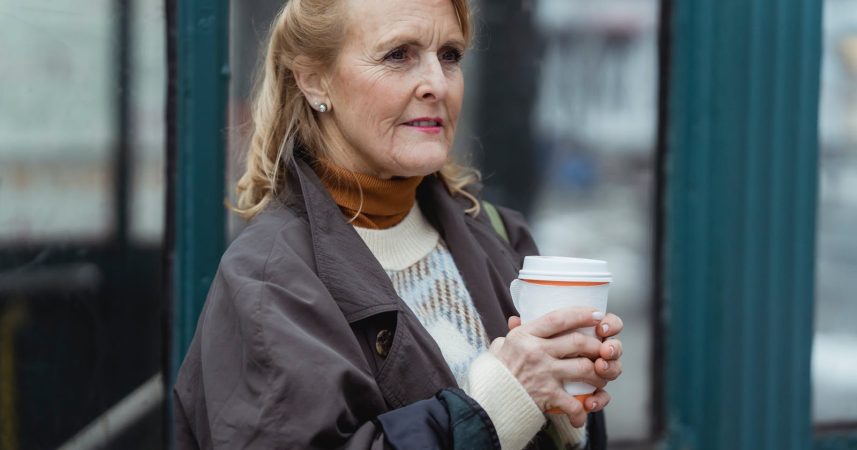
Behind their color-coded calendars and perfectly organized lives, the most "put-together" women over 60 are often white-knuckling through an identity crisis, having spent so many decades being needed that they've forgotten how to want anything for themselves.

Add VegOut to your Google News feed. 
Last week, a friend who just turned 62 confided something that stopped me in my tracks. "Everyone says I have it all together," she said, stirring her coffee absently. "But I realized yesterday that I couldn't name a single thing I actually want for myself anymore."
Her words reminded me of something I've been noticing more and more among women our age. The ones who seem most composed, most organized, most "fine" are often the ones struggling most with a question that sounds simple but isn't: What do I want?
Jennifer Hogan, a therapist, describes this perfectly: "You might feel disconnected from your passions or personality; Uncertain about what you want or need; Like you're performing for others but not truly being yourself."
The perfect performance trap
Think about the women you know who seem to have everything figured out. They're the ones with the color-coded calendars, the immaculate homes, the volunteer commitments that would exhaust someone half their age. They remember everyone's birthday, show up for every community event, and somehow manage to look effortlessly put-together while doing it all.
But here's what I've learned after years of watching this pattern, both in others and, if I'm honest, in myself: sometimes the most organized exterior is compensating for the most disorganized interior.
I remember sitting in my therapist's office a few years ago, proudly rattling off my weekly schedule. She listened patiently, then asked, "But what do you do just for you?" The silence that followed was deafening. I'd spent so many years defining myself by what I did for others that I'd forgotten there was supposed to be something underneath all that doing.
When busy becomes a blanket
There's a fascinating observation from author Marlene Martin that haunts me: "The therapist she finally saw at 68 told her that women who appear to be thriving in retirement—frantically volunteering, reorganizing, renovating—are actually white-knuckling through an identity crisis, using busyness as bubble wrap around their terror of being unnecessary."
That phrase, "bubble wrap around their terror," captures something so many of us feel but rarely articulate. We've spent decades being needed, being useful, being the ones who hold everything together. When that role shifts or disappears, we don't know who we are anymore. So we create new roles, new obligations, new ways to be indispensable, without ever asking if that's what we actually want.
A woman I met at a workshop last year described it beautifully. She'd spent her entire adult life as a nurse, then caring for aging parents, then helping with grandchildren. At 65, she found herself with actual free time and panicked. "I didn't know how to just be," she told me. "So I signed up for everything. I was busier in retirement than I'd ever been working, but I was miserable."
The forgotten art of wanting
Remember being young and having dreams that were entirely your own? Not dreams about your children's success or your partner's happiness or your parents' comfort, but dreams that belonged only to you?
Somewhere along the way, many of us stopped having those dreams. We replaced "I want" with "They need" so gradually that we didn't notice the substitution happening. Now, when someone asks what we want, we genuinely don't know how to answer.
I wrote about this challenge in a previous post about rediscovering passion after 60, but it bears repeating: wanting things for ourselves isn't selfish. It's human. It's necessary. It's what keeps us vital and engaged with life rather than just going through the motions.
Why the most together often feel most lost
Here's the paradox: the women who appear most successful at aging are often the ones struggling most with identity. They've mastered the external markers of a life well-lived, but internally, they're asking questions that feel both urgent and impossible to answer.
- Who am I when I'm not someone's mother, wife, employee, caregiver?
- What matters to me when I'm not organizing my life around other people's needs?
- How do I fill time that isn't structured around obligations?
These questions can feel particularly acute for those of us who've been high achievers, who've prided ourselves on our competence and reliability. Admitting we don't know what we want feels like failure, so we keep performing success even when we feel anything but successful inside.
The courage to not know
Hermann Hesse wrote, "Some of us think holding on makes us strong but sometimes it is letting go."
Perhaps the bravest thing we can do at this stage of life is let go of the need to have it all figured out. To admit, even if only to ourselves at first, that we don't know what we want. That the life we've constructed so carefully might not be the life we'd choose if we were choosing freely.
I've started experimenting with small acts of not knowing. When someone asks what I'm doing this weekend, sometimes I say, "I haven't decided yet," even when my instinct is to list a dozen productive activities. When I catch myself automatically volunteering for something, I pause and ask, "Do I want to do this, or am I just afraid of the empty space if I don't?"
These might seem like tiny rebellions, but they're teaching me something important: there's freedom in the space between letting go of old patterns and discovering new desires. That space might feel uncomfortable, even frightening, but it's where authentic wanting can finally emerge.
Final thoughts
If you recognize yourself in these words, know that you're not alone. The most put-together women I know are quietly grappling with these same questions. There's no shame in admitting you've forgotten what you want. In fact, there's tremendous courage in that admission.
Maybe the real achievement at this stage of life isn't having everything figured out. Maybe it's finally being brave enough to admit we don't, and curious enough to explore what might emerge in that not-knowing. After all, we've spent decades being who we needed to be. Perhaps it's time to discover who we want to be.
What’s Your Plant-Powered Archetype?
Ever wonder what your everyday habits say about your deeper purpose—and how they ripple out to impact the planet?
This 90-second quiz reveals the plant-powered role you’re here to play, and the tiny shift that makes it even more powerful.
12 fun questions. Instant results. Surprisingly accurate.