In the silence between his toolbox hitting the floor and the furnace roaring back to life, I finally heard all the "I love yous" my father had been saying for thirty-two years.
The funeral home smelled like lilies and old carpet. I stood there, my hand resting on the polished wood of my father's casket, and suddenly remembered that January night fourteen years earlier when my furnace died. The temperature outside was minus twelve. Inside wasn't much warmer.
When I called Dad, he simply said, "I'll be there in the morning." He drove through a snowstorm that had closed half the highways in the state. Four hours that should have taken two. He fixed my furnace, ate a sandwich, and drove home through the same storm. We never talked about it again.
Standing there in that quiet room, I finally understood what I'd missed all those years. My father had been telling me he loved me my whole life. I just hadn't been listening in the right language.
The language we couldn't speak
Growing up, I envied my friends whose fathers tossed around "I love you" like confetti. Mine? He fixed things. He showed up. He stayed late at work to pay for my college. He built me a bookshelf when I was twelve because I mentioned, once, that I was running out of room for my books. But those three words? They might as well have been in ancient Greek.
For years, I carried this like a small stone in my shoe. Not painful enough to stop walking, but always there, always rubbing. In therapy, in my thirties, I talked about it endlessly. "He never says it," I'd tell my therapist, as if this explained everything wrong in my life. "Not once."
What I didn't talk about was how he'd taught me to change a tire when I was sixteen, making me practice in the driveway until I could do it myself. Or how he'd sit through every terrible school play, every band concert where I played third clarinet badly. Or how, when my marriage fell apart at forty-one, he helped me move out without asking a single question I wasn't ready to answer.
When actions become invisible
Have you ever noticed how we catalog the words we don't hear more carefully than the actions we do see? It's like we're all walking around with these invisible scorecards, tallying up the "I love yous" while completely missing the 5 a.m. airport runs, the fixed leaky faucets, the quiet presence at every graduation, recital, and heartbreak.
I remember complaining to a friend once about my father's emotional distance. She listened patiently, then asked, "Who taught you to drive?" Dad did. "Who came to get you that night in college when you called from that party, scared and drunk?" Dad did. "Who co-signed your first apartment lease even though you had no credit?" The answer was becoming monotonous.
But still, I wanted the words. As if the words were somehow more real than thirty years of showing up.
The furnace that changed everything
That winter night when I was thirty-two remains frozen in my memory with perfect clarity. The furnace had been making strange noises for weeks, but I'd ignored them the way you ignore anything you can't afford to fix. Then it stopped. Just stopped. In January. In Minnesota.
I called three repair companies. The earliest anyone could come was in four days. I called Dad out of desperation more than hope. He lived four hours away. It was already dark. The weather reports were warning people to stay off the roads.
"I'll leave now," he said. "Put on layers. Move into one room and close the doors. Run the oven with the door open, but don't fall asleep with it on."
I tried to tell him not to come, that I'd figure something out. He'd already hung up.
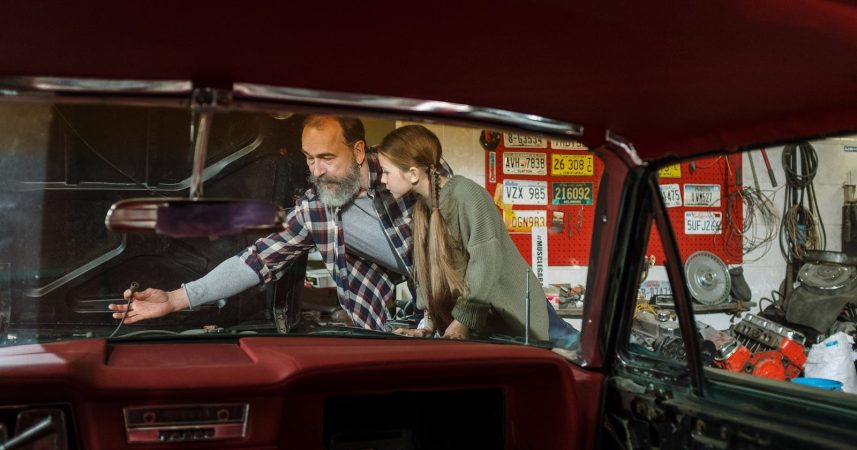
He arrived at 6 a.m., covered in snow, carrying his toolbox and a bag of groceries. He fixed the furnace, made me breakfast, and checked every window seal in the house. When he left that afternoon, he handed me a piece of paper with the names of three reliable furnace repair people "for next time" and told me to get it serviced every fall. "Preventative maintenance," he said, like he was teaching me some profound truth about furnaces and not about love.
Learning too late
After Dad died, I found myself doing this strange archaeology of memory, sifting through decades of interactions, looking for clues I'd missed. The picture that emerged was so different from the story I'd been telling myself.
There was the time he drove to six different stores to find the exact batting gloves I wanted for softball season. The way he'd call every Sunday at exactly 7 p.m., even if we had nothing to say. How he kept every article I'd ever written in a folder in his desk, including the terrible poetry I'd published in the college literary magazine.
I thought about something I'd written in a previous post about how we often don't see the full picture of someone until they're gone. With Dad, I'd been so focused on what he couldn't say that I'd completely missed everything he was doing.
The inheritance of understanding
Now I watch my own children with their grandfather's eyes. My son fixes his sister's bike without being asked. My daughter brings her brother soup when he's sick. They rarely say "I love you" to each other, but the love is there in every repaired chain, every bowl of soup, every time one of them says, "I've got this" when the other is overwhelmed.
Sometimes I want to shake them, to make them see what they have while they have it. But then I remember: this is how we learn. We think love is a declaration when really it's a practice. We think it's grand gestures when usually it's small repetitions. We think it's words when so often it's presence.
Final thoughts
Last week, my furnace made a familiar grinding noise. I called one of the repair people from Dad's list — turns out, the son has taken over the business. As he worked, he mentioned that my father had helped him once, years ago, when his truck broke down on a service call. "Never even got his name," he said. "Just stopped and helped. Good man."
Yeah, I thought. He was. He just never said so out loud.
What’s Your Plant-Powered Archetype?
Ever wonder what your everyday habits say about your deeper purpose—and how they ripple out to impact the planet?
This 90-second quiz reveals the plant-powered role you’re here to play, and the tiny shift that makes it even more powerful.
12 fun questions. Instant results. Surprisingly accurate.