I returned to my childhood house expecting nostalgia — what I uncovered in the dusty attic cracked open memories I’d long tucked away and never revisited.
My parents sold the turquoise-trimmed ranch on Arroyo Circle right after my college graduation, trading suburban Texas heat for a downsized condo near my aunt.
I promised myself I’d visit the old neighborhood “someday,” but someday stretched into two decades. Then an unexpected work trip routed me through Houston, and my finger hovered over Google Maps longer than I’d admit.
With a half-day gap before my flight, I rented a sun-bleached Kia and followed muscle memory down looping streets lined with crepe myrtles.
The new owners had repainted the siding a polite gray, but the massive pecan tree still scratched the shingles like it did every fall. I planned to park, snap a photo, maybe message it to my brother for the laugh—until I spotted a For-Sale sign.
An open-house flyer flapped below: Saturday 1–4 p.m. It was 1:17.
An open-house tour that turned into time travel
A realtor in smart heels greeted me — I borrowed the vague line, “I grew up here.” Her face softened, and she waved me inside. The living room felt smaller by adult standards, but the brick fireplace was unchanged.
My height chart—that pencil line ladder we etched each birthday—had been painted over, yet I swore I could still feel the grooves through white latex. As the realtor drifted away to greet another couple, I tip-toed deeper, mapping memory over remodel.
The attic pull-down ladder was still in the hallway ceiling.
That rickety climb had once been forbidden territory, a place Dad called “spider central.” I asked the realtor if I could peek, promising quickness and caution. She shrugged—liability forms covered it—and handed me a flashlight.
Step by cautious step into the dust
Warm air rushed out like closet breath.
The wooden rungs creaked as I climbed, flashlight beam slicing through suspended motes. Same scratchy insulation, same faint cedar smell.
I expected emptiness; the listing photos showed minimal storage. But tucked behind rafters, half-camouflaged by insulation fluff, sat a cardboard wardrobe box sealed with yellowing tape.
The label, scrawled in Dad’s Sharpie: “MOM’S CLASSROOM • 1996.”
My mother taught second grade for thirty years and was famous for saving everything—handmade valentines, kid essays about astronauts, enough macaroni art to sculpt a monument. When she downsized, she claimed she’d purged.
Guess not.
The lid that lifted twenty years of silence
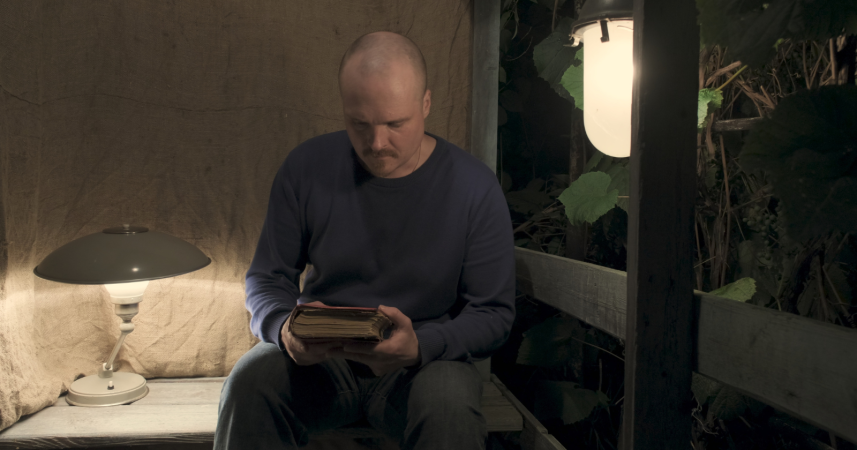
I knelt on the joists, pried loose the tape, and unfolded cardboard flaps. On top—exactly where a younger me had last seen it—lay a red spiral notebook with my name in bubble letters: Maya Flores, 4th Grade Journal. I’d forgotten that journal even existed, let alone that Mom snuck it home after the school year.
I opened to a random page dated May 14, 1996:
Today we had taco Tuesday. Mom packed cheese tacos even though I said I want beans like Dad. I wish she listened. I’m going to ask abuela to teach me proper bean tacos.
I laughed out loud—the realtor called up the ladder, “Everything okay?” I murmured yes, but my chest thrummed. Page after page, I saw my younger handwriting wrestling with what words meant, trying on adult doubts: questions about why Dad worked late, why fireworks sounded like thunderstorms, why I felt brave one day and invisible the next.
Beneath the journal lay a shoebox of cassette tapes, each labeled in the same looping script:
-
Maya—Reading Out Loud, Age 7
-
Diego—Drum Practice, Age 9
-
Mom’s Students—Poetry Day 1995
I fumbled a tape into my hand, flipping it over like a relic from an ancient language. No cassette player in sight, but I could almost hear my squeaky voice mispronouncing “chrysanthemum.”
At the bottom of the box, below construction-paper collages, hid a Polaroid photograph I’d never seen: Dad, Mom, and me on the driveway the day before my first day of kindergarten. Dad’s arms flared wide like he was introducing me to the camera. Mom’s grin was unfiltered delight. I stood between them, knees knobby, clutching a lunchbox with turtles on it.
I’d spent years remembering childhood as chaotic—Dad’s layoffs, Mom’s exhaustion, sibling squabbles.
Yet here was evidence of a moment so ordinary it felt miraculous in hindsight: three humans thrilled just to exist together at the edge of a suburban driveway.
The emotional punch I never saw coming
I sat cross-legged on the beams, letting attic dust settle on my jeans, and felt tears hot as Houston asphalt. Not from sadness, but from the collision of lost time and found tenderness.
For twenty years, I’d carried a narrative of distance — focused on what my parents didn’t understand about my path, what I’d missed while chasing careers in other zip codes. But these objects told a parallel story: one in which they preserved pieces of me with the devotion of archivists, perhaps hoping future-me would return to claim them.
I realized the attic wasn’t just storage. It was a time capsule of love notes my parents had quietly stashed away, certain I’d need them once life humbled me enough to look.
Bringing the discovery back down to earth
The realtor eventually called time; other buyers waited. I climbed down clutching the Polaroid and journal.She noted my puffy eyes, handed me a tissue, and whispered, “Take your time.” I asked if I could buy the items or at least photograph them.
She smiled: “They come with the house—or with you, if you want.” We agreed I’d mail her a prepaid envelope; she’d ship the box after closing.
That night, in my airport hotel, I flipped through the journal again. One entry read: I want to be a writer so I can keep stories safe.
Twelve-year-old me didn’t know I’d become one, nor that she’d one day rediscover a forgotten vow in her own handwriting.
What the attic taught me about memory
We think we remember childhood, but memory is a trick mirror—polishing edges here, fogging details there. Physical artifacts break the spell.
They ground recollections in texture and scent: the waxy crayon smell of a decade-old collage, the scratch of notebook paper. They remind us that the people who raised us, flawed as they were, tried to bottle time for us because they knew we’d need proof later.
I still don’t know who’ll buy that gray-painted ranch, whether they’ll notice the attic hatch or leave it sealed. But my personal narrative stretched wider that afternoon.
Instead of a straight line away from home, life now feels like a loop — messy, elastic, but definitely curved back toward origin points I’d overlooked.
Final thoughts
Walking back down those attic stairs felt like carrying two worth of emotional contraband in my pockets. Each journal page, Polaroid, and cassette reminded me that memory isn’t a tidy scrapbook—it’s a living archive waiting for the right key.
I’d spent years telling a streamlined story: I left home, built a life elsewhere, and never looked back.
Opening that cardboard box shattered the narrative into richer, messier pieces. My parents—who sometimes felt distant or overworked—had quietly curated evidence of our small, ordinary joys, trusting I’d circle back when I was ready to receive them.
Since that day, I’ve started treating attics, basements, and old hard drives as emotional time capsules rather than clutter zones. I digitized the tapes, mailed copies to my brother, and turned one of Mom’s saved student poems into wall art for my apartment.
Most importantly, I revised my inner storyline: the past isn’t a chapter I closed, but a co-author that still shapes my drafts. If life ever offers you the chance to revisit your origin rooms—take it.
The artifacts you find might feel humble or half-forgotten, yet they can hand you a map of who you were, who loved you, and how those early coordinates still point toward who you’re becoming.
What’s Your Plant-Powered Archetype?
Ever wonder what your everyday habits say about your deeper purpose—and how they ripple out to impact the planet?
This 90-second quiz reveals the plant-powered role you’re here to play, and the tiny shift that makes it even more powerful.
12 fun questions. Instant results. Surprisingly accurate.