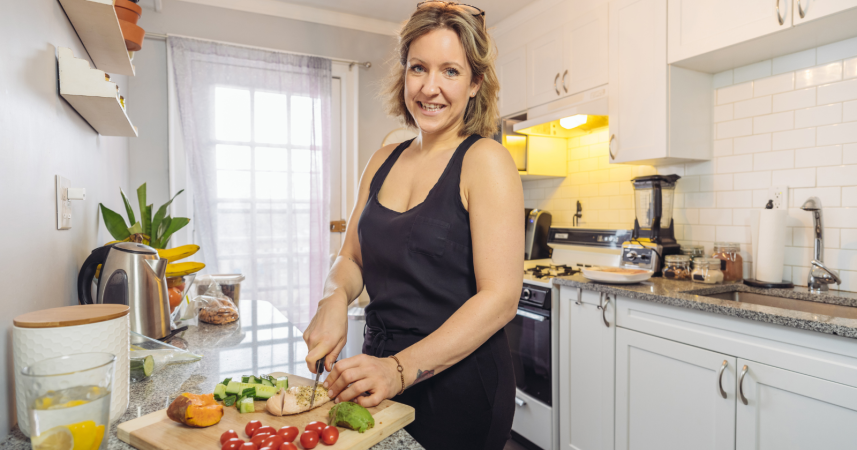
Traditional Sunday meal prep left me bored and burned-out—so I hacked together a “lazy prep” routine that feeds me all week with half the effort.
I admire those Instagram grids of mason-jar salads, but whenever I tried the standard Sunday marathon — three hours chopping, roasting, boxing — I wound up with fridge fatigue by Wednesday.
Half the containers languished behind the oat milk, and Thursday night I’d default to takeout anyway.
The problem wasn’t motivation — it was monotony.
I cook for joy, and cooking a week’s worth at once felt like signing a prenuptial agreement with culinary boredom.
So last year, I ditched “big batch Sunday” and designed a lazier, flexible system that still hits my three non-negotiables: balanced plates, minimal weeknight stress, and virtually zero food waste.
Below is the exact framework I follow—no spreadsheet, no pressure, just enough structure to keep future-me nourished and present-me sane.
Step 1: Pick two “mains” that morph
Instead of cooking five separate dinners, I choose two anchor dishes with chameleon potential:
-
Base 1 – A versatile protein: usually a pot of lentils, marinated tofu, or slow-cooker black beans.
-
Base 2 – A hearty vegetable or grain mix: think roasted sheet-pan veggies with sweet potatoes and onions, or a big batch of quinoa-kale pilaf.
Each batch takes 20–30 minutes of mostly hands-off time and yields 4–6 cups. The trick is neutrality: season lightly (salt, pepper, garlic) so future-me can swing flavors—taco Tuesday, curry Wednesday, Mediterranean Friday—without clashing spices.
Lazy bonus: cook these while you’re already in the kitchen on Sunday morning brewing coffee; no extra “prep block” required.
Step 2: Stock a “flavor shelf,” not a walk-in pantry
Meal prep advice often screams buy in bulk! I end up with Costco-sized tahini fossils. My lazier fix: a single shelf of flavor accelerators that turn bland bases into new meals in two minutes. Mine holds:
-
Jarred salsa verde
-
Thai red-curry paste
-
Miso + soy sauce squeeze bottle
-
Everything-bagel seasoning
-
Toasted sesame oil
-
Jar of olives and a lemon or two
That’s it. Combined with the neutral bases, I can whip up:
-
Taco bowl: black beans + roasted veg + salsa + avocado
-
Miso noodle soup: lentils + kale + miso-soy broth + sesame oil
-
Mediterranean plate: quinoa pilaf + olives + lemon-tahini drizzle
No recipe hunting. No spice-drawer excavation. Just instinct + shelf.
Step 3: Prep “speedy sides” on autopilot
While the mains simmer, I set a timer for 15 minutes and knock out easy sides:
-
Wash a head of lettuce → wrap in a towel, pop in produce drawer (instant salad greens).
-
Slice carrot and cucumber sticks → store in water for crispness.
-
Toast a sheet of seasoned pumpkin seeds → five minutes at 350°F for crunch topper.
-
Blend one sauce → e.g., tahini + lemon + water + garlic powder.
When the timer dings, I’m done—no perfectionism allowed. Those sides become lunchbox fillers, crunchy snacks, or salad insurance later in the week.
Step 4: Practice the “two-minute remix” rule nightly
Classic meal prep reheats the same casserole. My sanity saver: every evening I spend two minutes remixing the bases.
Microwave lentils → stir in curry paste + coconut milk → top with pumpkin seeds.
Pan-warm quinoa pilaf → toss with miso dressing + lettuce ribbons → add cucumber sticks.
Satisfaction stays high because flavors rotate even though ingredients repeat.
Tip: keep a running list of remix ideas on your phone—when inspiration hits (or Instagram gifts a combo), jot it down. By Thursday, future-you will thank past-you for the cheat sheet.
Step 5: Leave two dinners blank on purpose
I used to guilt-trip over mid-week social invites because “I have food at home.” Now I plan for spontaneity by prepping only five lunches and three dinners. The empty slots become:
-
Leftovers from a friend’s potluck
-
Friday pizza night
-
A new recipe I’m itching to test
Because I’m not over-prepped, nothing spoils, and I still feel delight—not dread—when opening the fridge.
Step 6: Audit, adjust, repeat
Sunday night, I glance at the fridge. Anything that didn’t get eaten? Note it. Did I run out of veggies by Thursday? Roast more next time.
Too much quinoa, not enough protein? Flip the ratios.
The beauty of lazy prep: tweaks are tiny. You’re not reengineering a 20-container grid—just nudging two base recipes and a flavor shelf.
Why this works when traditional prep failed me
-
Variety without workload
Two neutral bases + rotating sauces equal multiple flavor profiles, so palate fatigue disappears. -
Minimal upfront time
Total active prep: ~45 minutes mixed into my normal Sunday chores, versus a dedicated three-hour session. -
Zero decision fatigue midweek
At 7 p.m. I’m not “cooking,” just remixing. Brain space stays free for decompressing, not decoding cookbooks. -
Built-in flexibility
Leaving meal blanks means I never ignore spontaneous fun or farmers-market surprises.
Common questions I get from friends
Q: Doesn’t lightly seasoned food taste boring?
Briefly—but only until remix night. Remember, flavor comes at serving time: curry paste, salsa, lemon-tahini, whatever sparks joy.
Q: What about breakfast?
I prep one big jar of overnight oats and swap toppings daily—frozen berries, peanut butter, cocoa nibs. Same lazy principle.
Q: Family-friendly?
Yes. My niece builds her own bowls from the two bases, adding cheese or chicken if she wants. Lazy prep coexists with omnivores.
Final thoughts
Meal prep doesn’t have to be a Sunday slog or an all-or-nothing Pinterest project.
By anchoring my week around two neutral mains, a flavor shelf, and a two-minute remix rule, I’ve found a rhythm that feeds me consistently and leaves room for creativity.
No more forgotten Tupperware science experiments, no more Wednesday boredom orders.
Just flexible fuel—and the peace of knowing future-me is covered without present-me sacrificing an entire weekend afternoon.
If classic meal prep feels like too much, try the lazy version.
Your fridge—and your free time—might finally get along.
If You Were a Healing Herb, Which Would You Be?
Each herb holds a unique kind of magic — soothing, awakening, grounding, or clarifying.
This 9-question quiz reveals the healing plant that mirrors your energy right now and what it says about your natural rhythm.
✨ Instant results. Deeply insightful.
Related Stories from VegOut
- 9 things boomers sacrificed that their children will never fully understand—and probably couldn't handle if they did
- 8 things lower-middle-class guests do at dinner parties that hosts remember long after they leave—and never mention
- I've visited 67 countries but keep returning to this one place nobody talks about