Seven late-night advantages early birds can’t match—turn midnight into your edge.

Add VegOut to your Google News feed. 
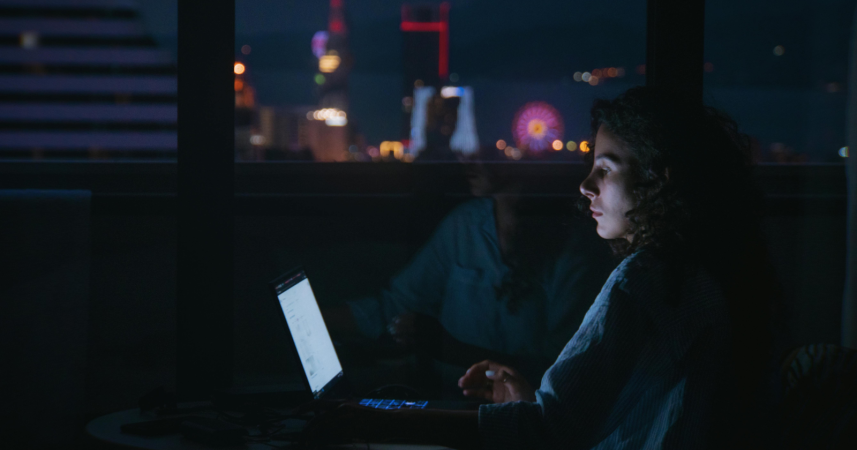
There’s a special kind of quiet that hits after midnight.
Streetlights hum, inboxes stop multiplying, and the world finally gives you a little elbow room. I spent years closing dining rooms and writing afterward—hands still smelling faintly of citrus and pepper—and learned something I wish someone had told me sooner: being a night owl isn’t a flaw to fix.
It’s a strength to design around.
If your brain lights up when the city powers down, here are seven reasons that rhythm might be your secret superpower.
1. You get deep work hours most people never touch
The hardest part of focus isn’t effort — it’s interference.
During the day, you’re swarmed by pings, meetings, “quick questions,” and micro-decisions that chip at your attention like a sous-chef who keeps stealing your cutting board.
After dark, the ambient noise drops.
Nobody expects instant replies. Your phone stops acting like a slot machine. That quiet isn’t just pleasant—it’s productive.
Cognitive scientists talk about “attentional residue,” the drag that comes from switching tasks. Night owls dodge a lot of that by working when context switches naturally thin out.
In kitchens, we called it the after-service glow: the line is broken down, the last check is out, and you can finally think in paragraphs instead of chits.
If you harness those hours for writing, study, design, or any task that benefits from long, unbroken stretches, you’ll get a creative advantage daylight people pay for with noise-canceling headphones and aggressive calendar blocks.
2. You tap a creativity mode that thrives when inhibition drops
Ever notice how ideas feel less… precious at 1:00 a.m.?
That’s not just the romance of late-night playlists. As fatigue inches up, your brain’s gatekeepers relax a hair, which can loosen rigid thinking and help you connect odd dots.
You’re more willing to test the weird metaphor, try an unusual chord, or combine ingredients you wouldn’t put together at noon.
In my F&B days, some of the best specials were born when we were cleaning down and tossing “what ifs” across the pass. The stakes felt lower; the ideas came freer.
Night gives you a playground where judgment turns down and curiosity turns up. If you capture those sparks—voice notes, sketchbooks, draft emails—you’ll wake up with raw material that daytime you can refine.
Daylight is for editing — midnight is for mixing flavors you didn’t know belonged together.
3. You own the world’s “off-peak” and turn it into leverage
Night owls are natural arbitrage artists. You operate when lines shrink, prices drop, and servers (the human kind and the internet kind) run cooler. Booking flights? You’ll actually have the patience to compare options.
Need customer support from a company based a few time zones over?
Their business hours are your late evening.
Want to learn from communities half a world away?
Your prime hours overlap theirs.
I built whole skill sets by hopping into live chats and international forums when local friends were asleep. Even locally, off-peak life is cheaper and easier—gyms, grocery stores, laundromats, libraries. Less waiting equals less impulse spending and fewer “I’ll just pay extra to save time” decisions.
If you structure your errands and admin for late hours, you’ll save money and sanity, and your daytime becomes optional instead of obligatory.
4. You bring calm under pressure from a world that trains during rush hour
Service industry nights teach a very specific superpower: poise at the exact moment chaos peaks.
The late shift is where small problems become big ones if you blink—short-staffed tables at 9:45, surprise allergies, a broken POS, a couple having their first and last fight.
Night owls learn to breathe, prioritize, and deliver when the rest of the city is unraveling or asleep. That translates everywhere. Midnight commuters, newborn parents, ER nurses, startup founders on deploy night—these are environments built for people who don’t crumble when the clock gets rude.
If your energy swells after dark, you’re wired for the kinds of work that need clear heads at odd hours: incident response, hospitality leadership, creative deadlines, global ops, post-production, even astronomy homework you put off until the stars show up.
That steadiness is rare. Use it.
5. You tell the truth about your biology—and design wins around it
A lot of us were raised on the gospel of 5:00 a.m. miracle mornings, as if virtue rises with the sun. But chronotypes exist. Some brains and bodies shift later, especially in adolescence and young adulthood, and for a slice of us that preference never fully rewinds.
Fighting it forever is like writing left-handed when you’re right-handed because a book said it builds character. Owning it lets you design smarter: evening workouts when your body temp peaks, late-afternoon deep work blocks, social rhythms that don’t demand your best self at 7:30 a.m.
You’re not giving up on sleep discipline—you’re moving it. Consistent wake/bed windows, light exposure on your morning, a caffeine cut-off that respects tomorrow, and a “digital last call” that protects your brain from the endless scroll.
When you stop apologizing for your hours and start engineering them, you realize the point isn’t to be early. It’s to be aligned.
6. You become the friend, parent, or partner who covers the edges
Every community needs someone awake at the margins.
Night owls quietly become that person.
You’re the one who finishes the science fair poster at 11:15, picks up a sick roommate at midnight, or rocks a baby through a fever so the day shift can function.
You’re the partner who double-checks the alarm and preps breakfasts in a quiet kitchen while podcasts murmur.
You’re the colleague who can deploy fixes at 2:00 a.m. with the traffic turned down and the risk minimized. Being useful after dark earns a kind of trust that doesn’t get loud on social feeds, but it compounds in relationships.
Just add boundaries so your gift doesn’t become everyone else’s expectation. “I can be the late driver on Fridays, not every night.” Superpowers burn bright when you decide where they shine.
7. You learn to protect energy like a rare spice—and that discipline spills everywhere
Night owls who thrive don’t coast; they manage. You learn to say no to early meetings that waste your best evening hours. You stack tasks so late nights aren’t followed by “heroic” early mornings that torch your mood and health.
You hydrate, you eat something green, you keep a wind-down ritual so your brain knows how to land. That kind of energy budgeting is a life skill, not a schedule hack. It teaches you to allocate your best attention to your best work and to let lesser things happen when you’re naturally slower.
You stop performing “availability” and start producing. In my thirties I tried to live like a split shift—late dinners, early workouts, short sleep—and called it discipline.
In my forties I realized real discipline is designing a rhythm that prints results without grinding you to dust.
Night people can get there faster because we have to.
Final thoughts
If any part of you has been trying to “fix” your night-owl wiring, consider flipping the script.
The goal isn’t to worship the moon or avoid the sun. It’s to notice when you feel most alive and build a life that respects that data. Use the quiet hours to push the big rocks.
Capture the wild ideas and edit them in daylight. Trade lines and crowds for empty aisles and open calendars. Bring your calm to the places that need it most.
Guard your sleep like revenue.
And remember: the world runs on many shifts. There’s no moral trophy for fighting your own rhythm. There is a real payoff for owning it. If your day starts when the streetlights do, that’s not a character flaw. It’s a blueprint.
What’s Your Plant-Powered Archetype?
Ever wonder what your everyday habits say about your deeper purpose—and how they ripple out to impact the planet?
This 90-second quiz reveals the plant-powered role you’re here to play, and the tiny shift that makes it even more powerful.
12 fun questions. Instant results. Surprisingly accurate.