Digital tools are incredible, but they're not free. They cost us attention, presence, and certain kinds of depth that only come from moving slowly.
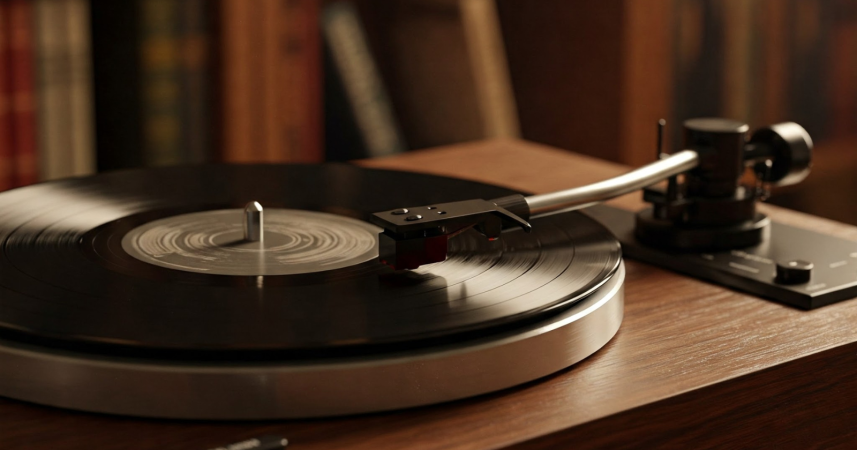
I was sorting through my vinyl collection last week when my partner walked in and asked why I don't just stream everything like a normal person.
Fair question. The records take up space, they're a pain to move, and half of them skip on the third track.
But here's the thing: I'm not listening to vinyl despite the inconvenience. I'm listening because of it.
That got me thinking about all the analog habits older generations practiced not because they had to, but because those habits actually added something to life. Things that felt slower, more intentional, more real.
We tend to think of progress as purely additive. New technology comes along, and we gain something without losing anything. But anyone who's spent an hour doomscrolling knows that's not quite true.
So let's talk about seven simple pleasures our parents and grandparents got right, back when life moved at a different pace.
1) They wrote things down by hand
My grandmother still sends birthday cards. Not emails. Not texts. Actual cards with her actual handwriting that arrive in actual mailboxes.
I used to think this was just her being old-fashioned. Then I started keeping a handwritten journal three years ago, and something shifted.
There's a different quality to thoughts that come through a pen. They're slower, sure. But they're also more deliberate. You can't backspace your way out of an uncomfortable feeling or delete a half-formed idea before it has a chance to develop.
Research backs this up. Studies show that handwriting activates different parts of the brain than typing does, particularly areas involved in learning and memory. When you write something by hand, you're more likely to remember it and understand it at a deeper level.
But beyond the cognitive benefits, there's something else happening. Writing by hand forces you to be present with your thoughts in a way that typing on a keyboard doesn't quite manage.
Try it sometime. Write a letter to someone you care about. Not an email. An actual letter. Notice how different it feels to commit words to paper knowing you can't just hit delete and start over.
2) They had conversations without checking their phones
Picture this: You're at dinner with friends. Someone tells a story. Halfway through, another person interrupts to fact-check a detail on their phone. The story loses momentum. The moment deflates.
This happens constantly now, and we've normalized it to the point where we barely notice.
But older generations had no choice but to let conversations breathe. They had to sit with uncertainty. They had to trust their memories and fill in gaps with speculation. They had to actually listen because there was no backup entertainment in their pocket.
I've mentioned this before, but I started leaving my phone in my bag during meals about a year ago. Not because I'm morally superior, but because I noticed I was having worse conversations.
The difference is striking. Without the option to escape into your screen, you're forced to engage more fully. Awkward silences become opportunities instead of emergencies. Stories get told all the way through. People make eye contact.
We've created this weird cultural norm where being alone with our thoughts for even thirty seconds feels intolerable. Previous generations didn't have that option. They had to be bored sometimes. They had to sit with discomfort. And paradoxically, that constraint made room for deeper connection.
3) They committed to physical media
I know I already mentioned my vinyl collection, but this goes beyond just music.
When you bought an album on vinyl or CD, you were making a choice. You had limited money and limited shelf space, so you picked carefully. Then you lived with that choice. You listened to the whole album, even the weird tracks, because you'd invested in it.
Streaming changed everything. Now we have infinite options and zero commitment. We skip songs fifteen seconds in. We bail on albums after one track. We treat music like background noise instead of something that deserves attention.
The same applies to books, movies, everything. My parents' generation would watch whatever was on TV that night. They'd read the book they borrowed from the library all the way through, even if it was just okay. They didn't have infinite alternatives constantly beckoning.
There's a hidden cost to unlimited choice. When everything is available, nothing feels special. When you can skip with no consequences, you never develop patience or the ability to find value in something that doesn't immediately grab you.
I'm not saying we should go back to scarcity. But there's something to be said for occasionally choosing one thing and sticking with it long enough to discover its layers.
4) They took photos sparingly
My dad has maybe three photo albums from his entire childhood. Three. And you know what? Every single photo in there tells a story because photos were events, not reflexes.
I shoot photography around Venice Beach pretty regularly, and I've noticed something. The more photos I take, the less I actually see. My brain switches into documentation mode, and I stop experiencing the moment I'm supposedly trying to capture.
Older generations shot film. Each photo cost money to take and develop, so they were selective. They took one or two shots, then put the camera away and actually lived the experience.
Now we take forty nearly identical photos of the same sunset, post the best one with a filter, and move on without ever really looking at the sky.
There's research suggesting that taking photos can actually impair your memory of an event. Your brain delegates the job of remembering to the camera, so you engage less deeply with what's happening around you.
Try leaving your phone in your pocket next time you're somewhere beautiful. Just look. Let your brain do the work of noticing and remembering. The memory might be fuzzier than a photo, but it will be yours in a way that a hundred Instagram posts never quite manage.
5) They read paper books
I still buy physical books, which makes me weird in some circles. But I've never finished a book on my phone without getting distracted at least a dozen times.
Paper books don't ping you with notifications. They don't tempt you to check Twitter between chapters. They just sit there, demanding your full attention for as long as you're willing to give it.
Reading a physical book is a completely different experience from reading on a screen. You have a tactile sense of progress as you move through the pages. You can flip back easily when you need to remember something. You don't have to manage battery life or worry about eye strain.
But more than that, physical books create a different relationship with information. When you finish a book, it goes on a shelf where you can see it. Your collection becomes a visible representation of what you've learned and where your attention has been.
Previous generations built personal libraries not as status symbols but as physical manifestations of their intellectual journeys. Those books were references, friends, teachers that you could return to whenever you needed them.
We've gained convenience with e-readers and lost something subtle but significant in the trade.
6) They cooked slowly from scratch
My grandmother can turn a pot of dried beans into something that tastes like it took divine intervention. Her secret? Time. She soaks them overnight, simmers them for hours, and refuses to rush the process.
We've optimized cooking for speed. Instant pots, microwave meals, delivery apps. Everything designed to shave minutes off the process of feeding ourselves.
But cooking slowly does something beyond just preparing food. It creates rhythm in your day. It engages your senses. It forces you to plan ahead and be present with the process.
When I cook on weekends, really cook without rushing, it's meditative. The chopping, the stirring, the adjusting of seasoning. These aren't obstacles to overcome but the actual point of the activity.
Older generations understood this intuitively. Cooking was where they thought through problems, where they connected with family, where they practiced patience and attention to detail.
We've turned food into fuel and cooking into an inconvenience. But treating it as something worth slowing down for changes the experience entirely.
7) They walked places and paid attention
My parents tell stories about walking everywhere when they were young. Not for exercise or to hit step goals, but because that's how you got around.
Those walks were when they thought, when they noticed their neighborhoods changing, when they ran into people and had unexpected conversations. Movement wasn't optimized or tracked. It was just part of life.
Now we drive everywhere while checking emails or walk while listening to podcasts or scrolling feeds. We've eliminated almost every moment of just being with our thoughts and surroundings.
I started taking walks without headphones last year, and honestly, it felt weird at first. My brain kept reaching for stimulation. But after a few weeks, something clicked. I noticed things. Trees I'd walked past a hundred times. New shops opening. The way light hits buildings at different times of day.
We've become so accustomed to constant input that we've forgotten how to just observe. Previous generations didn't have a choice. Boredom and noticing were built into daily life.
Conclusion
None of this is about romanticizing the past or pretending everything was better before smartphones.
But it's worth asking what we've traded away in the name of convenience and efficiency. Digital tools are incredible, but they're not free. They cost us attention, presence, and certain kinds of depth that only come from moving slowly.
You don't have to abandon modern life to reclaim some of these analog pleasures. Write one letter by hand this month. Leave your phone at home for a walk. Buy a book instead of downloading it. Cook something that takes three hours.
Notice how it feels to engage with the world at a different pace.
Older generations didn't have all the answers. But they had something we're rapidly losing: the ability to be fully present in a single moment without simultaneously documenting, optimizing, or escaping it.
That seems worth preserving.
If You Were a Healing Herb, Which Would You Be?
Each herb holds a unique kind of magic — soothing, awakening, grounding, or clarifying.
This 9-question quiz reveals the healing plant that mirrors your energy right now and what it says about your natural rhythm.
✨ Instant results. Deeply insightful.

Jordan Cooper
Jordan Cooper is a food and culture writer based in Venice Beach, California. Before turning to writing full-time, he spent nearly two decades working in restaurants, first as a line cook, then front of house, eventually managing small independent venues around Los Angeles. That experience gave him an understanding of food culture that goes beyond recipes and trends, into the economics, labor, and community dynamics that shape what ends up on people’s plates.
At VegOut, Jordan covers food culture, nightlife, music, and the broader cultural forces influencing how and why people eat. His writing connects the dots between what is happening in kitchens and what is happening in neighborhoods, bringing a ground-level perspective that comes from years of working in the industry rather than observing it from the outside.
When he is not writing, Jordan can be found at live music shows, exploring LA’s sprawling food scene, or cooking elaborate meals for friends. He believes the best food writing should make you understand something about people, not just about ingredients.
More Articles by Jordan