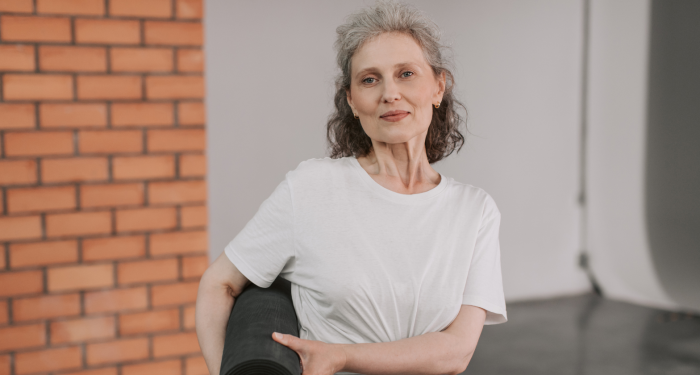
Their wrinkled hands held coffee cups and decades of secrets, each woman over seventy carrying the same urgent message for their younger selves—wisdom so universal yet so ignored that hearing it twenty times still wasn't enough to capture its full weight.
Last month, I found myself sitting in my favorite coffee shop with a spiral notebook, surrounded by women whose laugh lines told better stories than any book I'd ever taught.
After my breast cancer scare at 52, I'd started collecting wisdom like some people collect stamps. But this time was different. I wasn't just listening; I was asking a specific question to women over seventy: "What would you tell your fifty-year-old self if you could?"
The responses came slowly at first, then poured out like water breaking through a dam. Some women laughed, some got quiet, and one reached across the table to squeeze my hand before she spoke. By the time I'd talked to twenty women, patterns emerged. The same themes kept surfacing, like stones worn smooth by years of living.
What struck me most wasn't just what they said, but how they said it. There was no bitterness in their voices, no harsh judgment of their younger selves. Instead, there was something gentler — the kind of compassion you can only offer after you've walked the whole path and seen where it leads.
Stop apologizing for taking up space
Almost every woman I spoke with mentioned some version of this truth. They talked about years spent making themselves smaller, quieter, more palatable. One woman, a retired surgeon, told me she spent decades dimming her intelligence in social settings because she didn't want to intimidate people.
Another mentioned how she'd apologized reflexively for everything — for having opinions, for needing things, for simply existing in rooms where she belonged.
This resonated deeply with my own experience. After spending my entire life as a people-pleaser, therapy in my fifties finally helped me understand that setting boundaries wasn't selfish; it was necessary. The women I interviewed echoed this revelation. They spoke about the energy wasted on trying to be likeable instead of being authentic.
Maria Morava, a Relationships Reporter, captured this perfectly: "I used to stress over what people thought, what I wore, what I said, my accent, every little mistake." The women in my coffee shop conversations nodded knowingly when I shared this quote. They remembered their own versions of this exhausting vigilance.
What would they tell their fifty-year-old selves? Stop shrinking. Stop apologizing for your expertise, your needs, your very presence. The world doesn't need another woman pretending to be less than she is.
Your body is not your enemy
Have you ever noticed how much mental energy we spend fighting our own bodies? The women I interviewed certainly had. They spoke with regret about decades spent at war with their physical selves — the diets, the negative self-talk, the constant comparison to impossible standards.
One woman, now seventy-three, told me she wishes she could go back and tell her fifty-year-old self that her body was not a project to be fixed but a companion to be cherished. She'd spent so much time focusing on what her body looked like that she'd missed appreciating what it could do — climb mountains, hold grandchildren, dance at weddings.
They talked about the freedom that comes with age, when you finally stop seeing your body through the harsh lens of judgment and start seeing it as the miraculous vessel that has carried you through every single day of your life.
Several mentioned that they now dress for comfort and joy rather than for others' approval. They wear bold colors if they want to, comfortable shoes without apology, and they've stopped sucking in their stomachs.
The message was clear: make peace with your body now. Thank it for its service. Treat it with kindness. The energy you waste on criticism could be spent on living.
Loneliness won't kill you, but bad relationships might
This truth came up again and again, often accompanied by knowing looks and rueful smiles. So many of the women had stayed in relationships — romantic, platonic, familial — that drained them because they feared being alone.
Estelle Erasmus, a writer, expressed what many of them felt: "I would tell my younger self to stop being afraid of being lonely. I made so many decisions just to be sure I'd never be without a lover for 10 seconds."
The women talked about the difference between being alone and being lonely. They'd learned, often the hard way, that you can be desperately lonely in a room full of people who don't really see you. Conversely, solitude can be rich and fulfilling when you genuinely enjoy your own company.
Several women mentioned toxic friendships they'd maintained out of obligation or history. They wished they'd understood earlier that it's okay to outgrow people, that not every relationship is meant to last forever. Quality over quantity became their mantra, but they wished they'd learned it sooner.
Joy is not a luxury to be earned
If there was one message that made me put down my pen and really think, it was this one. Woman after woman talked about postponing joy — waiting until they retired, until the kids were grown, until they lost weight, until they had more money.
They spoke about the small joys they'd denied themselves because they seemed frivolous or selfish. The art class not taken, the trip not planned, the afternoon not spent reading in the garden because there was always something more "productive" to do.
This hit particularly close to home for me. My own wake-up call came with that cancer scare, when I realized I'd been saving my good china and my dreams for some mythical "later" that might never come. The women I interviewed had similar stories — health scares, losses, moments that crystallized the truth that joy isn't a reward for a life well-lived; it's what makes a life worth living.
You're allowed to change your mind
Perhaps the most liberating message that emerged was about the freedom to evolve. These women talked about feeling trapped by earlier decisions, by the stories they'd told about themselves, by others' expectations of who they were supposed to be.
They wished they'd known at fifty that it's never too late to change course. One woman started painting at sixty-five and now sells her work. Another left a thirty-year marriage at fifty-eight and described the next decade as the happiest of her life. They talked about shedding old identities like outgrown clothes and the exhilaration of discovering who they were when they stopped performing who they thought they should be.
The permission to change, to contradict your younger self, to want different things — this was revolutionary for many of them. They'd been taught that consistency was a virtue, but they'd learned that growth requires change, and change requires the courage to disappoint people who prefer the old version of you.
Final thoughts
As I left that coffee shop with my notebook full of wisdom, I thought about how these conversations had changed me. These women weren't offering abstract advice; they were sharing hard-won truths from lives fully lived. Their fifty-year-old selves couldn't have imagined the freedom, wisdom, and joy that awaited them in their seventies and beyond.
What strikes me most is that none of them wished for fewer wrinkles or younger bodies. They wished for earlier courage, clearer boundaries, more self-compassion. They wished they'd understood that life is both longer and shorter than you think — long enough to recover from mistakes, too short to waste on other people's opinions.
Their message to all of us still navigating our fifties, sixties, and beyond? Start now. Whatever it is you're waiting to do, to say, to become — start now. Not because time is running out, but because life is waiting to be lived.